Aletsch Glacier
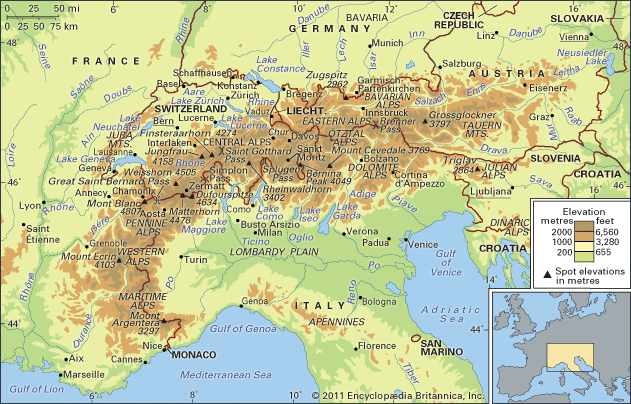
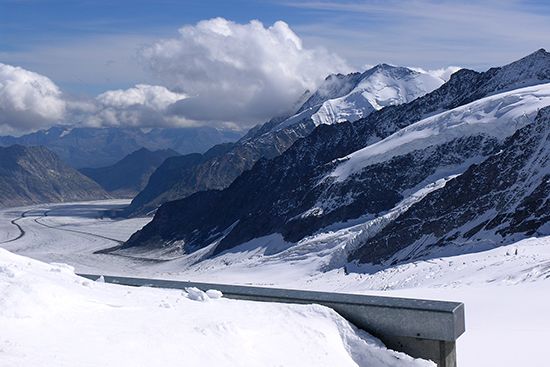
The Aletsch Glacier is the largest and longest glacier in the Alps, located in the Bernese Alps of south-central Switzerland.
What is Aletsch Glacier?
The Aletsch Glacier is the largest and longest glacier in the Alps, located in the Bernese Alps of south-central Switzerland.1
Spanning an area of 66 square miles (171 square km), the glacier is divided into the Great Aletsch (the main body) and the Middle and Upper Aletsch branches. The main glacier measures 15 miles (24 km) in length and 1 mile (1.6 km) in width, extending southward from the Concordia Platz to the Aletsch Forest nature reserve. The Massa River, a tributary of the Rhône River, originates from the Great Aletsch. The region is a popular destination for mountain climbing, skiing, and glacial excursions.1
How do glaciers form and move over time?
Glaciers form through the gradual transformation of snow into dense ice, a process driven by accumulation and pressure. Over time, snow crystals lose their intricate shapes as they settle, round out, and pack together. As the snowpack densifies, air spaces are sealed off, eventually creating impermeable glacier ice. This transformation occurs rapidly in warm, wet environments but can take thousands of years in polar regions.3
Glaciers move under the influence of gravity through two primary mechanisms: internal deformation and basal sliding.4
- Internal deformation: The ice behaves as a crystalline solid, slowly creeping as individual crystals shift and deform under the stress of the glacier’s own weight.54
- Basal sliding: This occurs when the glacier slides across its bed, a process significantly enhanced by the presence of meltwater, which acts as a lubricant.654
Movement rates vary widely; temperate glaciers, which exist near the melting point, generally flow faster than cold-based polar glaciers. Factors such as ice thickness, surface slope, and subglacial water pressure also dictate the speed and erosive power of the glacier as it carves the landscape.6547
What are the main causes of glacier retreat?
Glacier retreat occurs when a glacier’s mass balance becomes negative, meaning the amount of ice lost through ablation exceeds the amount gained through accumulation.6
The primary causes of this imbalance include:
- Climatic Variation: Changes in the environment, such as decreased snowfall or increased melting, disrupt the mass balance. While glaciers naturally respond to these shifts, the process is sequential; a change in climate affects surface processes, which then alters ice flow and eventually causes the terminus to retreat.5
- Ablation Processes: Mass is removed from a glacier through surface melting, evaporation, and the calving of icebergs. In temperate regions, surface melting is the dominant cause of loss.6
- Tidewater Instability: For glaciers that terminate in the ocean, retreat can be triggered by physical instabilities rather than climate alone. If a glacier retreats into deeper water, the rate of iceberg calving increases, which can lead to a rapid, irreversible retreat until the glacier reaches shallower water.10
Why are the Swiss Alps important for studying climate change?
The Swiss Alps are a critical region for studying environmental changes due to their unique physiography and extreme climatic sensitivity. As a central European mountain system, the Alps act as a climatic barrier that separates diverse weather patterns, creating sharp contrasts in temperature and precipitation across short distances. This makes them an ideal natural laboratory for observing how global climatic shifts manifest at varying elevations.1314
The region is particularly significant for monitoring the following:
- Ecological Fragility: The Alps are considered one of the most threatened mountain systems globally due to intense human impact, including mass tourism and infrastructure development, which exacerbate the stress on fragile ecosystems.1415
- Atmospheric Dynamics: The frequent occurrence of temperature inversions and the influence of local wind systems, such as the foehn, provide researchers with data on how microclimates respond to broader atmospheric changes.1316
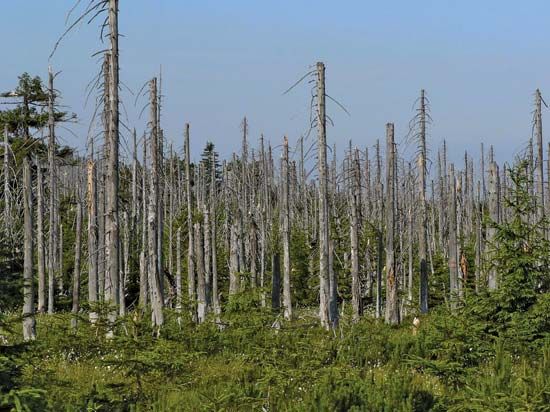
- Environmental Indicators: Historical issues like acid rain have demonstrated how pollution affects forest health, which in turn impacts natural defenses against avalanches. Monitoring these forests and snow patterns remains a vital branch of Alpine climatology.1715
Sources
- Aletsch Glacier — Encyclopædia Britannica
- glacier - Response of glaciers to climatic change — Encyclopædia Britannica
- glacier - Transformation of snow to ice — Encyclopædia Britannica
- glacier - Flow of mountain glaciers — Encyclopædia Britannica
- glacier - Tidewater glaciers — Encyclopædia Britannica
- glacier - Mass balance — Encyclopædia Britannica
- glacier: Top Questions — Encyclopædia Britannica
- hydrologic sciences - The movement of glaciers — Encyclopædia Britannica
- glacial landform - Glacial erosion — Encyclopædia Britannica
- glacier - Glacier hydrology — Encyclopædia Britannica
- glacier - Heat or energy balance — Encyclopædia Britannica
- iceberg - Impacts on ice sheets and sea level — Encyclopædia Britannica
- Alps - Climate of the Alps — Encyclopædia Britannica
- Switzerland - Avalanches — Encyclopædia Britannica
- Alps — Encyclopædia Britannica
- Alps - Human impact on the Alpine environment — Encyclopædia Britannica
- Switzerland - Wind systems — Encyclopædia Britannica
Published on · 3 min read