Alfalfa Weevil
The alfalfa weevil (Hypera postica) poses a significant economic challenge to the agricultural industry by damaging alfalfa and clover crops, which are vital…
What economic impact does the alfalfa weevil have on the agricultural industry?
The alfalfa weevil (Hypera postica) poses a significant economic challenge to the agricultural industry by damaging alfalfa and clover crops, which are vital for livestock feed.1
The economic impact stems primarily from the feeding habits of the larvae, which occur in large numbers and strip soft leaf and stem tissues from the plants, leaving behind only a network of veins. This destruction reduces the quality and yield of the crop, which is otherwise highly valued for its protein content and nutritional benefits. In the United States and Europe, these infestations can cause considerable crop damage, particularly as generations of weevils reach adulthood in June and August.12
To mitigate these economic losses, farmers often employ a combination of crop management and biological control strategies. While pesticides are an option, they are generally recommended only when weevil populations reach especially large numbers, helping to balance the costs of intervention with the potential value of the protected harvest.1
What are the most effective methods for controlling alfalfa weevil populations?
Effective management of the alfalfa weevil relies on an integrated approach that prioritizes long-term sustainability over the exclusive use of chemicals. Because nature allows for the survival of both pests and their natural enemies, a multifaceted strategy is most successful.13
Key Control Strategies
- Biological Control: The use of natural enemies—including parasites, predators, and pathogens—is a cornerstone of management. These agents have proven effective in controlling the alfalfa weevil by naturally reducing their populations.3
- Integrated Pest Management (IPM): This approach coordinates multiple methods to minimize reliance on pesticides. For example, combining the use of resistant crop varieties with targeted chemical applications can protect beneficial insects while managing the pest.3
- Crop Management: Proper field and residue management are essential components of a comprehensive strategy. These practices help disrupt the weevil’s life cycle and reduce the severity of infestations.13
- Chemical Intervention: The use of insecticides is generally recommended only when weevil populations reach particularly high levels. When necessary, they are most effective when integrated with other nonchemical methods to maintain environmental health.13
How can farmers identify an alfalfa weevil infestation in their crops?
Farmers can identify an alfalfa weevil infestation by observing specific physical signs of damage and identifying the insects themselves during the spring months.
Signs of Infestation
- Leaf Damage: The most prominent indicator is the feeding pattern of the larvae. They strip the soft leaf and stem tissues from the plants, leaving behind only a skeletonized network of veins.1
- Larval Presence: The larvae are distinct in appearance; they are plump, legless, and green with a white stripe running along their backs.1
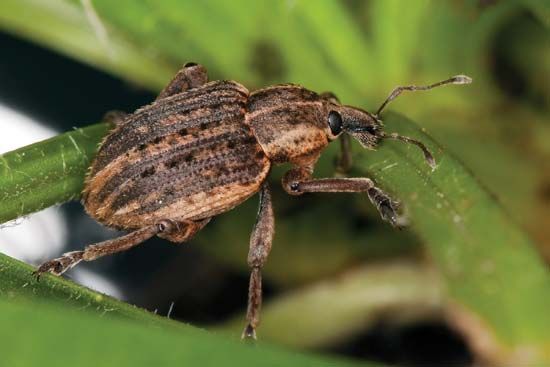
- Adult Presence: While smaller and harder to spot, the adults are dark brown to black and measure approximately 3 mm (0.1 inch) in length. They possess a characteristic prominent snout, which they use to bore small holes into the plant to deposit their eggs.1
Because the larvae often occur in large numbers, significant damage can become apparent as the season progresses toward the summer months. It is important to distinguish this pest from other insects, such as the alfalfa snout beetle, which causes different types of damage, such as feeding on the plant’s taproot.4
How have farming practices evolved to deal with alfalfa weevil infestations?
Farming practices for managing the alfalfa weevil have evolved from a reliance on chemical intervention toward a more sustainable, multifaceted approach known as integrated pest management.
Historically, the primary response to significant infestations was the application of pesticides. However, modern agricultural standards now recommend chemical use only when weevil populations reach particularly high levels, prioritizing environmental health.13
Current strategies emphasize:
- Biological Control: The introduction and support of natural enemies—such as parasites, predators, and pathogens—that target the weevil. This method acknowledges that nature maintains a balance between pests and beneficial insects.13
- Crop Management: Implementing specific field practices and residue management to disrupt the weevil’s life cycle, which includes overwintering stages.13
- Resistant Varieties: Developing and planting crop varieties that are naturally resistant to attack, which represents an ideal, though long-term, solution for pest control.3
- Integrated Approaches: Coordinating multiple methods, such as combining resistant crops with targeted, systemic insecticides that preserve beneficial predator populations.3
Sources
- alfalfa weevil — Encyclopædia Britannica
- Alfalfa — Encyclopædia Britannica
- Agricultural technology - Biological controls — Encyclopædia Britannica
- alfalfa snout beetle — Merriam-Webster
Published on · 3 min read