Carrion Beetle
Carrion beetles, belonging to the family Silphidae, are essential insects that primarily function as decomposers by feeding on the bodies of dead and…
What are the defining characteristics of carrion beetles?
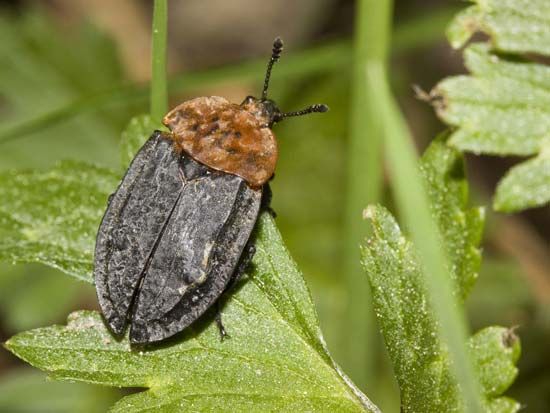
Carrion beetles, belonging to the family Silphidae, are essential insects that primarily function as decomposers by feeding on the bodies of dead and decaying animals. Their defining characteristics include:12
- Physical Appearance: They range in size from minute to 35 mm, with an average of 12 mm. Many species feature bright orange, yellow, or red markings on a dark background, while others are entirely black. They possess flat, flexible bodies and wings, which allow them to crawl beneath carcasses.1
- Feeding and Behavior: While most feed on carrion, some species act as scavengers in beehives, and certain eyeless varieties inhabit caves to feed on bat droppings. Some species, known as burying beetles, dig the soil from beneath small carcasses to bury them.1
- Life Cycle: The larvae are long and flat with a triangular point at each end. Upon hatching, they are fed a brown liquid regurgitated by their parents for the first few days.1
While most are beneficial scavengers, a few species, such as the spinach carrion beetle, are known to attack economic plants.3
How do carrion beetles play a role in decomposition and ecosystem health?
Carrion beetles, members of the family Silphidae, are vital contributors to ecosystem health by acting as primary decomposers. By feeding on the bodies of dead and decaying animals, they facilitate the breakdown of organic matter, which is essential for nutrient cycling within the environment.1
Their role in decomposition is particularly notable in the behavior of burying beetles. These insects excavate soil from beneath small carcasses, such as those of mice or birds, effectively burying the remains. This process serves several ecological functions:1
- Nutrient Recycling: By burying and consuming carrion, these beetles accelerate the return of nutrients to the soil.1
- Sanitation: The removal and burial of decaying matter help manage the presence of carcasses in the environment, which can otherwise harbor pathogens.1
- Parental Care: The burial process provides a protected food source for their offspring, as the larvae feed on the carrion and receive additional nutrition through a liquid regurgitated by their parents.1
While most species are beneficial scavengers, it is important to note that a few, such as the spinach carrion beetle, may occasionally feed on economic plants rather than carrion.2
What are some common species of carrion beetles, and where are they found?
Carrion beetles, which belong to the family Silphidae, are found in diverse environments globally, as beetles generally inhabit nearly all climates and latitudes except for extreme environments like Antarctica or the highest mountain altitudes.16
While the family Silphidae includes many species, a notable group within this family is the genus Nicrophorus, commonly known as burying beetles. These beetles are recognized for their behavior of burying small animal carcasses to provide a food source for their developing larvae. A specific example is the American burying beetle (Nicrophorus americanus), which is native to North America. This species is characterized by a shiny black body featuring distinct orange markings on its elytra (wing covers) and pronotum.718
In terms of distribution, while many beetle species are widely distributed across zoogeographical regions, others have very limited ranges, such as being restricted to a single valley, island, or vegetation type. Some carrion beetles are also found in specialized habitats, such as beehives or caves, where they scavenge or feed on bat droppings.61
How do carrion beetles differ from other types of beetles?
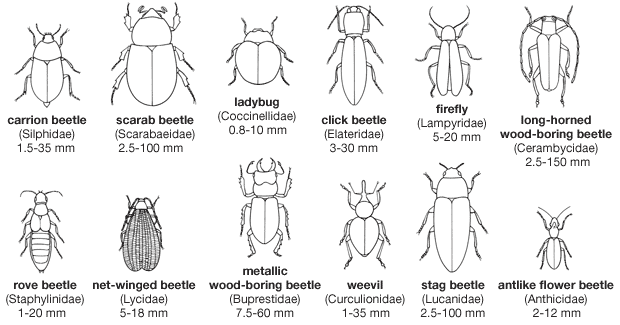
Carrion beetles (family Silphidae) are distinguished from other beetles primarily by their specialized diet and unique reproductive behaviors. While many beetle groups function as scavengers, carrion beetles are specifically adapted to exploit the bodies of dead and decaying animals as their primary food source and nursery.14
Key differences include:
- Physical Adaptations: Many carrion beetles possess flat, flexible bodies and wings, which allow them to crawl underneath carcasses to access them efficiently.1
- Burying Behavior: A notable subset known as burying beetles (Nicrophorus) actively excavate soil from beneath small carcasses, such as those of mice or birds, to sink them into the ground. This behavior protects the food source from competitors and provides a secure environment for their offspring.110
- Parental Care: Unlike many other beetle species that simply lay eggs on a food source, carrion beetles exhibit a level of parental care. Parents often regurgitate a brown liquid to feed their larvae during their first few days of life.1
- Specialized Larvae: The larvae of carrion beetles are long and flat, featuring a distinct triangular point at each tapering end, which is adapted for their life cycle within decaying matter.1
While other scavengers like dermestids also feed on animal remains, they often focus on dried materials like skin or hair, whereas silphids are specialized for the decomposition of fresh carrion.410
Sources
- carrion beetle — Encyclopædia Britannica
- carrion beetle — Merriam-Webster
- silphid — Merriam-Webster
- Coleoptera - As scavengers — Encyclopædia Britannica
- Silphidae — Merriam-Webster
- List of insects - beetles and weevils (order Coleoptera) — Encyclopædia Britannica
- burying beetle — Merriam-Webster
- American burying beetle — Merriam-Webster
- Coleoptera - Distribution and abundance — Encyclopædia Britannica
- Coleoptera - Size range and diversity of structure — Encyclopædia Britannica
- Coleoptera - Feeding habits and habitats — Encyclopædia Britannica
Published on · 4 min read