Casebearing Leaf Beetle
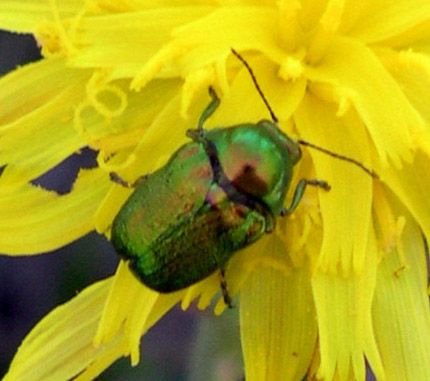
A casebearing leaf beetle is any member of two small groups of leaf beetles, specifically within the subfamilies Cryptocephalinae and Lamprosomatinae. These…
What is casebearing leaf beetle?
A casebearing leaf beetle is any member of two small groups of leaf beetles, specifically within the subfamilies Cryptocephalinae and Lamprosomatinae. These insects are named for the distinctive cases that their larvae construct and inhabit throughout their development.1
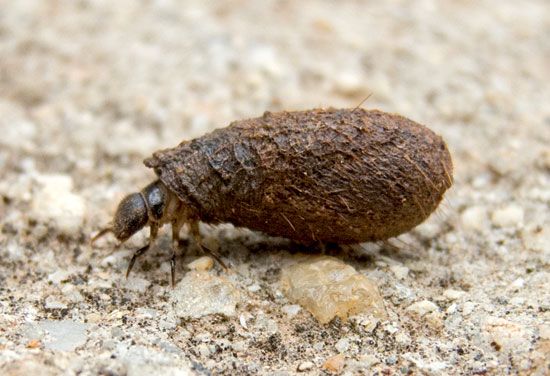
When a female lays her eggs, she covers each one with a layer of excrement. Upon hatching, the larvae retain this covering as a protective case, which they continue to build upon as they grow. This case serves as effective camouflage; when the larvae are disturbed, they retract their legs, causing them to resemble droppings and helping them avoid predators. Some species, such as the European Clythra quadripunicata and the North American Coscinoptera dominicana, are known to live within ant nests, where they feed on plant debris.1
It is important to distinguish these beetles from “casebearers” (family Coleophoridae), which are a group of moths rather than beetles.2
How do these larvae use their cases for protection against predators?
Casebearing leaf beetle larvae utilize their cases as a sophisticated form of defensive camouflage to evade predators. The protection mechanism functions as follows:
- Initial Construction: The female parent initiates the process by coating each egg in a layer of excrement. Upon hatching, the larvae retain this material as their primary case.1
- Continuous Growth: As the larvae develop, they continue to add to this structure throughout their larval life.1
- Camouflage Strategy: When a larva is disturbed or senses a threat, it retracts its legs into the case. Because of the case’s specific color and shape, the larva effectively mimics the appearance of droppings, causing potential predators to ignore it.1
This behavior allows the larvae to remain inconspicuous in their environment, providing a passive but highly effective survival advantage.
Why do some species of these beetles choose to live inside ant nests?
Some species of casebearing leaf beetles, such as the European Clythra quadripunicata and the North American Coscinoptera dominicana, reside within ant nests to utilize the environment as a source of sustenance, where they feed on plant debris found within the colony.1
While the specific evolutionary advantages of this relationship are often linked to the protection provided by the ants’ presence, the primary documented behavior for these beetles in such environments is the consumption of available organic waste. In the broader context of Coleoptera, many larvae and pupae utilize various materials to create protective barriers specifically to shield themselves from ants and other predators, highlighting the complex and often adversarial interactions between these insects.17
What are some other examples of insects that use camouflage to survive?
Many insects rely on camouflage—also known as cryptic coloration or crypsis—to blend into their surroundings and avoid detection by predators. Beyond casebearing beetles, several other insects exhibit remarkable adaptations:89
- Leaf insects: Members of the family Phylliidae possess wings and legs that closely imitate the color and form of leaves, sometimes even featuring markings that resemble disease spots or insect damage.10
- Stick insects: These insects often resemble twigs. Some species, such as Carausius, can actively change their color to match their background by moving pigment granules within their epidermal cells.8
- Stick caterpillars: These larvae are well-known for their resemblance to twigs, a strategy that protects them from insect-eating birds. They often combine this appearance with a rigid, deathlike posture.118
- Indian oakleaf butterfly: When its wings are closed, this butterfly mimics the appearance of a dead leaf, providing effective concealment.12
- Dead-leaf grasshoppers and moths: These insects have evolved body shapes and color patterns that allow them to blend seamlessly into leaf litter or foliage.12
Sources
- casebearing leaf beetle — Encyclopædia Britannica
- casebearer — Encyclopædia Britannica
- Coleoptera - Distribution and abundance — Encyclopædia Britannica
- neuropteran - Immature stages — Encyclopædia Britannica
- Coleoptera - As plant feeders — Encyclopædia Britannica
- acarid - Reproduction and life cycle — Encyclopædia Britannica
- Coleoptera - Pupae — Encyclopædia Britannica
- leaf insect — Encyclopædia Britannica
- mimicry - The importance of the signal receiver — Encyclopædia Britannica
- insect - Protection from enemies — Encyclopædia Britannica
- crypsis — Merriam-Webster
- 9 Animals That Look Like Leaves — Encyclopædia Britannica
Published on · 3 min read