Amami Great Island
Amami Great Island is the largest island in the Amami chain, located within the northern Ryukyu Islands in Kagoshima prefecture, Japan.
What is Amami Great Island?
Amami Great Island is the largest island in the Amami chain, located within the northern Ryukyu Islands in Kagoshima prefecture, Japan.1
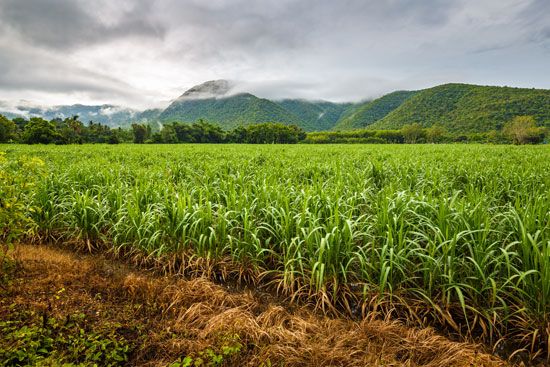
Spanning approximately 275 square miles (712 square km), the island is primarily mountainous and forested, with its highest peak, Mount Yūwan, reaching 2,276 feet (694 meters). A quasi-national park preserves the island’s higher elevations, while lower, cultivated regions are used for the production of rice, timber, and sugarcane.1
The island features significant infrastructure, including a hydroelectric station on the Sumiyō River and an airport located on Cape Kasari. The largest city, Amami (formerly Naze), serves as a hub for scientific research and specialized healthcare services. Connectivity across the island is supported by a highway linking Kasari and Setouchi, the latter of which hosts a museum and serves as a domestic shipping port alongside Amami.1
What are the Ryukyu Islands?
The Ryukyu Islands are an archipelago extending approximately 700 miles (1,100 km) southwest from the Japanese island of Kyushu to Taiwan. This island chain serves as a geographical boundary between the East China Sea and the Philippine Sea.2
The archipelago consists of 55 islands and islets divided into three primary groups:
- Amami Islands: Located in the north, these are administratively part of Kagoshima prefecture.2
- Okinawa Islands: The central group, which, along with the Sakishima islands, constitutes Okinawa prefecture.2
- Sakishima Islands: The southernmost group.2
The two largest islands are Okinawa and Amami Great Island. While the larger islands are typically volcanic and mountainous, many smaller islands are flat and coralline. The region experiences a subtropical climate with significant rainfall and annual typhoons.2
Historically, the islands formed an independent kingdom before being incorporated into Japan in 1879. Following World War II, the islands were under United States control until their phased return to Japan in 1953 and 1972.2
What kind of wildlife lives in the forests of Amami?
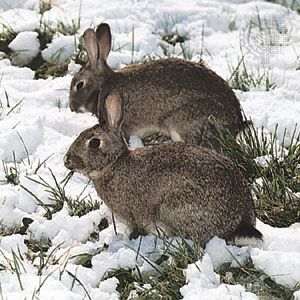
The forests of Amami Great Island are home to the Amami rabbit, a unique species found exclusively on Amami and the island of Tokunoshima. This population, estimated at approximately 5,400 individuals, is currently in decline due to habitat destruction and predation by introduced species, including mongooses, feral cats, and feral dogs.1
While the island’s mountainous terrain is heavily forested, the broader region features diverse plant life, including semitropical rainforests in the lowlands that contain various ferns, mulberries, camphor, and oaks.45
How does the climate of the Amami Islands compare to mainland Japan?
The climate of the Amami Islands differs significantly from the temperate conditions found across much of mainland Japan. While mainland Japan experiences a monsoonal climate characterized by distinct seasonal shifts, including cold, snowy winters on the Sea of Japan coast and dry, windy winters on the Pacific side, the Amami Islands maintain a subtropical climate.6
Because of their southern latitude, the Amami Islands experience warmer temperatures year-round compared to the mainland, which is heavily influenced by the latitudinal extent and the interaction between cold air from Siberia and the surrounding seas. Unlike the mainland, where mountainous terrain creates sharp contrasts in winter precipitation, the Amami Islands are defined by their subtropical warmth, high annual rainfall, and susceptibility to frequent, destructive typhoons during the late summer and early autumn.6
Sources
- Amami Great Island — Encyclopædia Britannica
- Ryukyu Islands — Encyclopædia Britannica
- Ryukyu Islands — Merriam-Webster
- rabbit - Diversity and conservation status — Encyclopædia Britannica
- Japan - Flora — Encyclopædia Britannica
- Japan - Climate — Encyclopædia Britannica
- Andaman and Nicobar Islands - Climate — Encyclopædia Britannica
Published on · 2 min read