American Bully
The American Bully is a muscular companion dog developed in the United States during the 1980s and 1990s. Breeders created the type by crossing the American…
What is an American Bully?
The American Bully is a muscular companion dog developed in the United States during the 1980s and 1990s. Breeders created the type by crossing the American Pit Bull Terrier with various bulldog breeds, such as the English Bulldog, to produce a companion animal with a broad head, wide chest, and powerful build, while attempting to temper the aggression associated with pit bulls.12
The breed is not recognized by the American Kennel Club due to a lack of historical tradition and consistency. While many serve as loving pets, the breed’s potential for aggression remains a significant concern. Due to their strength and involvement in serious attacks, they face restrictions or bans in several countries, including the United Kingdom. Responsible ownership is critical, as these dogs require diligent training and secure environments. Furthermore, the breed is prone to health issues like hip dysplasia and breathing difficulties.12
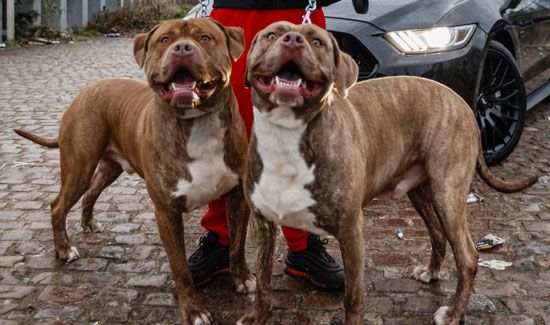
What does an American Bully look like?
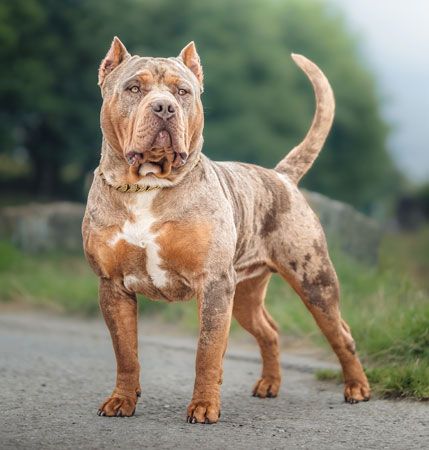
The American Bully is a muscular, powerful dog characterized by a short, compact body and a deep, wide chest. Its physical appearance is defined by a large, broad head, a muscular neck, and powerful jaws with tight lips.12
Key physical features include:
- Musculature: The breed is noted for its marked muscle development and overall agile, active build.12
- Coat: They possess a short, glossy, and smooth coat. They are acceptable in any color or combination, except for those with albinism or merle coats.2
- Ears: Ears may be left natural or cropped.2
- Size Varieties: The breed is categorized into several sizes based on height at the withers:
- Pocket: 13–17 inches (33–43 cm)
- Standard/Classic: 16–20 inches (41–51 cm)
- XL: 19–23 inches (48–58 cm)
- Micros and XXLs: Dogs falling outside these ranges are often referred to as micros (shorter than pocket) or XXLs (taller than XL).2
While the “classic” variety is distinguished by a lighter frame and less muscle mass, all American Bullies are bred for a robust, imposing presence.2
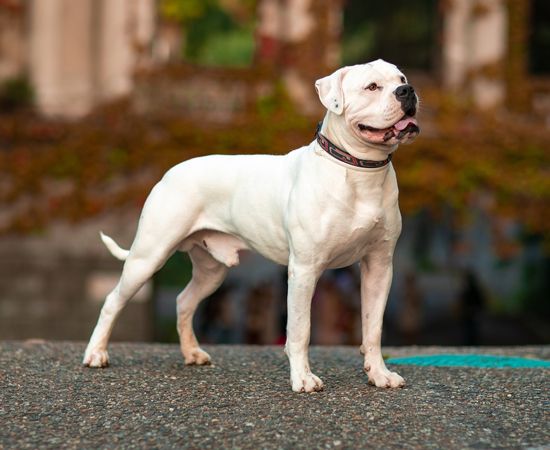
How is the American Bully different from other bully breeds?
The American Bully is distinct from other “bully” breeds primarily due to its specific breeding history and intended purpose. While many bully-type dogs, such as the American Pit Bull Terrier, were historically developed as working dogs for blood sports, the American Bully was intentionally created in the 1980s and 1990s as a companion animal.12
Breeders sought to combine the physical power of the American Pit Bull Terrier with the more laid-back, gentle nature of various bulldog breeds, such as the English, American, or Olde English Bulldogge. The resulting dog is characterized by a more compact, muscular, and “tougher” appearance than its ancestors, featuring a broader head and a wider chest.12
Despite these efforts to temper aggression, the American Bully remains controversial. Unlike established breeds, it lacks a long history and consistent breed standards, leading major organizations like the American Kennel Club to withhold recognition. Furthermore, because of their strength and documented involvement in serious attacks, they are often subject to the same breed-specific legislation and bans as other pit bull-type dogs in various jurisdictions.123
What is the typical temperament of an American Bully?
The American Bully is characterized by an exuberant, active, and adventurous temperament. While they are often described as loving and gentle pets, their behavioral profile is complex due to their ancestry.12
Breeders intentionally crossed the American Pit Bull Terrier with various bulldog breeds to temper the aggression historically associated with pit bulls and create a suitable family companion. While many American Bullies successfully serve as affectionate pets, the success of these efforts has been mixed. A degree of aggression remains a characteristic of the breed, and they have been involved in a significant number of attacks on humans and other animals.12
Because of their immense strength and potential for unpredictable aggression, responsible ownership requires diligent training and careful oversight. They are generally not recommended for environments like dog parks, and their power can make them difficult to control if they become agitated. It is important to note that while these are widely accepted generalizations, individual temperament can vary significantly.2
Sources
- What Dogs Make an American Bully? — Encyclopædia Britannica
- American Bully — Encyclopædia Britannica
- Pit bull bans — Encyclopædia Britannica
Published on · 3 min read