Americas
The arrival of European explorers in the Americas initiated a period of profound and often catastrophic change for Indigenous populations. This impact was…
How did the arrival of European explorers impact the indigenous populations of the Americas?
The arrival of European explorers in the Americas initiated a period of profound and often catastrophic change for Indigenous populations. This impact was characterized by several devastating factors:
- Disease: Indigenous peoples had no immunity to Old World diseases, such as smallpox, which, combined with secondary effects like pneumonia and famine, caused mortality rates as high as 95 percent in some areas.123
- Displacement and Conflict: European powers sought territorial expansion and resource extraction, leading to the forced removal of Native peoples from their ancestral lands. This process involved frequent warfare, massacres, and the systematic abrogation of treaty rights.4521
- Social and Cultural Disruption: Colonizers implemented policies designed to assimilate Indigenous peoples into dominant cultures, including the use of residential schools that prohibited traditional languages and religions. In many regions, social structures were dismantled, and Indigenous peoples were subjected to forced labor through systems like the encomienda.56
Despite these systemic efforts to marginalize and assimilate them, Indigenous communities demonstrated remarkable resilience, eventually engaging in movements for political empowerment and cultural revitalization.51
What were some of the major pre-Columbian civilizations in the Americas?
Pre-Columbian civilizations in the Americas were extraordinary urban cultures that developed in Mesoamerica and the Andean region, as well as across North America, long before the arrival of Europeans in the 16th century. These societies were characterized by complex social structures, monumental architecture, and significant advancements in agriculture, arts, and science.78
Major Mesoamerican and Andean Civilizations
- Olmec: Often considered the first major civilization in Mesoamerica, the Olmec established a class-structured, politically centralized society between 1200 and 900 BCE, known for their monumental stone sculptures.7
- Maya: Renowned for their intellectual achievements, the Maya excelled in hieroglyphic writing, mathematics, and astronomy. They lived in independent city-states across present-day Mexico, Guatemala, Belize, Honduras, and El Salvador.7910
- Teotihuacán: A powerful urban center in the Valley of Mexico that reached its height between 400 and 600 CE, influencing much of Mesoamerica through its commercial and political reach.7
- Aztec: Emerging as the dominant force in central Mexico by 1428, the Aztec Empire was a highly organized state that ruled millions of people from their capital, Tenochtitlán.711
- Inca: Based in Cuzco, the Inca built the largest empire in the pre-Columbian Americas, stretching along the Andes from Ecuador to Chile. They were masters of engineering, constructing vast road networks and sophisticated irrigation systems.712
- Chavín: An early Andean civilization that established a shared cultural “horizon” across the northern Andes, influencing art and religion long before the rise of the Inca.7
North American Cultures
- Mississippian Culture: Flourishing in the river valleys of the Mississippi, these peoples built large ceremonial centers, such as Cahokia, and maintained complex religious and social hierarchies.8
- Ancestral Pueblo: Located in the American Southwest, these cultures were known for their innovative irrigation techniques and impressive pueblo architecture, including multi-story cliff dwellings.8
What is the total land area of the Americas, and how does it compare to other continents?
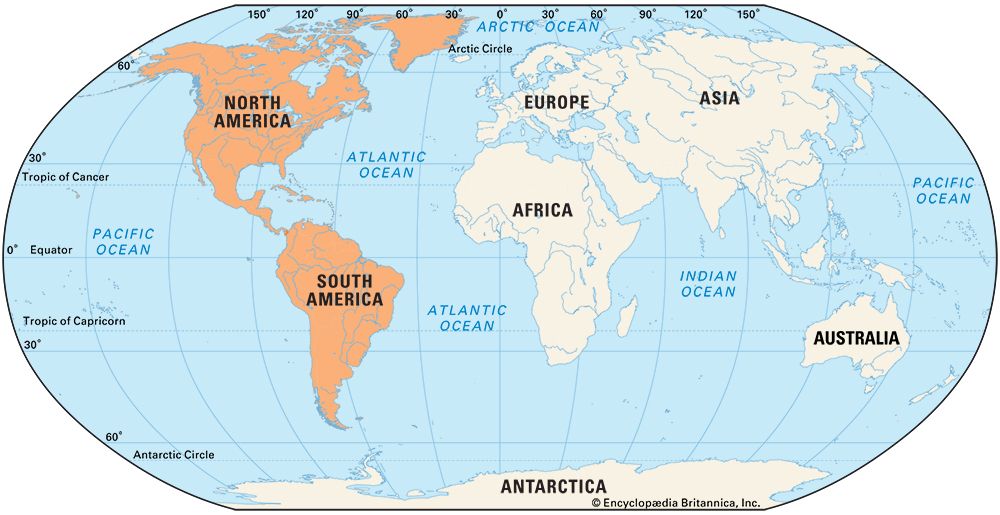
The term “the Americas” refers to the combined landmass of North America and South America, which are physically connected by the Isthmus of Panama. While the provided search results specify that North America covers an area of 9,355,000 square miles (24,230,000 square km), they do not provide a single, consolidated total land area for the entire Americas landmass.13
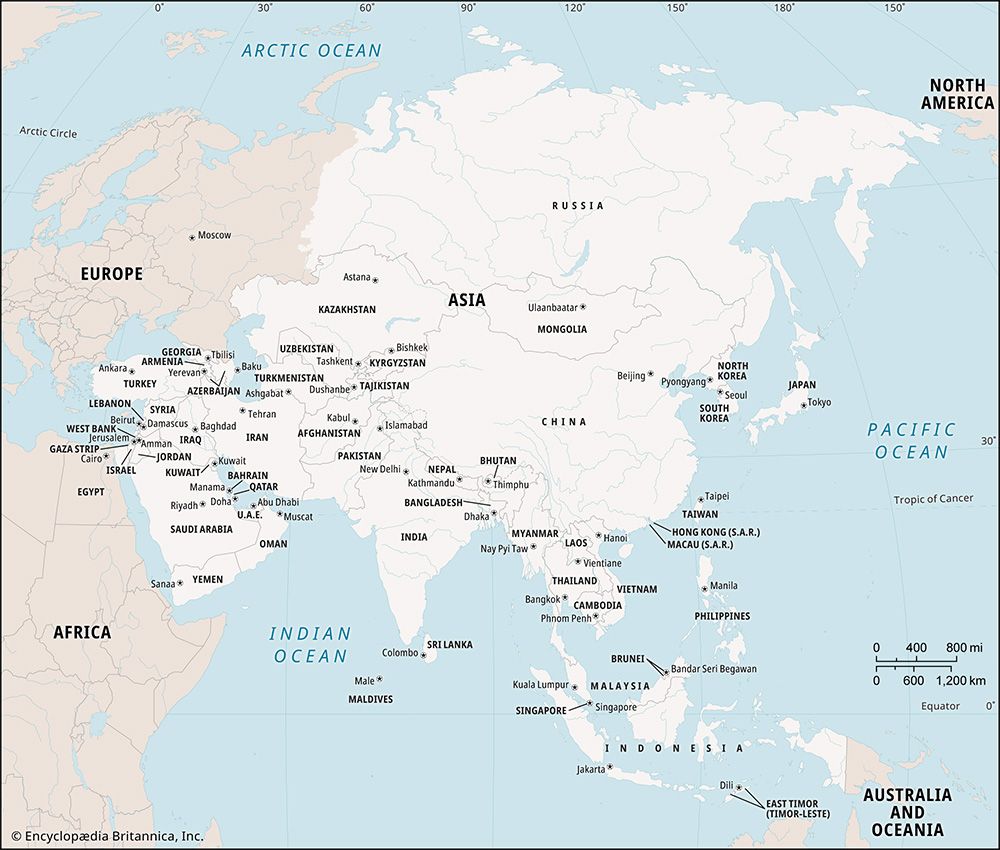
When comparing the Americas to other continents, it is helpful to note that Asia is the largest continent on Earth, covering approximately 17,226,200 square miles (44,614,000 square km). North America alone is ranked as the third-largest continent. The continents are generally listed in order of size as Asia, Africa, North America, South America, Antarctica, Europe, and Australia.141315
How has the Panama Canal impacted trade and transportation between North and South America?
The Panama Canal has fundamentally transformed trade and transportation by providing a vital shortcut between the Atlantic and Pacific oceans. Before its completion in 1914, vessels traveling between the east and west coasts of the Americas were forced to navigate around Cape Horn at the southern tip of South America, a journey approximately 8,000 nautical miles longer than the route through the canal.1718
By significantly reducing travel time and distance, the canal has established Panama as one of the world’s most strategic transportation and logistics hubs. Key impacts include:1920
- Efficiency: The canal shortens voyages between North American coasts and South American ports by up to 3,500 nautical miles, facilitating faster and more cost-effective trade.18
- Global Commerce: Serving as a major commercial artery, the canal handles 12,000–15,000 ship transits annually, with the United States and China as its primary users.21
- Infrastructure Development: The 2016 expansion project allowed for the passage of larger “post-Panamax” ships, prompting ports throughout the Americas to modernize their facilities to accommodate increased trade capacity.22
Sources
- Christopher Columbus: Top Questions — Encyclopædia Britannica
- Indigenous peoples of the Americas - Colonization and conquest — Encyclopædia Britannica
- Native American - The population of Native America — Encyclopædia Britannica
- Middle American Indian - The Conquest and its effects — Encyclopædia Britannica
- Western colonialism - Advance of the U.S. frontier — Encyclopædia Britannica
- North America - The North American Indian heritage — Encyclopædia Britannica
- Pre-Columbian civilizations — Encyclopædia Britannica
- Inca — Encyclopædia Britannica
- Central America - Pre-Columbian Central America — Encyclopædia Britannica
- Central America - Emergence of the Maya — Encyclopædia Britannica
- Aztec - Establishment of the Aztec empire — Encyclopædia Britannica
- Indigenous peoples of the Americas - Prehistoric agricultural peoples — Encyclopædia Britannica
- North America: Top Questions — Encyclopædia Britannica
- North America — Encyclopædia Britannica
- continent — Encyclopædia Britannica
- continent: Top Questions — Encyclopædia Britannica
- Panama Canal: Top Questions — Encyclopædia Britannica
- Timeline and Map of the Panama Canal — Encyclopædia Britannica
- Panama — Encyclopædia Britannica
- Panama - Panama Canal and coastal ports — Encyclopædia Britannica
- Panama Canal - Effects of expansion — Encyclopædia Britannica
- Panama Canal — Encyclopædia Britannica
Published on · 4 min read