Sweetsop
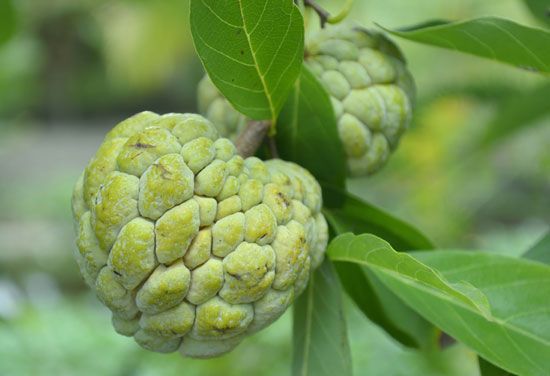
The sweetsop (Annona squamosa), also known as the sugar apple, is a small evergreen tree or shrub belonging to the custard apple family (Annonaceae). It is…
What is a sweetsop tree and where is it native to?
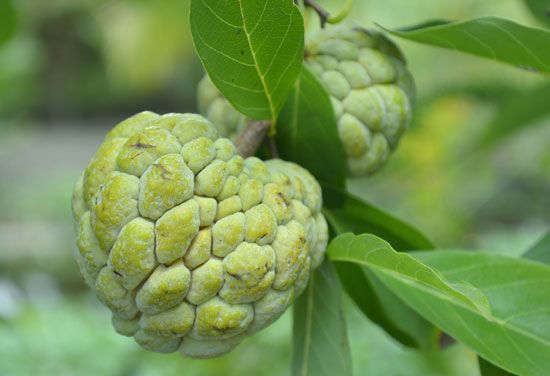
The sweetsop (Annona squamosa), also known as the sugar apple, is a small evergreen tree or shrub belonging to the custard apple family (Annonaceae). It is characterized by its thin, oblong-ovate leaves and solitary greenish flowers that develop into yellowish-green, tuberculate fruit. These fruits, which resemble shortened pine cones, are notable for their segmented rinds that separate when fully ripe to reveal a sweet, custard-like pulp.12
Regarding its origins, the sweetsop is native to the Caribbean region, including the West Indies, as well as Central America and northern South America. While it originated in these tropical American regions, it has been widely introduced and is now highly esteemed and cultivated throughout the Eastern Hemisphere tropics, particularly in India and Pakistan.12
How long does it take for a sweetsop tree to bear fruit after planting?
Sorry, the Britannica knowledge base does not contain this information.
How is the sweetsop fruit typically consumed or used in cuisine?
The sweetsop (Annona squamosa), also commonly known as the sugar apple, is highly valued for its edible fruit, which features a sweet, custard-like pulp.12
In culinary practice, the fruit is typically consumed in the following ways:
- Raw Consumption: The fruit is most commonly eaten fresh. When fully ripe, the segmented rind of the sweetsop separates easily, allowing access to the cream-colored, sweet, and aromatic pulp inside.12
- Juice: The pulp can be extracted and processed to create a refreshing juice.1
While the fruit is primarily enjoyed for its sweet flavor, it is worth noting that the tree is also recognized in some tropical regions for its traditional medicinal applications, such as using leaf extracts for tonics or poultices, though these are distinct from its culinary uses.2
How does sweetsop differ from its close relative, the cherimoya?
While both the sweetsop (Annona squamosa) and the cherimoya (Annona cherimola) belong to the Annonaceae family and the genus Annona, they possess distinct characteristics.
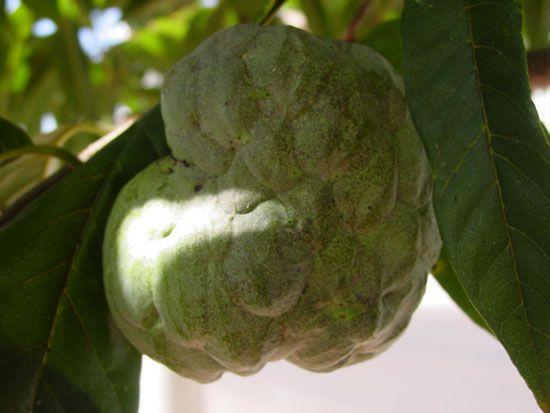
The cherimoya is native to frost-free higher elevations in tropical America and produces large, pale green fruits that are either smooth or feature round protrusions, containing a sweet-acid pulp. In contrast, the sweetsop is known for a tendency to split, a trait that the hybrid atemoya—created by crossing the two species—aims to improve upon.56
The atemoya combines the desirable qualities of both parents, offering the flavor profile of the cherimoya while exhibiting better shipping durability and a reduced likelihood of splitting compared to the sweetsop. Additionally, it is important to note that the skin and seeds of the cherimoya contain a neurotoxin called annonacin and should not be consumed.56
Sources
- sweetsop — Encyclopædia Britannica
- Magnoliales - Fruit — Encyclopædia Britannica
- Soursop — Encyclopædia Britannica
- sugar apple — Merriam-Webster
- Cherimoya — Encyclopædia Britannica
- Cherimoya: Top Questions — Encyclopædia Britannica
Published on · 2 min read