Androscoggin River
The Androscoggin River is a 175-mile-long river located in northeastern New Hampshire and southern Maine. While some sources suggest it flows into the…
What is Androscoggin River?
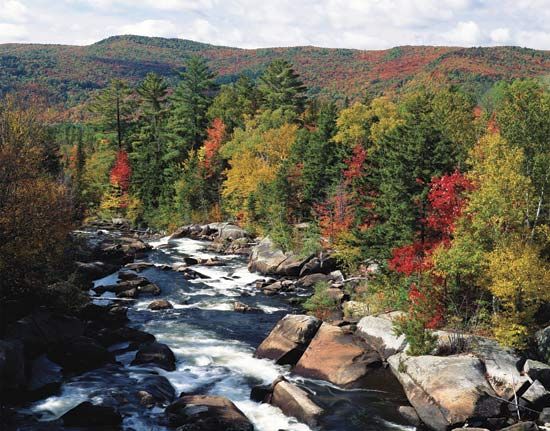
The Androscoggin River is a 175-mile-long river located in northeastern New Hampshire and southern Maine. While some sources suggest it flows into the Kennebec River, it is widely recognized for flowing from Umbabog Lake through Berlin, N.H., and Rumford, Maine, before eventually reaching the Atlantic Ocean.12
The name is derived from an Algonquian word meaning “fish-curing place,” and the river is well-known for its recreational opportunities, including fishing, hunting, and boating. Its drainage basin has historically supported industries such as pulp, paper, textiles, and footwear due to the availability of waterpower and natural resources. Additionally, the river bisects Androscoggin county in Maine, where it flows between the cities of Lewiston and Auburn.13
How did the paper and textile industries shape the towns along the river?
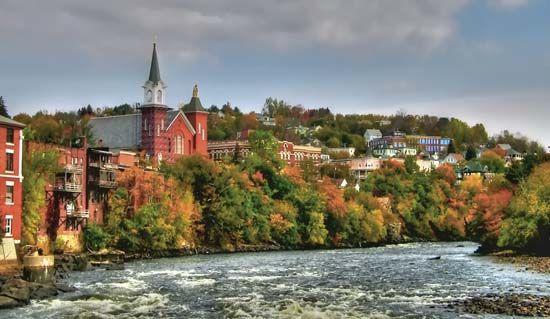
The paper and textile industries were fundamental to the development and economic identity of towns along the Androscoggin River, primarily by leveraging the river’s significant waterpower and natural resources.14
- Waterpower and Industrial Growth: The river’s steep descent, particularly at locations like Berlin, N.H., and Rumford, Maine, provided the essential energy needed to power mills. In Lewiston, the formation of the Androscoggin Falls, Dam Locks and Canal Company in 1836 facilitated the growth of large-scale textile operations by harnessing the river’s flow.15
- Resource-Driven Specialization: Communities specialized based on local access to raw materials and power. The abundance of spruce-fir forests and process water made the region a hub for the pulp and paper industry, exemplified by the massive mill in Rumford. Meanwhile, the “twin cities” of Lewiston and Auburn became centers for textile and footwear manufacturing, respectively.167
- Economic Evolution: These industries defined the towns for over a century, supporting local employment and urban growth. However, as industrial needs shifted, many of these traditional mills closed by the late 20th century, leading cities like Lewiston and Auburn to diversify their economies into sectors such as electronics and light manufacturing.57
Who were the Abenaki people who originally lived in this region?
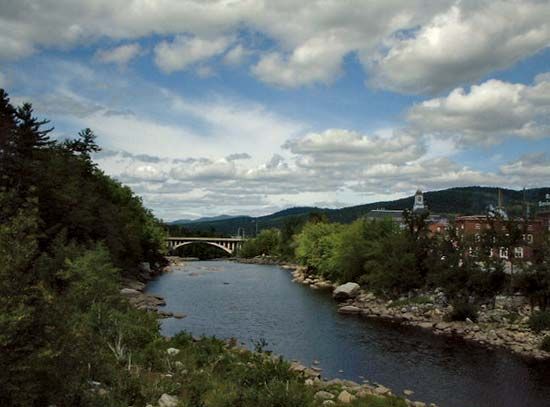
The Abenaki are an Algonquian-speaking Indigenous people whose name translates to “toward the dawn.” They were the earliest known inhabitants of the region surrounding the Androscoggin River, where they lived in kin-based bands along river valleys and coasts.891
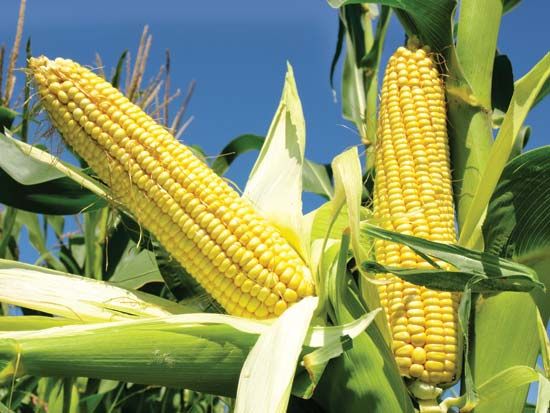
Their traditional culture was highly adapted to the environment, featuring a diversified economy of hunting, fishing, and horticulture. They cultivated corn, beans, and squash, while utilizing birch-bark canoes for transportation and living in wickiups.89
Following European contact in the 16th century, the Abenaki suffered significant population declines due to introduced diseases and conflicts over territory and trade. Many eventually migrated to Canada, while others remained in the region, integrated into communities, or moved to reservations. Today, their legacy persists through numerous place-names, such as Androscoggin County, and the continued cultural presence of Indigenous groups in the area.891
What role does waterpower play in the history of Maine’s rivers?
Waterpower has been a cornerstone of Maine’s economic history, serving as a primary driver for industrial development during the Industrial Revolution.101
- Industrial Foundation: During the 19th century, Maine’s rivers provided the essential mechanical energy required to power mills before the widespread adoption of steam power. Towns frequently emerged at locations where reliable water flow and steep drops—such as those found on the Androscoggin River—could be harnessed to drive machinery.117
- Manufacturing Hubs: The availability of waterpower, combined with access to natural resources like timber, allowed Maine to become a major center for manufacturing. The pulp and paper industry relied heavily on the river’s flow for both process water and energy, while textile and shoe manufacturing operations in cities like Lewiston and Auburn were built directly around these water-powered sites.71
- Economic Transition: While waterpower initially invited significant investment and growth, the state’s reliance on these traditional manufacturing sectors left it susceptible to economic shifts as industries moved to lower-wage areas. In the late 20th century, many of these mills closed, leading to a diversification of the economy and a greater focus on environmental regulation and tourism.101
Sources
- Androscoggin River — Encyclopædia Britannica
- Androscoggin — Merriam-Webster
- Androscoggin — Encyclopædia Britannica
- Rumford — Encyclopædia Britannica
- Auburn — Encyclopædia Britannica
- Lewiston — Encyclopædia Britannica
- energy conversion - Waterwheels — Encyclopædia Britannica
- Abenaki — Encyclopædia Britannica
- Maine - History — Encyclopædia Britannica
- Maine - Economy of Maine — Encyclopædia Britannica
- Maine - Settlement patterns — Encyclopædia Britannica
- Maine - Economic growth — Encyclopædia Britannica
Published on · 3 min read