Corn
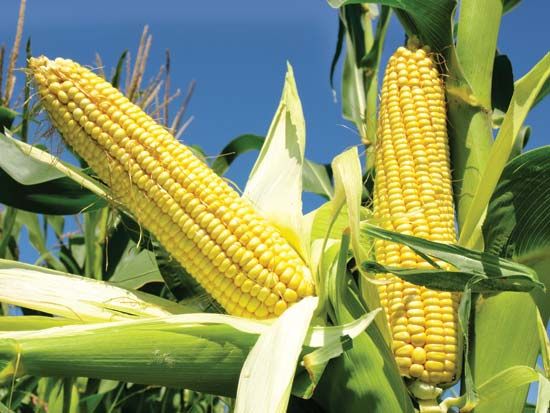
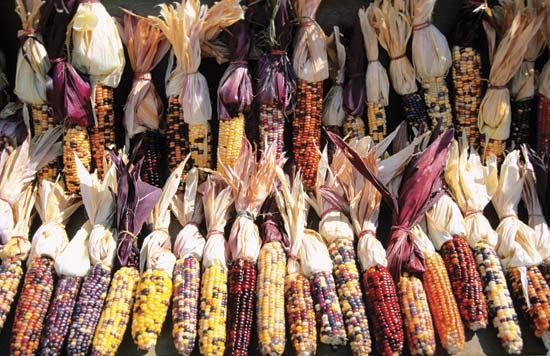
Commercial classifications of corn are primarily based on kernel texture and starch composition. The main types include:
What are the different types of corn, and how are they used?
Commercial classifications of corn are primarily based on kernel texture and starch composition. The main types include:1
- Dent corn: Characterized by a depression in the crown of the kernel, it is the most common variety used for animal feed and food manufacturing.12
- Flint corn: Contains little soft starch and is used for decoration or processed into hominy.1
- Flour corn: Composed largely of soft starch, it is easily ground and serves as a primary source of corn flour.1
- Sweet corn: Harvested while succulent, it retains sugar rather than converting it to starch, making it popular as a vegetable.1
- Popcorn: A specialized type of flint corn with a hard hull; when heated, internal moisture turns to steam, causing the kernel to explode.13
Beyond direct consumption, corn is processed into corn oil, cornstarch, and syrups, and is used industrially for products ranging from biodiesel to paper and charcoal.45
What are the nutritional benefits of corn, and how does it compare to other grains?
Corn is a significant global food source, valued for its high dietary fiber and antioxidant content. Unlike many other cereals, yellow corn contains carotenoids that provide vitamin A activity.62
However, when compared to other grains, corn is often considered nutritionally inferior. Its protein quality is relatively poor because it is low in the essential amino acids lysine and tryptophan. Furthermore, the niacin present in corn is in a bound form that humans cannot absorb unless the grain is pretreated with lime (a process known as nixtamalization) or consumed in its immature, “milky” stage. Diets relying almost exclusively on untreated corn can lead to pellagra, a niacin-deficiency disease.627
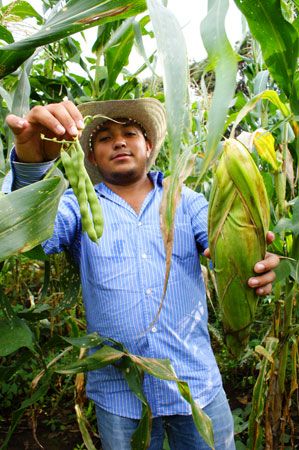
Unlike wheat, corn is gluten-free, meaning it cannot form the elastic dough required for rising breads. Historically, these nutritional limitations were mitigated in Indigenous cuisines by combining corn with squash and beans, creating a balanced diet.67
What are the major corn-producing countries, and how important is corn to global agriculture?
Corn is one of the world’s most dominant and productive crops, serving as a vital staple for human consumption, livestock feed, and industrial raw materials. While the provided search results do not list specific production statistics by country, they confirm that corn is the most important crop in the United States and is cultivated globally, ranging from Canada and Russia to South America.910
The global importance of corn is underscored by its versatility:
- Food and Industry: It is a primary food source and a key ingredient in various industrial products.9
- Biofuel: Corn is used to produce ethanol, though this has sparked a “food versus fuel” debate regarding land use and the diversion of crops from the food chain.11
- Agricultural Innovation: To meet the demands of a growing global population, much of the world’s corn—particularly in the U.S.—is now genetically modified to improve productivity, reduce pesticide use, and increase drought tolerance.12
What are some common diseases and pests that affect corn crops, and how are they managed?
Corn crops face pressure from various pests and diseases, requiring a multifaceted approach to management. Effective control typically relies on integrated pest management, which combines biological, cultural, and chemical strategies to minimize crop loss while protecting the environment.1314
Common Pests and Management
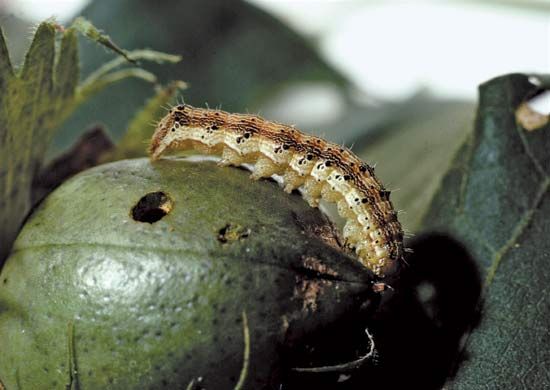
Major insect pests affecting corn include the corn earworm and the European corn borer.1514
- Genetic Engineering: Many corn varieties are genetically modified to express Bt toxin, a protein derived from the bacterium Bacillus thuringiensis. This toxin is fatal to specific herbivorous insects upon ingestion, significantly reducing the need for broad-spectrum chemical insecticides.1615
- Resistance Management: To prevent insects from developing resistance to Bt crops, farmers often plant “refuges”—plots of non-Bt corn—to maintain populations of susceptible insects.15
- Biological Control: Natural predators and parasites are also utilized to manage pest populations, often as part of a broader integrated control program.14
Common Diseases and Management
Corn smut, caused by the fungus Ustilago maydis, is a notable disease that creates galls on the plant. While it is not typically lethal, it can reduce yields.17
- Cultural Practices: Because there is no chemical control for corn smut, management focuses on sanitation, such as removing galls before they mature and clearing corn litter each fall to prevent spores from overwintering in the soil.17
- General Disease Control: For other pathogens, strategies include crop rotation to “starve out” soil-borne agents, the use of resistant plant varieties, and proper field sanitation to reduce inoculum sources.1318
Sources
- Corn - Types of corn — Encyclopædia Britannica
- Corn - Food and nutrition — Encyclopædia Britannica
- Corn - Industrial and other applications — Encyclopædia Britannica
- Popcorn — Encyclopædia Britannica
- dent corn — Merriam-Webster
- human nutrition - Cereals — Encyclopædia Britannica
- Cereal processing - Corn — Encyclopædia Britannica
- Corn: Top Questions — Encyclopædia Britannica
- Corn - Uses and products — Encyclopædia Britannica
- Genetically modified organisms (GMOs) - Pro 3: Growing GMO crops has environmental benefits, such as reduced pesticide use, less water waste, and lower carbon emissions. — Encyclopædia Britannica
- Corn - Biofuel — Encyclopædia Britannica
- Corn - Domestication and history — Encyclopædia Britannica
- cotton - Pests and diseases — Encyclopædia Britannica
- genetically modified organism - GMOs in agriculture — Encyclopædia Britannica
- Bacillus thuringiensis — Encyclopædia Britannica
- Plant disease - Principles of disease control — Encyclopædia Britannica
- Plant disease - Eradication — Encyclopædia Britannica
- Corn smut — Encyclopædia Britannica
- Agricultural technology - Biological controls — Encyclopædia Britannica
- cornstalk disease — Merriam-Webster
Published on · 4 min read