Anguilla
Anguilla was originally settled by Arawakan-speaking peoples around 2000 BCE. Following its colonization by British settlers in 1650, the island’s economy…
What is the history of Anguilla, including its colonial past and path to self-governance?
Anguilla was originally settled by Arawakan-speaking peoples around 2000 BCE. Following its colonization by British settlers in 1650, the island’s economy shifted from tobacco and cotton to sugarcane, relying on enslaved African labor.1
Throughout the 19th and 20th centuries, Anguilla was frequently subjected to administrative unions with Saint Kitts and Nevis against the wishes of its residents. Following the collapse of the West Indies Federation, Anguilla was incorporated into an associated state with Saint Kitts and Nevis in 1967. Anguillans resisted this arrangement, ejecting local police and declaring an independent republic.1
In 1969, British troops intervened to restore order. The Anguilla Act of 1971 placed the island under direct British control, eventually leading to its status as a British overseas territory. Today, Anguilla operates as a stable parliamentary democracy with a ministerial system, while the United Kingdom remains responsible for its defense and external affairs.12
How does Anguilla’s climate and natural environment contribute to its appeal as a Caribbean destination?
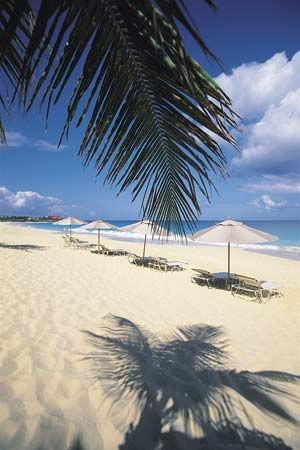
Anguilla’s appeal as a premier Caribbean destination is deeply rooted in its unique natural landscape and tropical climate. Formed from coral and limestone, the island is characterized by its flat, undulating terrain and is famously fringed by magnificent white sand beaches. These coastal features, combined with an easygoing atmosphere, serve as the primary draw for visitors.34
The island’s climate is consistently tropical, with average temperatures hovering in the low 80s °F (about 28 °C). This warmth is tempered by trade winds, which help mitigate the heat and contribute to the island’s pleasant environment. While the island receives relatively low annual rainfall—averaging about 35 inches (900 mm)—this dry, sunny weather supports a landscape of low scrub and sea grape along the coasts, creating a distinct aesthetic that distinguishes it from more lush, volcanic Caribbean islands.35
Beyond its physical beauty, the environment provides the backdrop for vibrant cultural activities, such as the national sport of boat racing, which celebrates the island’s maritime heritage.6
What are the main economic activities and industries in Anguilla?
Anguilla’s economy is primarily driven by tourism and financial services, as agriculture plays only a minor role in the island’s modern economic landscape.4
Key Economic Sectors
- Tourism: This is a central pillar of the economy. The growth of the tourism industry has significantly bolstered the construction sector and led to improvements in local transportation infrastructure.4
- Financial Services: Since the 1980s, offshore banking has become an increasingly important industry. To address concerns regarding financial integrity, the government implemented legislation in 2000 to combat money laundering.4
- Fishing and Traditional Industries: Fishing remains a traditional livelihood, with the export of fish and lobster serving as a vital source of foreign exchange. Other long-standing activities include shipbuilding and livestock raising.4
Economic Framework
Anguilla maintains a unique fiscal environment with no sales or income tax. Instead, government revenue is generated through import duties, corporate registrations, and various licensing fees. The island utilizes the Eastern Caribbean dollar as its official currency, though the U.S. dollar is widely accepted. To foster continued economic growth, Anguilla became an associate member of the Caribbean Community and Common Market in 1999.4
What are some of the most popular tourist attractions and activities in Anguilla?
Anguilla is widely celebrated for its magnificent beaches and tranquil, easygoing atmosphere, which serve as the primary draw for visitors. Beyond relaxing by the sea, the island offers a variety of cultural and recreational activities:
- Boat Racing: As the national sport, boat racing is a central cultural experience. These events, which evolved from traditional fishing practices, are held on public holidays and feature calypso music, local barbecue, and festive social gatherings.3
- Summer Festival (Carnival): Held in late July and early August, this major event showcases the island’s culture through beauty pageants, musical performances, a Calypso Monarch competition, and the vibrant Parade of Troupes.5
- Public Holidays and Festivals: Celebrations such as Anguilla Day, August Monday, and August Thursday provide opportunities to engage with local history and traditions, often accompanied by public festivities.5
- Sports: Visitors can observe or participate in popular local pastimes, including cricket, football (soccer), volleyball, and lawn tennis.3
Sources
- Anguilla - History of Anguilla — Encyclopædia Britannica
- Anguilla - Government and society — Encyclopædia Britannica
- Anguilla - Land — Encyclopædia Britannica
- Anguilla - Economy — Encyclopædia Britannica
- Anguilla - Sports and recreation — Encyclopædia Britannica
- Anguilla — Encyclopædia Britannica
- Leeward Islands — Encyclopædia Britannica
- Anguilla - Cultural institutions — Encyclopædia Britannica
Published on · 3 min read