Anopheles
Anopheles is a genus of mosquitoes comprising more than 450 species found nearly worldwide, excluding Antarctica. They are medically significant as the only…
What is Anopheles?
Anopheles is a genus of mosquitoes comprising more than 450 species found nearly worldwide, excluding Antarctica. They are medically significant as the only known carriers of malaria, and they can also transmit encephalitis, filariasis, and dog heartworm.1
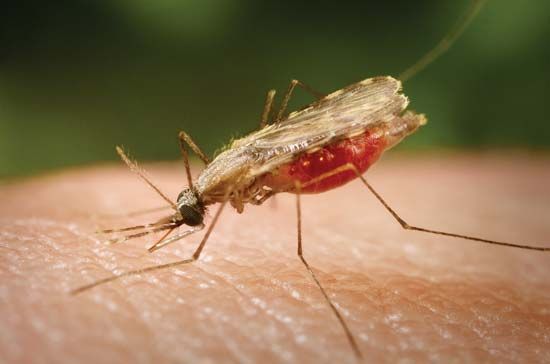
Physically, Anopheles mosquitoes are typically smaller than other genera, featuring spotted wings and a distinct resting posture where the body is held at an angle to the surface. Only the females bite, as they require blood proteins to mature their eggs. While they are notorious for disease transmission, it is important to note that the majority of Anopheles species do not bite humans, instead feeding on other mammals, birds, or reptiles.1
Public health efforts prioritize controlling the 30–40 species responsible for malaria transmission, a critical endeavor given the disease’s high global mortality rate.1
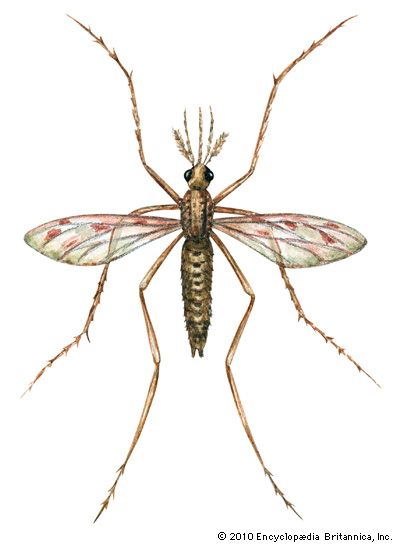
How do scientists distinguish Anopheles mosquitoes from other types of mosquitoes?
Scientists distinguish Anopheles mosquitoes from other genera, such as Aedes or Culex, by observing specific physical characteristics and behaviors across their life stages:
Adult Identification
- Resting Position: This is a primary diagnostic feature. When resting, an Anopheles mosquito holds its proboscis, head, and body in a straight line, angled away from the surface. In contrast, other genera like Aedes and Culex typically hold their bodies parallel to the resting surface.314
- Appearance: Anopheles mosquitoes often have spotted wings caused by colored scales. Additionally, they possess long, tactile sensory feelers called palps on either side of the proboscis, which serve as a distinguishing anatomical feature.31
Larval Identification
- Surface Orientation: Anopheles larvae lie parallel to the water surface. Other mosquito larvae typically hang at an angle from the surface.314
- Breathing Mechanism: Anopheles larvae lack the long breathing tube (siphon) found in most other mosquito larvae. Instead, they breathe through posterior spiracular plates located directly on the abdomen.31
What are the different stages in the life cycle of a mosquito?
The life cycle of a mosquito consists of four distinct stages: egg, larva, pupa, and adult.781
- Egg: Females typically deposit eggs on the surface of water or on moist surfaces near the waterline that are subject to flooding. Depending on the species, eggs may be laid singly or in batches.891
- Larva: Often called “wrigglers,” the larvae are aquatic and swim with a characteristic jerking movement. They typically feed on algae and organic debris. Larvae undergo four developmental stages known as instars before transitioning to the next phase.81
- Pupa: Unlike many other insects, mosquito pupae—referred to as “tumblers”—are active and free-swimming. They do not feed during this stage and breathe through tubes located on the thorax.81
- Adult: After emerging from the pupal case at the water’s surface, the adult mosquito mates. While both sexes may feed on nectar for energy, females of most species require a blood meal to obtain the proteins necessary to mature their eggs.891
How does the malaria parasite affect the human body after it enters the bloodstream?
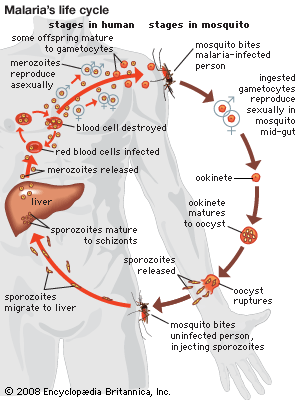
When an infected female Anopheles mosquito bites a human, it injects immature parasites called sporozoites into the bloodstream. These sporozoites travel to the liver, where they mature into schizonts and multiply into thousands of merozoites.1011
Once released from the liver, these merozoites invade red blood cells, where they grow and divide. The subsequent rupture of these blood cells releases new generations of merozoites to infect further cells, a process that destroys the red blood cells and liberates toxins into the bloodstream. This synchronized rupture is responsible for the periodic cycles of chills, fever, and sweating characteristic of malaria.1011
The infection often leads to anemia, spleen enlargement, and general weakness. In cases of Plasmodium falciparum, infected cells may adhere to capillary walls, obstructing blood flow and potentially causing severe complications like cerebral malaria, which can lead to coma and death.10
We could dive deeper into the specific treatments used to combat these parasites or explore how certain genetic traits provide resistance to the disease.
Sources
- Anopheles — Encyclopædia Britannica
- anopheles — Merriam-Webster
- mosquito - Anopheles mosquitoes — Encyclopædia Britannica
- Culex: Top Questions — Encyclopædia Britannica
- Culex — Encyclopædia Britannica
- Odonata - Basic structure — Encyclopædia Britannica
- Diptera - General features — Encyclopædia Britannica
- mosquito - Physical features and behavior — Encyclopædia Britannica
- Aedes — Encyclopædia Britannica
- malaria - The course of the disease — Encyclopædia Britannica
- malaria - Natural immunity — Encyclopædia Britannica
- Plasmodium — Encyclopædia Britannica
Published on · 3 min read