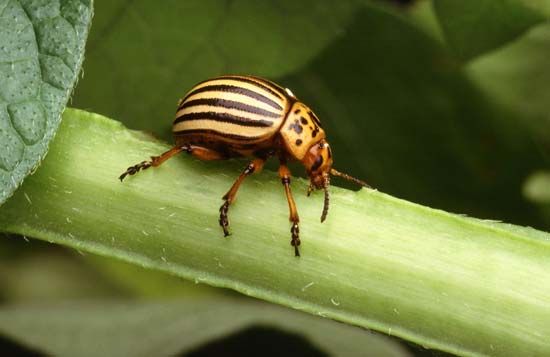
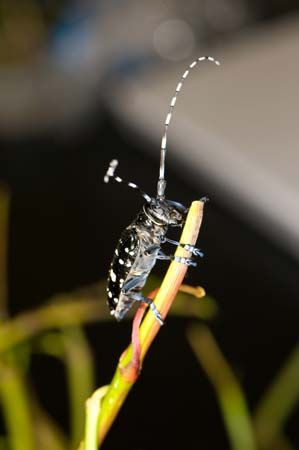
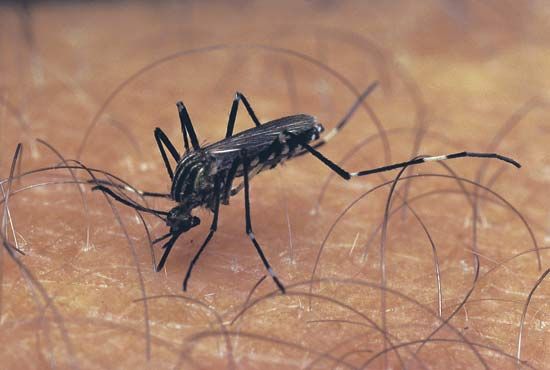
10 Insects That Look Like Jewels
While many insects possess vibrant, iridescent exoskeletons that rival precious gemstones, the specific list of 10 insects is not provided in the available…
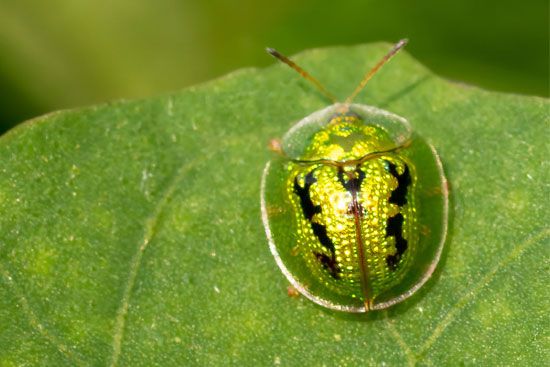
What are 10 Insects That Look Like Jewels?
While many insects possess vibrant, iridescent exoskeletons that rival precious gemstones, the specific list of 10 insects is not provided in the available search results. However, we know that these metallic hues and intricate patterns often serve vital biological functions, such as deterring predators, providing camouflage, or attracting mates.1
One prominent group known for this aesthetic is the jewel beetle, which belongs to the family Buprestidae and is recognized for its brilliant coloration. Beyond beetles, butterflies are frequently celebrated as “winged jewels” for their extraordinary beauty and shimmering scales.21
If you are interested in other visually striking insects, you might enjoy exploring the diverse world of moths, which showcase incredible biodiversity through a wide array of colors and patterns.3
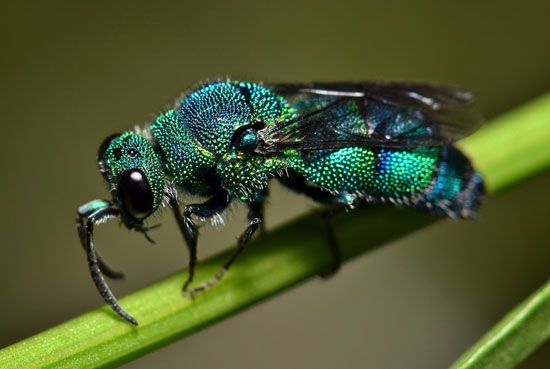
How does structural coloration create iridescent colors in insects?
Structural coloration in insects creates iridescent effects through a physical process known as interference. Unlike pigmentary colors, which are produced by molecules that absorb or transmit specific wavelengths of light, structural colors arise from the interaction of light with submicroscopic physical structures.45
The Mechanism of Interference
Iridescence occurs when incident light strikes and reflects off multiple, ultrathin layers within an insect’s cuticle or wing scales. As light waves reflect off these successive layers, they overlap and interfere with one another.467
- Constructive and Destructive Interference: Depending on the thickness of these layers and the spaces between them, certain wavelengths of light are amplified (constructive interference) while others are canceled out (destructive interference).47
- Angle of Vision: Because the path length of the light changes based on the angle at which it strikes these structures, the perceived color shifts as the viewer moves, which is the hallmark of iridescence.47
Physical Structures
These effects are produced by fine, regular features such as:
- Thin laminae: Microscopic grooves, pits, or layered films within the surface of the exoskeleton or wing scales.46
- Reflecting rods: Regular arrays of structures that facilitate the scattering and interference of light.7
Because these colors are physical rather than chemical, they are not caused by pigments and can be altered or destroyed if the insect’s surface is crushed, ground, or compressed.5
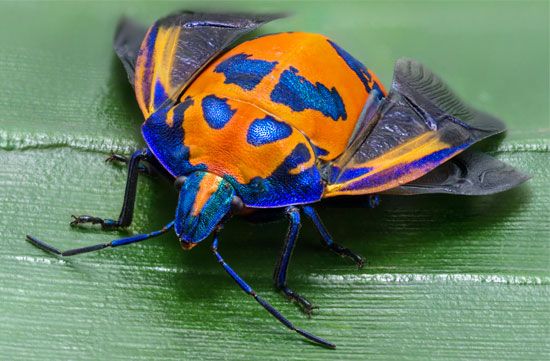
What are the primary functions of an insect’s exoskeleton?
The insect exoskeleton is a complex, multi-functional structure that serves as the primary interface between the insect and its environment. Its key functions include:
- Structural Support: The exoskeleton provides a rigid framework that supports the insect’s soft internal tissues and maintains body shape.1213
- Protection: It acts as a protective armor, shielding the insect from physical injury and environmental hazards.1413
- Locomotion: By providing a rigid base for the attachment of muscles, the exoskeleton facilitates efficient movement. It works in tandem with the muscle system, supporting opposing sets of muscles (extensors and flexors) to allow for complex actions.1413
- Prevention of Dehydration: A critical function for terrestrial insects is the prevention of water loss. The outer layer of the exoskeleton, known as the epicuticle, contains waxes that create a waterproof barrier, allowing insects to thrive in diverse terrestrial habitats.151216
- Sensory and Biological Interface: The cuticle is a living structure capable of producing sensory bristles, wings, and other specialized appendages. It also facilitates interactions with the environment, such as through water-repellent properties that allow some insects to walk on water or carry air films for respiration.1516
How do insects use their bright colors to survive in the wild?
Insects utilize bright colors as a vital survival strategy, primarily through advertisement and signaling rather than concealment. These conspicuous patterns serve several key functions in the wild:
- Warning (Aposematic) Coloration: Insects with chemical defenses, such as toxins or repellent secretions, often display bright, conspicuous colors. Predators, such as birds, quickly learn to associate these “labels” with dangerous or nauseous prey, thereby avoiding them in the future.19
- Mimicry: Insects that lack natural chemical defenses can gain protection by evolving color patterns that mimic distasteful or dangerous species. By resembling a protected insect, the mimic deceives potential predators into avoiding it.1920
- Reproductive Signaling: Bright colors are frequently used in sexual selection to attract mates. These displays signal an individual’s health, genetic robustness, or the quality of its territory. In some species, such as certain dragonflies, these colors are sexually dimorphic, helping individuals identify potential mates.21
- Intimidation and Dominance: Bright colors can also function as social signals between members of the same species. Males may use vivid displays to intimidate rivals or signal dominance during contests for territory or mates.21
Sources
- 10 Insects That Look Like Jewels — Encyclopædia Britannica
- jewel beetle — Merriam-Webster
- Who’s Who at the Moth Ball — Encyclopædia Britannica
- coloration - Interference — Encyclopædia Britannica
- coloration - Phenoxazones and sclerotins — Encyclopædia Britannica
- light - Thin-film interference — Encyclopædia Britannica
- Lepidoptera - Protection against danger — Encyclopædia Britannica
- coloration - Structural and biochemical bases for colour — Encyclopædia Britannica
- coloration - Porphyrins — Encyclopædia Britannica
- insect - Cuticle — Encyclopædia Britannica
- coloration - Physiological functions — Encyclopædia Britannica
- Integument - Arthropods — Encyclopædia Britannica
- arthropod - The exoskeleton and molting — Encyclopædia Britannica
- exoskeleton — Encyclopædia Britannica
- Orthoptera - Body composition — Encyclopædia Britannica
- arthropod - Excretory system and water balance — Encyclopædia Britannica
- skeleton - Comparative study of skeletal systems — Encyclopædia Britannica
- arachnid - Support, skeleton, and exoskeleton — Encyclopædia Britannica
- insect - Protection from enemies — Encyclopædia Britannica
- mimicry - Batesian mimicry — Encyclopædia Britannica
- Why are male animals more colorful? — Encyclopædia Britannica
- coloration - The selective agent — Encyclopædia Britannica
- coloration - Reproductive signals — Encyclopædia Britannica
- Orthoptera - Camouflage — Encyclopædia Britannica
Published on · 4 min read