Anthomyiid Fly
Anthomyiid flies (family Anthomyiidae) are a group of insects that significantly impact agriculture, primarily because their larvae feed on various crops.…
How do anthomyiid flies impact agriculture and human activities?
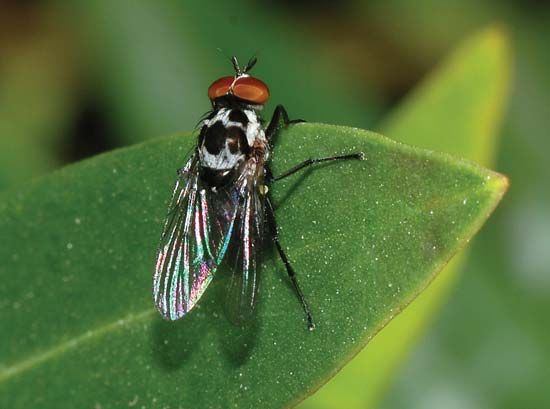
Anthomyiid flies (family Anthomyiidae) are a group of insects that significantly impact agriculture, primarily because their larvae feed on various crops. While some species are scavengers or aquatic, many are considered serious agricultural pests.12
Key agricultural impacts include:
- Cabbage Maggot (Delia radicum): Feeds on the underground parts of cabbage, cauliflower, broccoli, radishes, and turnips.1
- Onion Maggot (D. antiqua): Damages onions by feeding on the underground bulb and stem.1
- Seedcorn Maggot (D. platura): Consumes seeds and seedlings of corn, peas, and beans, often causing plants to fail or grow weakly.1
- Spinach Leaf Miner (Pegomya hyoscyami): Creates damaging internal passages, or mines, within spinach leaves.1
Management strategies often involve the use of insecticides or cultural practices, such as adjusting planting dates to avoid peak egg-laying periods. Although they are closely related to houseflies, they are typically distinguished by their bristly abdomens.12
What role do anthomyiid flies play in pollination, if any?
While many flies serve as important pollinators, the provided search results do not contain information regarding a specific role for anthomyiid flies in pollination.
The family Anthomyiidae is primarily recognized for its economic impact as agricultural pests, as the larvae of many species feed on crops such as onions, cabbage, and corn. While other fly families—such as Syrphidae and Bombyliidae—are noted for their specialized roles as pollinators, anthomyiid flies are characterized by their plant-eating or scavenging habits rather than pollination activities.456
What methods are used to control anthomyiid fly populations in agricultural settings?
Controlling anthomyiid fly populations in agricultural settings involves a variety of chemical and cultural strategies tailored to the specific pest species.
Chemical Control
The most common method for managing these pests is the application of insecticides. For instance, soil treatment is the primary defense against the cabbage maggot, while onion maggots are typically managed through insecticide applications applied before planting. While synthetic insecticides like organophosphates are effective, their use is increasingly balanced with environmental considerations to avoid harming beneficial insects or creating ecological imbalances.189
Cultural and Integrated Management
Cultural practices are highly effective for reducing damage without relying solely on chemicals:
- Planting Adjustments: Delaying planting dates can help avoid peak egg-laying periods for species like the seedcorn maggot.1
- Integrated Pest Management (IPM): This approach coordinates multiple methods, such as combining resistant crop varieties with targeted insecticide use or utilizing light traps and postharvest residue management.10
- Biological Controls: Researchers continue to explore the use of natural predators, parasites, and pathogens to manage insect populations, as well as the release of sterile males to disrupt reproduction.109
Where are anthomyiid flies typically found, and what habitats do they prefer?
Anthomyiid flies (family Anthomyiidae) are a large, widespread group of insects found in diverse environments. Because they are closely related to houseflies, they are often encountered in areas where their preferred food sources or breeding grounds are available.111
Their habitat preferences are largely determined by the feeding habits of their larvae:
- Agricultural and Garden Settings: Many species are significant agricultural pests. Their larvae are commonly found in soil, where they feed on the underground parts of plants, including roots, bulbs, and stems of crops like cabbage, cauliflower, broccoli, radishes, turnips, onions, and corn.111
- Decaying Organic Matter: Some anthomyiid species function as scavengers. These are typically found in habitats rich in decaying vegetable matter, excrement, or other organic debris.1
- Aquatic Environments: While many are terrestrial, some species are aquatic, living in water-based habitats.1
Because these flies are distributed globally and occupy such varied niches—ranging from cultivated fields to areas of decomposition—they are highly adaptable to different environmental conditions.112
Sources
- anthomyiid fly — Encyclopædia Britannica
- List of insects - flies (order Diptera ) — Encyclopædia Britannica
- Anthomyiidae — Merriam-Webster
- major types of pollinators - Beetles and flies — Encyclopædia Britannica
- pollination - Beetles and flies — Encyclopædia Britannica
- orchid - Fly pollination — Encyclopædia Britannica
- orchid - Moth and butterfly pollination — Encyclopædia Britannica
- insecticide - Organophosphates — Encyclopædia Britannica
- Agricultural technology - Biological controls — Encyclopædia Britannica
- insect - Control of insect damage — Encyclopædia Britannica
- Diptera - Annotated classification — Encyclopædia Britannica
- Diptera - General features — Encyclopædia Britannica
- Diptera - Pupa — Encyclopædia Britannica
Published on · 3 min read