Anti-Lebanon Mountains
The Anti-Lebanon Mountains (Al-Jabal al-Sharqī) are a mountain range running northeast-southwest along the border between Syria and Lebanonplace/Syria) and…
What is Anti-Lebanon Mountains?
The Anti-Lebanon Mountains (Al-Jabal al-Sharqī) are a mountain range running northeast-southwest along the border between Syria and Lebanonplace/Syria) and Lebanon. They run parallel to the Lebanon Mountains, from which they are separated by the al-Biqāʿ Valley.123
The range averages 6,500 feet (2,000 meters) above sea level, with several peaks exceeding 8,000 feet (2,400 meters). Its southernmost extension is often considered to be Mount Hermon, which reaches a height of 9,232 feet (2,814 meters). Due to the region’s aridity, steep slopes, and thin soils, the area is sparsely populated and primarily utilized for nomadic herding.23
What is the significance of the Bekaa Valley?
The Bekaa valley is a significant geographic and economic region in east-central Lebanon, situated between the Lebanon Mountains and the Anti-Lebanon Mountains. Its importance is defined by several key factors:
Agricultural and Economic Role
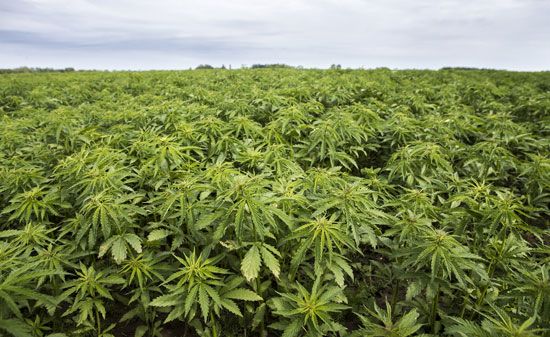
The valley contains nearly half of Lebanon’s arable land, serving as a vital center for the cultivation of sugar beets, cereals, and vegetables. While it faces challenges such as lower rainfall compared to coastal regions, it remains a primary agricultural hub. Additionally, the valley has a long history of cannabis cultivation; in 2020, Lebanon legalized this production to help bolster its national economy.456
Cultural and Historical Significance
The region is home to Baalbek, a UNESCO World Heritage site renowned for its outstanding Roman ruins. Other towns, such as Zahle, are culturally significant for their vineyards and the production of arak, a traditional alcoholic beverage.47
Geopolitical Context
The valley has frequently been a focal point of conflict, including skirmishes during the Lebanese Civil War and, more recently, the Israel-Hezbollah war that began in 2023. Furthermore, it has served as a critical refuge for those displaced by the Syrian Civil War.4
How does Mount Hermon differ from the rest of the range?
Mount Hermon differs from the rest of the Anti-Lebanon Mountains primarily in its elevation, hydrological significance, and historical utility.
- Elevation: While the Anti-Lebanon range averages 6,500 feet (2,000 meters) with some peaks exceeding 8,000 feet (2,400 meters), Mount Hermon stands as the highest point in the range at 9,232 feet (2,814 meters), as well as the highest point on the eastern coast of the Mediterranean Sea.9110
- Hydrology: Unlike the arid, sparsely populated remainder of the range, Mount Hermon serves as the source for the two major headwaters of the Jordan River.9
- Land Use and History: While the rest of the range is largely limited to nomadic herding due to thin soils and aridity, Mount Hermon has been a significant sacred landmark since the Bronze Age. Furthermore, portions of its slopes have been developed for modern recreational use, including skiing, within the Golan Heights.91
What are the main differences between the Lebanon and Anti-Lebanon mountain ranges?
The Lebanon Mountains and the Anti-Lebanon Mountains are two parallel ranges separated by the Bekaa valley. While they define the topography of the region, they differ significantly in their physical characteristics and economic utility:
The Lebanon Mountains
- Geography: This range rises steeply from the Mediterranean coast and extends approximately 100 miles. It is characterized by limestone and sandstone formations cut by deep, narrow gorges.1
- Elevation: It reaches higher altitudes than the Anti-Lebanon range, with its highest peak, Qurnat al-Sawda, standing at 10,131 feet (3,088 meters).1
- Climate and Vegetation: The range receives significant precipitation, often falling as heavy snow that persists until early summer. It is famously home to the cedars of Lebanon.13
The Anti-Lebanon Mountains
- Geography: Running along the Syrian-Lebanese border, this range is generally more arid. Due to thin soils, steep slopes, and limestone sinks, it is sparsely populated.11
- Elevation: The range averages 6,500 feet (2,000 meters), with several peaks exceeding 8,000 feet. It is interrupted in the south by Mount Hermon, which reaches 9,232 feet (2,814 meters).111
- Economic Use: Unlike the more fertile Lebanon range, the Anti-Lebanon mountains are primarily utilized for nomadic herding.11
Sources
- Anti-Lebanon Mountains — Encyclopædia Britannica
- Syria: Top Questions — Encyclopædia Britannica
- Lebanon - Relief — Encyclopædia Britannica
- Bekaa valley — Encyclopædia Britannica
- Lebanon - Agriculture, forestry, and fishing — Encyclopædia Britannica
- Litani River: Top Questions — Encyclopædia Britannica
- Lebanon - Climate of Lebanon — Encyclopædia Britannica
- Lebanon - Cultural milieu — Encyclopædia Britannica
- Mount Hermon — Encyclopædia Britannica
- Hermon, Mount — Merriam-Webster
- Levant — Encyclopædia Britannica
Published on · 3 min read