Antlion
The life cycle of an antlion follows a complete metamorphosis, consisting of the egg, larval, pupal, and adult stages.
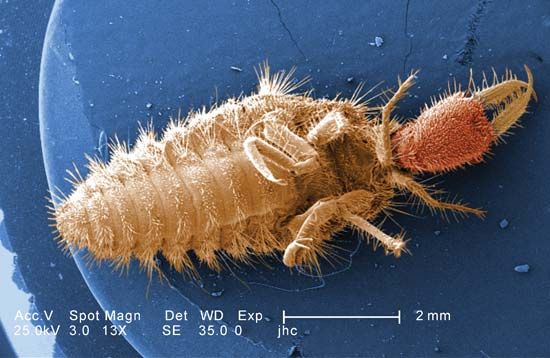
What is the life cycle of an antlion, from egg to adult?
The life cycle of an antlion follows a complete metamorphosis, consisting of the egg, larval, pupal, and adult stages.12
- Egg: Females lay eggs in light soil or sand, sometimes cementing them to surfaces or stalks.2
- Larva: After hatching, the carnivorous larva typically digs a funnel-shaped pit in dry, sandy soil. It buries itself with only its sickle-like jaws exposed, waiting to seize prey that falls into the trap. The larva consumes the contents of its victim and discards the empty skin. This stage involves significant growth and may last for months.123
- Pupa: Once fully grown, the larva spins a protective, double-layered cocoon made of sand and silk. Inside, it undergoes a transformation, eventually emerging as an adult.12
- Adult: The adult antlion is a weak flier with four delicate, net-veined wings. Because the adult does not feed, the larval stage must provide enough stored energy to sustain the insect throughout its adult life.1
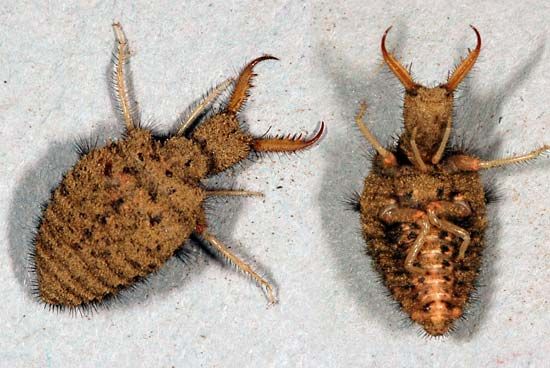
What is the etymology of the name ‘antlion’ and its significance?
The name “antlion” is derived from the predatory behavior of the insect’s larva, which is famously known for trapping ants and other small insects in funnel-shaped pits dug into the ground. The term reflects the “lion-like” ferocity with which the larva seizes its prey using its powerful, sickle-like jaws.31
The significance of the name lies in this specific hunting strategy, which characterizes the family Myrmeleontidae. By digging these pits in dry, sandy soil, the larva creates a trap where unsuspecting prey slips to the bottom, allowing the antlion to consume the victim’s contents. While the term “antlion” highlights this aggressive larval stage, it is worth noting that the adult form is a delicate, weak-flying insect that does not feed at all, relying entirely on the energy reserves gathered during its time as a larva. In some regions, such as the United States, the larva is also colloquially referred to as a “doodlebug”.13
How do antlion larvae create their distinctive pit traps?
Antlion larvae create their distinctive, funnel-shaped pit traps through a precise, mechanical process in dry, sandy soil. The larva uses its oval-shaped abdomen as a plow to loosen the sand. It then heaps these particles onto its large, square head and flicks them clear of the pit’s perimeter.3
These pits typically measure between 2.5 to 5 cm (1 to 2 inches) in depth and 2.5 to 7.5 cm (1 to 3 inches) in width at the edge. Once the construction is complete, the larva buries itself at the bottom of the funnel, leaving only its powerful, sickle-like jaws exposed. When a small insect wanders over the edge, the loose sand causes it to slip to the bottom, where it is immediately seized by the waiting predator.31
While this pit-building behavior is iconic, it is important to note that not all species utilize this method; some larvae, such as the spotted-winged antlion (Dendroleon obsoletus), instead ambush prey from a hidden position without constructing a pit.3
How do antlions hunt and capture their prey?
Antlions are renowned for the predatory behavior of their larva, which employs specialized techniques to capture prey. The most iconic method involves the construction of a funnel-shaped pit in dry, sandy soil. The larva uses its abdomen as a plow to loosen sand, which it then flicks away using its head to create a steep-sided trap.31
Once the pit is complete, the larva buries itself at the bottom, leaving only its powerful, sickle-like jaws exposed. When a small insect, such as an ant, wanders over the edge, the loose sand causes it to slide to the bottom, where it is immediately seized. The antlion then extracts the victim’s body fluids and discards the empty skin outside the pit.31
Not all species rely on this trap; some, such as the spotted-winged antlion (Dendroleon obsoletus), ambush prey from hidden positions without digging pits. Regardless of the method, the larva must consume enough food to sustain the adult, as the mature insect does not feed at all.13
Sources
- antlion — Encyclopædia Britannica
- neuropteran - Life cycle of Neuroptera — Encyclopædia Britannica
- How Would You Describe a Ant Lion? — Merriam-Webster
- ant lion — Merriam-Webster
- anthelion — Merriam-Webster
Published on · 3 min read