Ant
Ants engage in a diverse array of interactions with other organisms, ranging from predatory behavior to complex cooperative relationships.
How do ants interact with other insects and animals in their environment?
Ants engage in a diverse array of interactions with other organisms, ranging from predatory behavior to complex cooperative relationships.
Predation and Scavenging
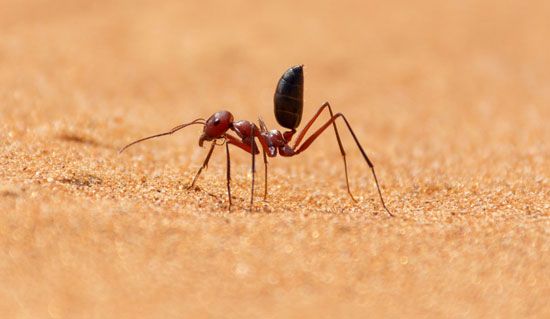
Many ant species are opportunistic omnivores or dedicated hunters. Species such as bullet ants and driver ants actively hunt insects, spiders, and small vertebrates like frogs. Others, like the Sahara desert ant, specialize in scavenging carcasses in extreme environments.12
Mutualism and Farming
Ants often form mutualistic bonds:
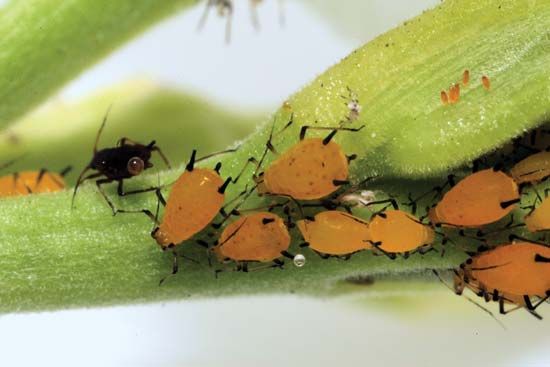
- Herding: Some ants protect aphids to harvest their sugary honeydew secretions.12
- Agriculture: Leafcutter ants cultivate specific fungi as their primary food source, protecting the crop from pathogens.13
- Plant Protection: Acacia ants live on bullhorn acacia trees, receiving food and shelter while defending the tree from herbivores.13
Parasitism and Slavery
Some species exhibit parasitic behaviors. Slave-making ants raid the nests of other species to steal pupae, which are raised to serve the colony. Other ants live as parasites within the nests of different species, relying on host workers for nourishment.3
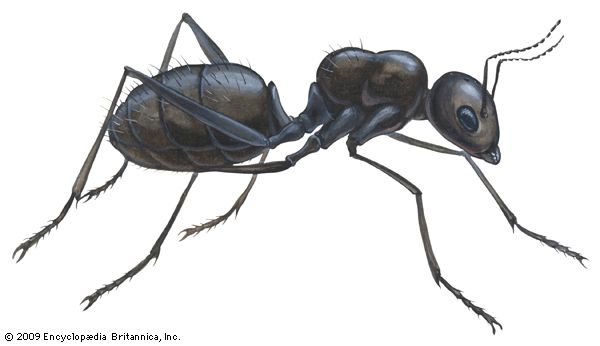
How are ant colonies organized and what roles do different ants play?
Ant colonies are highly organized, eusocial societies characterized by a strict division of labor among different castes. Each individual is an integral part of the colony, and survival depends on the collective functioning of these specialized groups.56
Colony Castes and Roles
Ant colonies typically consist of three primary castes, often distinguished by morphological and physiological differences:
- Queen: The fertile female responsible for reproduction. In most species, she establishes the nest and spends her life laying eggs. In some advanced species, she rarely leaves the nest and is cared for by workers.567
- Workers: Sterile females that perform essential tasks, including nest building, brood care, foraging, and defense. Workers may be further divided into subcastes, such as “minims” (which tend to the queen and larvae) and “majors” or “soldiers” (which are specialized for defense).567
- Males: Their role is limited to mating with virgin queens. They are produced in limited numbers and typically die shortly after the mating flight.67
Specialized Adaptations
Some species exhibit extreme polymorphism to enhance colony efficiency. For example, honey ants possess “repletes”—workers that act as living food storage vessels—while certain Pheidole ants produce “super majors” to access diverse food resources. Communication is maintained through chemical signals (pheromones), touch, and vibration, allowing the colony to coordinate complex activities like foraging and defense.5879
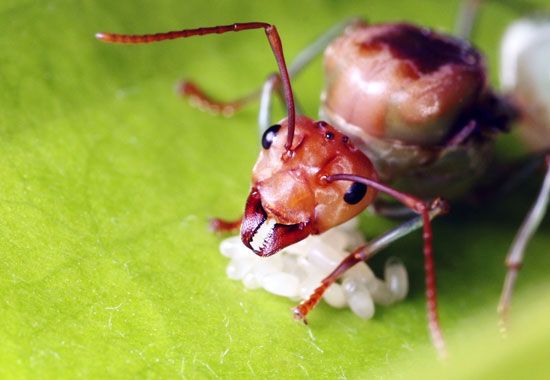
How do ants communicate with each other?
Ants are prolific users of chemical communication, relying on a sophisticated system of pheromones to coordinate the complex activities of their colony. Their small bodies contain up to a dozen separate glands, each producing specific chemical compounds or mixtures that serve distinct social functions.109
Key Methods of Communication
- Trail Marking: Worker ants deposit scent pheromones along paths to guide nestmates to food sources. These trails are reinforced by returning workers as long as the food remains available.1011
- Alarm Signaling: When danger is detected, ants release alarm pheromones. These chemicals are highly volatile, allowing them to disperse quickly to warn the colony and then decay rapidly to prevent constant agitation.10
- Kin and Colony Recognition: Ants use cuticular hydrocarbons on their body surfaces to distinguish between colony members and intruders.10
- Social Regulation: Chemical signals are also used to attract mates, solicit food, and regulate the development of different worker castes.109
Beyond chemicals, ants also utilize tactile signals and vibrations to interact with one another, ensuring the colony functions as a cohesive unit.9
What are some of the most interesting behaviors or abilities of ants?
Ants exhibit some of the most complex and diverse behaviors in the insect world, ranging from sophisticated agriculture to nomadic warfare.
Remarkable Ant Behaviors
- Farming and Agriculture: Certain species, such as leafcutter ants, are master farmers. They harvest leaves to cultivate specific fungi in underground chambers, meticulously weeding out competing fungi and using antimicrobial substances to protect their crop. This practice is a form of mutualism where the fungus relies entirely on the ants for survival.214
- Nomadic Hunting: Army ants do not build permanent nests. Instead, they form temporary living structures called bivouacs made of their own bodies to protect the queen and larvae. They are notorious for their massive, organized hunting raids that can overwhelm almost any animal in their path.15162
- Weaving Nests: Weaver ants construct arboreal nests by using their own larvae as living shuttles. Workers hold leaves together while others tap the larvae to induce them to spin silk, effectively “sewing” the leaves into a waterproof shelter.8
- Slave-Making: Some species, such as Protomognathus americanus, raid the nests of other ants to steal pupae. Once these stolen ants emerge as adults, they are imprinted on the scent of the slave-makers and perform labor for the colony that captured them.2
- Obligate Mutualism: Acacia ants live in a specialized relationship with bullhorn acacia trees. The ants receive food and shelter from the tree and, in return, aggressively defend it from browsing herbivores.217
Sources
- What do ants eat? — Encyclopædia Britannica
- ant - Notable ant behaviors — Encyclopædia Britannica
- ant - Food — Encyclopædia Britannica
- ant - Natural history — Encyclopædia Britannica
- Caste — Encyclopædia Britannica
- Hymenoptera - Division of labor — Encyclopædia Britannica
- Hymenoptera - Social forms — Encyclopædia Britannica
- Eciton army ant — Encyclopædia Britannica
- termite - Communication — Encyclopædia Britannica
- Chemoreception - Pheromones — Encyclopædia Britannica
- Animal communication - Signal production — Encyclopædia Britannica
- pheromone — Encyclopædia Britannica
- Animal social behavior - Aggregation and individual protection — Encyclopædia Britannica
- leafcutter ant — Encyclopædia Britannica
- weaver ant — Encyclopædia Britannica
- Eciton army ant: Top Questions — Encyclopædia Britannica
- ant - Physical description — Encyclopædia Britannica
Published on · 4 min read