Appalachian Orogenic Belt
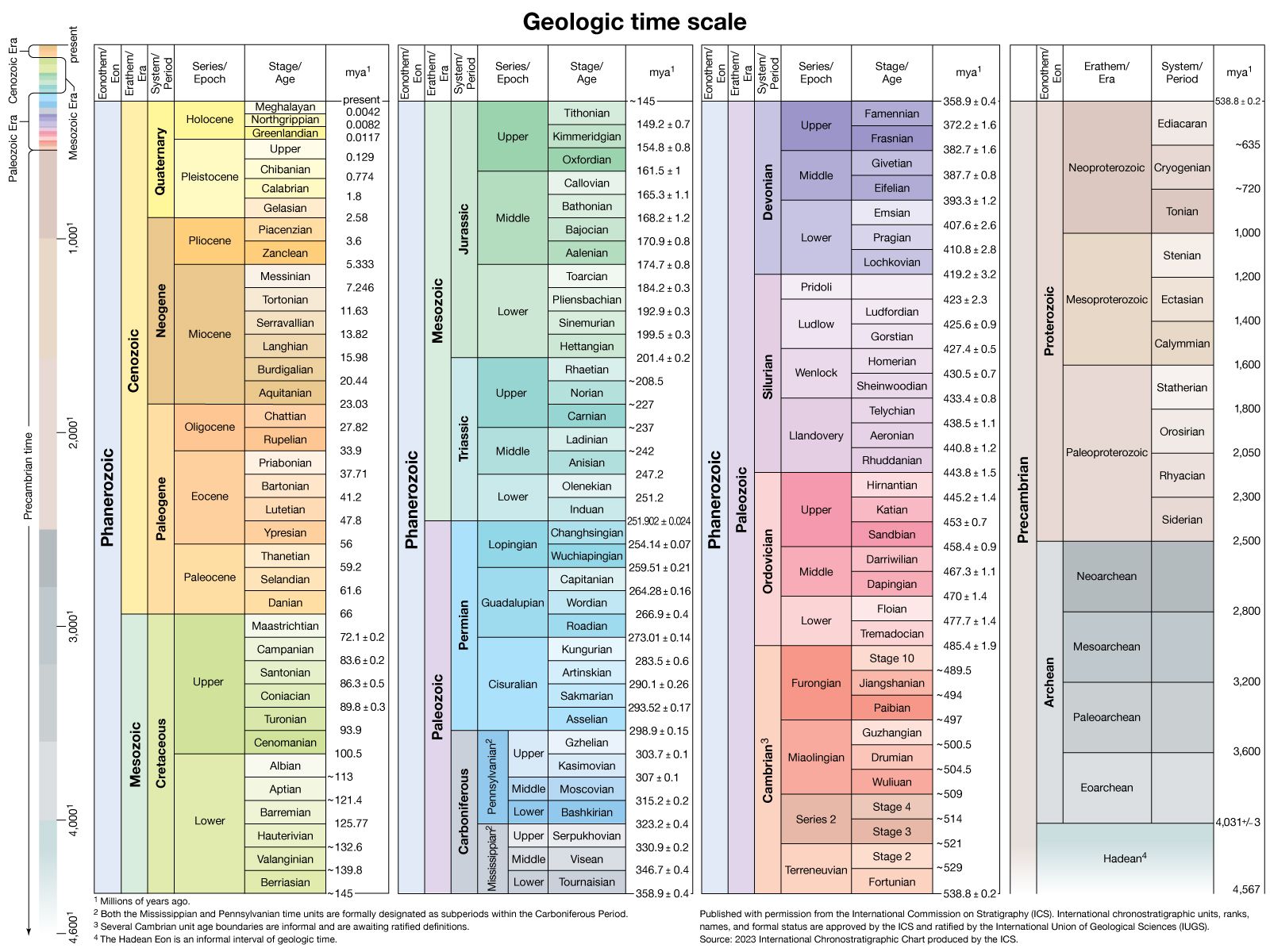
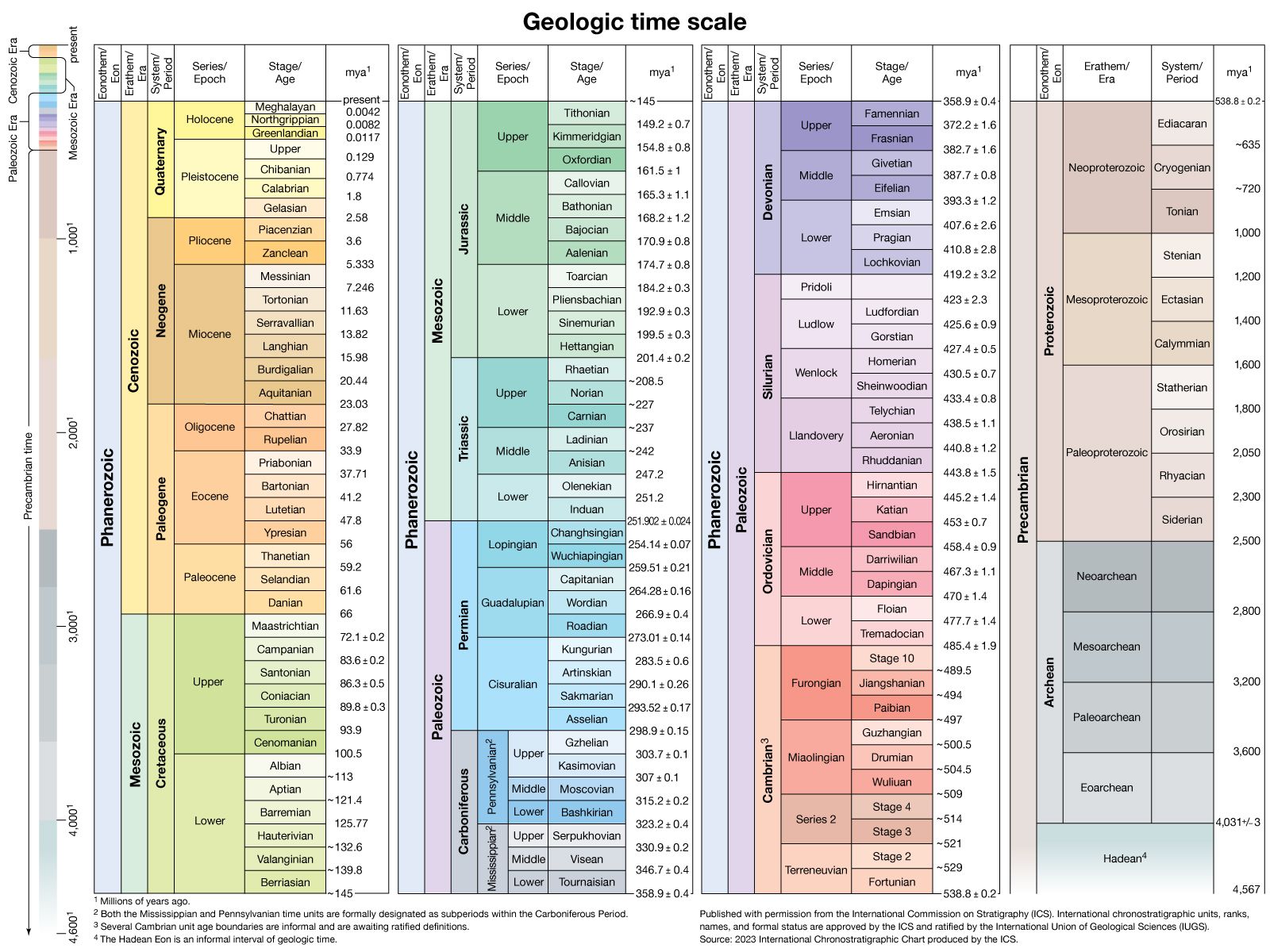
The Appalachian orogenic belt is a complex mountain system formed by three major orogenies—the Taconic, Acadian, and Alleghenian—resulting from the collision…
What are the major geological features and rock types found in the Appalachian orogenic belt?
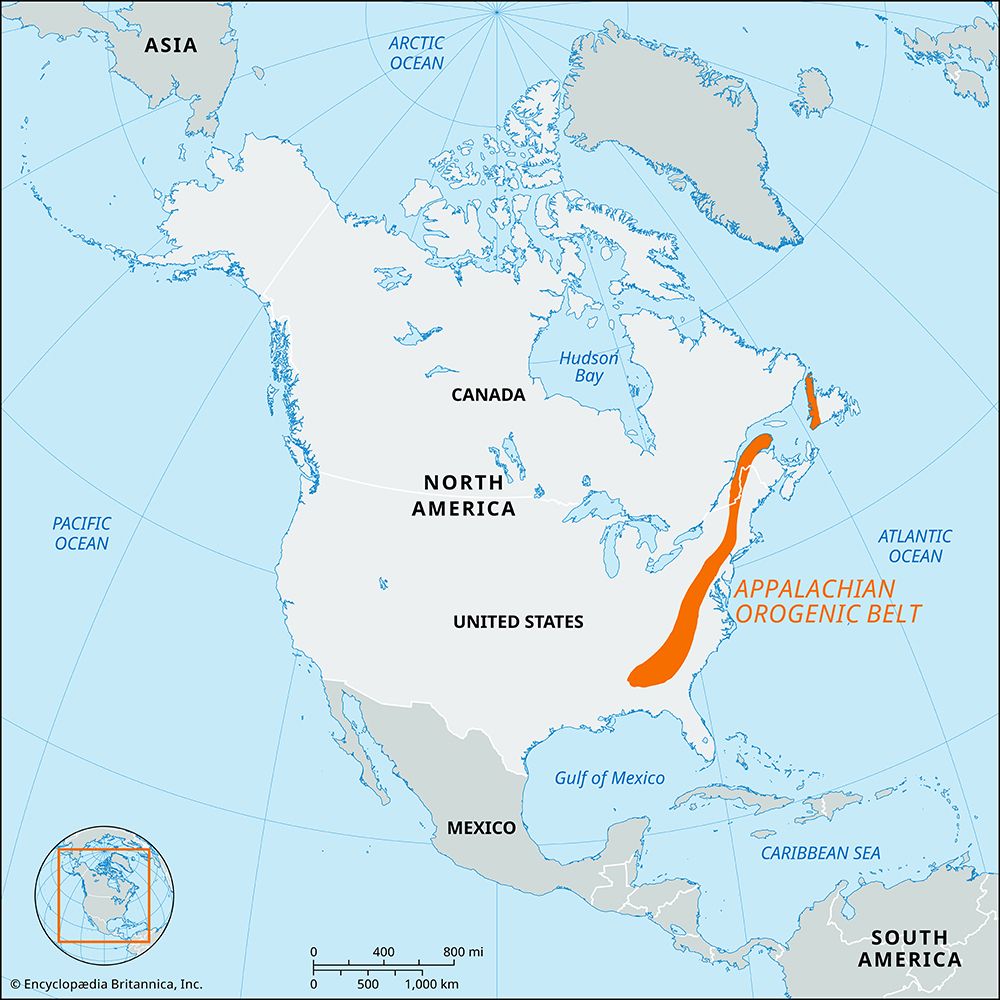
The Appalachian orogenic belt is a complex mountain system formed by three major orogenies—the Taconic, Acadian, and Alleghenian—resulting from the collision of continental blocks and island arcs.12
Rock Types
The geology is characterized by two primary rock categories:
- Crystalline Rocks: Found in the core of the mountains (e.g., Blue Ridge, Piedmont), these ancient Precambrian rocks include gneiss, granite, schist, slate, marble, and quartzite.34
- Sedimentary Rocks: Located to the west in the Ridge and Valley and Appalachian Plateau, these Paleozoic deposits include shale, sandstone, limestone, and coal.34
Major Geological Features
The topography is defined by parallel strips of distinct geologic zones. The central crystalline belt is flanked by folded sedimentary layers, which erosion has sculpted into linear ridges and broad valleys, such as the Great Valley. Additionally, the region features thrust faults where ancient crystalline rocks were pushed over younger sedimentary deposits.413
How has the Appalachian orogenic belt affected human settlement and economic development in the region?
The Appalachian orogenic belt has profoundly shaped human history in North America, acting as both a formidable barrier to expansion and a source of immense economic wealth.
Settlement and Expansion
For centuries, the mountains served as a “long blue wall” that discouraged colonial westward movement. The rugged terrain, dense forests, and complex river systems forced early settlers to utilize specific passages, such as the Great Appalachian Valley, which became a primary migration route for Scotch-Irish and German pioneers. While the central Appalachians offered easier passage through water gaps, the southern and northern regions remained isolated wildernesses for much longer. This isolation fostered a distinct regional culture characterized by unique folklore, handicrafts, and traditions.356
Economic Development
The region’s geology provided the foundation for major American industries:
- Extractive Industries: The Appalachian Plateau contains some of the world’s richest coal beds, which fueled industrial growth but also led to significant environmental and social challenges.764
- Resources: Beyond coal, the mountains have been a source of iron ore, natural gas, granite, and marble.654
- Tourism: Today, the landscape’s natural beauty supports a robust tourism and recreation economy, highlighted by the Appalachian Trail and the Blue Ridge Parkway.8
How has erosion shaped the current appearance of the Appalachian Mountains?
The Appalachian Mountains are among the oldest on Earth, and their current appearance is largely the result of the “ceaseless action of water” and ice carving away weaker materials over millions of years. Because the mountains are essentially the “eroded stumps” of much greater, ancient ranges, their present topography serves as a faithful reflection of their underlying geologic structure.31
Erosion has shaped the landscape in several distinct ways:
- Differential Erosion: This process has carved away softer, weaker rocks while leaving behind a “skeleton” of more resistant rock formations. This is most evident in the Ridge and Valley region, where erosion has sculpted the upturned edges of folded sedimentary layers into long, linear ridges separated by broad, open valleys.1
- River Systems: Many major rivers in the region are older than the mountains themselves. As the mountains were uplifted, these rivers maintained their courses, cutting through rising rock masses to create dramatic water gaps, canyons, and gorges.3
- Glacial Forces: In the northern Appalachians, Pleistocene glaciers scoured the crystalline rocks, stripping away topsoil and polishing peaks, which resulted in the rugged, rocky landscape characteristic of New England3.1
How does the Appalachian orogenic belt compare to other mountain ranges in North America?
The Appalachian orogenic belt is distinct among North American mountain ranges primarily due to its extreme age and its role in the formation of the Pangaea supercontinent. Compared to other ranges, its characteristics include:14
- Geologic Maturity: Unlike younger, more rugged ranges, the Appalachians are considered the “eroded stumps” of much greater ancient mountains. Their current appearance is the result of hundreds of millions of years of erosion, which has exposed the underlying geologic structure in neat, parallel strips.34
- Tectonic Origins: The belt formed through a series of three major orogenies—the Taconic, Acadian, and Alleghenian—resulting from the progressive collision of continental blocks and island arcs with the North American margin.110
- Global Connections: The Appalachian belt is not isolated; it is geologically continuous with the Caledonian and Hercynian orogenic belts found in western Europe, reflecting a shared history of continental assembly.1
- Structural Analogues: While the Appalachians dominate the East, the Ouachita Mountains in Arkansas and Oklahoma are considered a detached, buried continuation of the same Appalachian geologic structure.3
Sources
- Appalachian orogenic belt — Encyclopædia Britannica
- Taconic orogeny — Encyclopædia Britannica
- Appalachian Mountains - Geology of the Appalachian Mountains — Encyclopædia Britannica
- United States - The Appalachian Mountain system — Encyclopædia Britannica
- Appalachian Mountains - Settlement and expansion — Encyclopædia Britannica
- Appalachian Mountains - Economic growth — Encyclopædia Britannica
- Appalachian Mountains — Encyclopædia Britannica
- Appalachian Mountains - Recreation and tourism — Encyclopædia Britannica
- Appalachian Plateau — Encyclopædia Britannica
- North America - 600 to 250 million years ago — Encyclopædia Britannica
Published on · 3 min read