Apple Moss
Apple moss (Bartramia pomiformis) is a moss belonging to the family Bartramiaceae, named for its distinctive apple-shaped capsules, which serve as spore…
What is apple moss?
Apple moss (Bartramia pomiformis) is a moss belonging to the family Bartramiaceae, named for its distinctive apple-shaped capsules, which serve as spore cases.1
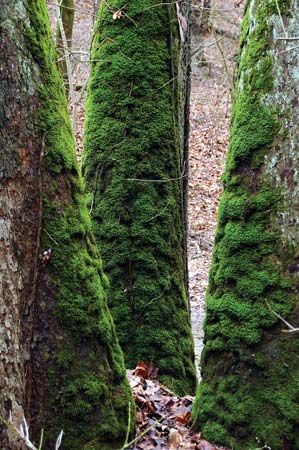
This plant typically grows in wide, deep cushions within moist, rocky woods across the Northern Hemisphere. It is one of approximately 70 species within the genus Bartramia, with more than 10 species found in North America.1
Physically, apple moss is generally erect, reaching about 6 cm (2.25 inches) in height. It features a two-forked stem, or caulid, characterized by rust-colored, feltlike hairs on its lower section. Additionally, the upper half of each of its leaflike structures, known as a phyllid, is serrated.1
What are the main characteristics of bryophytes?
Bryophytes are a group of nonvascular, seedless plants that include mosses, liverworts, and hornworts. They are characterized by several distinct biological and ecological features:34
- Lack of Vascular Tissue: Bryophytes do not possess specialized xylem or phloem for water and nutrient conduction, nor do they have true roots, stems, or leaves. Instead, they often use threadlike rhizoids for attachment and moisture uptake.43
- Alternation of Generations: They exhibit a life cycle where the gametophyte (the sexual, haploid generation) is the dominant, long-lived, and photosynthetic phase. The sporophyte (the asexual, diploid generation) is dependent on the gametophyte for nutrients and water.345
- Reproduction: Bryophytes produce multicellular sex organs called gametangia: the female archegonium and the male antheridium. Because their sperm are flagellated and motile, these plants require water for fertilization.54
- Habitat and Ecology: Generally small in size, they thrive in moist, shady environments, though some are adapted to aquatic or periodically dry conditions. They play vital roles in nutrient cycling and soil formation, and are fundamental to the development of wetland habitats like peatlands.346
How do mosses reproduce using spores?
In mosses, the production and dispersal of spores are essential stages of their life cycle, occurring within the sporophyte generation.8
Spore Formation
After the moss sporophyte matures, its distal end develops into a capsule, also known as a sporangium. Inside this structure, spores (meiospores) are produced through the process of meiosis.8
Dispersal Mechanisms
Mosses utilize various specialized mechanisms to release these spores into the environment:9
- Peristome Teeth: In many species, once the operculum (lid) falls off, a ring of teeth is exposed. These teeth are hygroscopic, meaning they respond to moisture changes by pulsating, which helps shake the spores out of the capsule.89
- Pressure Discharge: In the genus Sphagnum, the drying sporangium builds up internal pressure. This pressure eventually causes the operculum to pop off, forcefully shooting the spores into the air.910
- Passive Release: Some species, such as those in the subclass Polytrichidae, release spores through small gaps between the teeth and a membrane, allowing them to be shaken out by wind or physical movement.9
Once released, a spore that lands in a favorable environment will germinate to form a protonema, a filamentous structure that eventually gives rise to new leafy gametophores.89
What are some other common types of mosses found in nature?
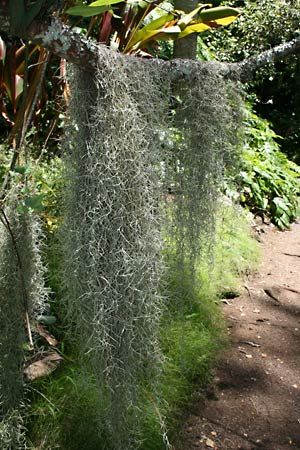
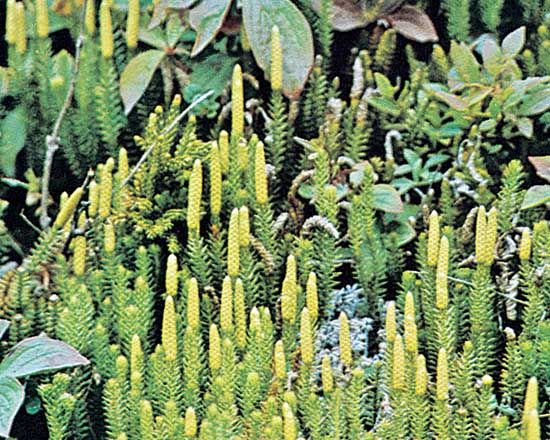
There are approximately 12,000 species of mosses distributed worldwide, ranging from forest floors to specialized wetland environments. While many plants with “moss” in their name—such as Spanish moss or club mosses—are not true mosses, the division Bryophyta includes a diverse array of genuine species.211
Common types of mosses include:
- Peat moss (genus Sphagnum): Known for its ability to absorb large amounts of water and its role in forming peat bogs.1112
- Hair-cap moss (genus Polytrichum): Often forms large mats in fields and bogs; it is notable for its wheat-grain-shaped capsules.13
- Tree moss (genus Climacium): Resembles a tiny evergreen tree and is typically found in damp, shady areas.14
- Cushion moss (genus Leucobryum): Named for its dense, mounded growth habit.2
- Fern moss (genus Thuidium): Characterized by its feathery, fern-like branching pattern.2
- Cord moss (genus Funaria) and Apple moss (Bartramia pomiformis): Examples of mosses named for the distinct shapes of their spore-bearing capsules.2
Sources
- apple moss — Encyclopædia Britannica
- list of mosses — Encyclopædia Britannica
- bryophyte — Encyclopædia Britannica
- bryophyte - Reproduction and life cycle — Encyclopædia Britannica
- Plant - Definition of the category — Encyclopædia Britannica
- hornwort — Encyclopædia Britannica
- bryophyte - Ecology and habitats — Encyclopædia Britannica
- Plant reproductive system - Mosses — Encyclopædia Britannica
- bryophyte - Form and function — Encyclopædia Britannica
- peat moss — Encyclopædia Britannica
- tree moss — Encyclopædia Britannica
- hair-cap moss — Encyclopædia Britannica
- moss — Encyclopædia Britannica
- Bog - Flora — Encyclopædia Britannica
Published on · 3 min read