Bryophyte
Bryophytes—comprising mosses, liverworts, and hornworts—differ significantly from vascular plants in several key ways:
How do bryophytes differ from other types of plants?
Bryophytes—comprising mosses, liverworts, and hornworts—differ significantly from vascular plants in several key ways:
- Vascular Tissue: Unlike vascular plants, bryophytes lack specialized xylem and phloem for internal transport and structural support.1
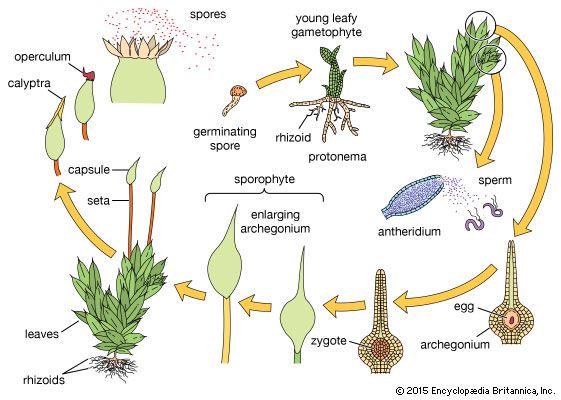
- Dominant Generation: In bryophytes, the gametophyte is the long-lived, independent, and photosynthetic phase. Conversely, in vascular plants, the sporophyte is the dominant, conspicuous generation.12
- Anatomy: Bryophytes lack true roots, stems, and leaves. While they may possess structures resembling these, such features are found on the gametophore of bryophytes, whereas they appear on the sporophytes of vascular plants.12
- Reproduction: Bryophytes rely on water for sperm to reach the egg for fertilization, a vestige of their aquatic ancestry.1
What is the evolutionary history of bryophytes, and how long have they existed on Earth?
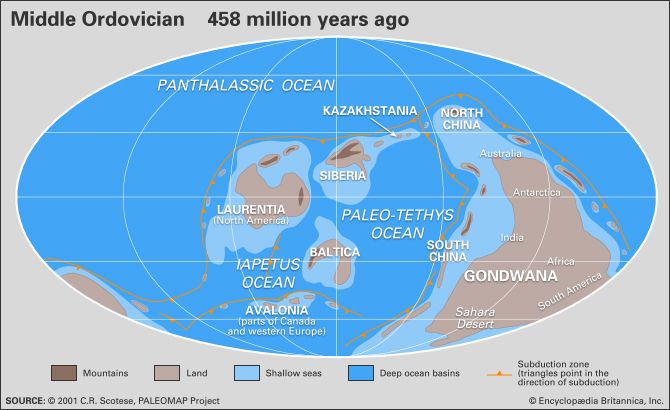
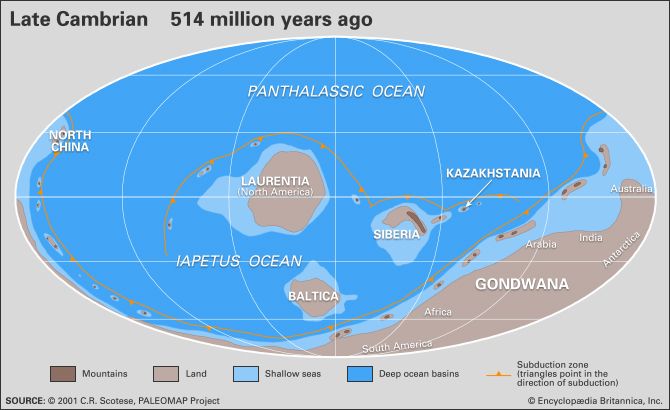
Bryophytes—a group including mosses, liverworts, and hornworts—are widely believed to have evolved from complex green algae that transitioned to terrestrial environments. While the fossil record provides concrete evidence of land plants dating to the Ordovician Period (approximately 485.4 to 443.8 million years ago), molecular clock studies suggest that plants began colonizing land as early as 500 million years ago, during the Cambrian Period million years ago, during the Cambrian Period.134
The earliest evidence of bryophytes appears as liverwort cryptospores in rocks dated between 473 and 471 million years ago. These cryptospores are considered among the first terrestrial plants. In contrast, the earliest unambiguous moss fossils do not appear until the Permian Period (298.9 to 251.9 million years ago). Because most fossil bryophytes closely resemble living forms, their evolutionary history is less completely understood than that of vascular plants.54
What are the three main groups of bryophytes, and how do they differ from each other?
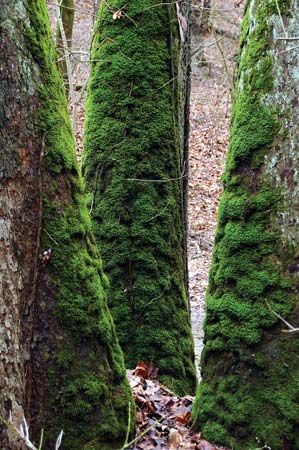
The term “bryophyte” is used informally to refer to three distinct divisions of nonvascular, seedless plants: mosses (division Bryophyta), liverworts (division Marchantiophyta), and hornworts (division Anthocerotophyta). While they share a life cycle characterized by an alternation of generations—where the independent, photosynthetic gametophyte is the dominant phase—they differ in several structural and developmental ways.627
Key Differences
- Mosses (Bryophyta): The mature gametophore is typically leafy in appearance, with phyllids spirally arranged on a stem2. Some mosses possess a central core of specialized water-conducting cells called [hydroids]. Their sporophytes consist of a foot, a seta, and a terminal sporangium that often opens via an apical lid called an [operculum].17
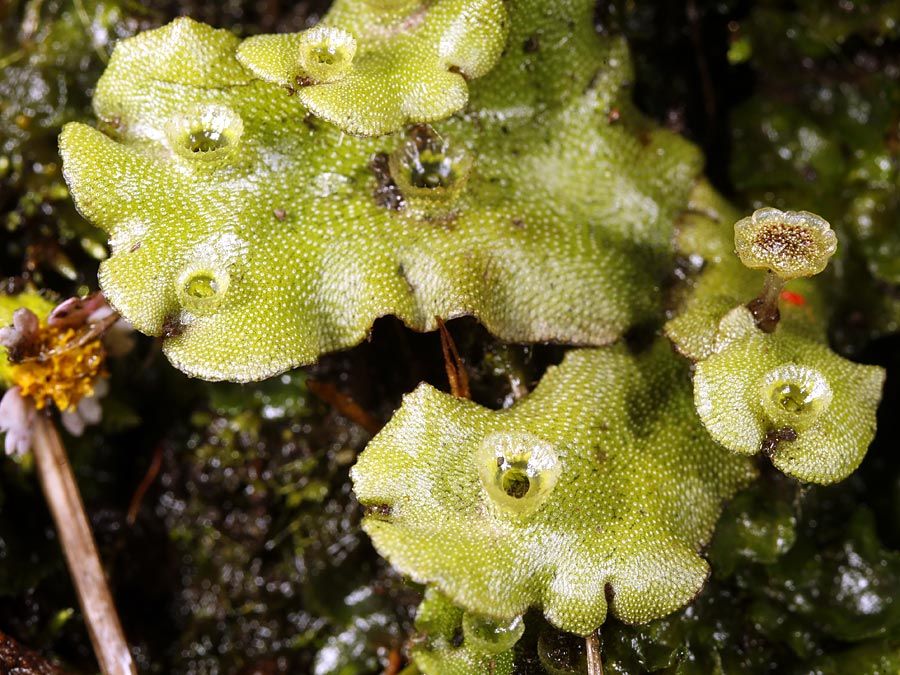
- Liverworts (Marchantiophyta): Many liverworts have a flattened, ribbonlike gametophyte called a thallus, though some are leafy. Unlike mosses, their sporangium usually matures before the seta elongates, and they utilize elaters—cells with coiled thickenings—to aid in spore dispersal.218
- Hornworts (Anthocerotophyta): These are distinguished by a tapered, horn-shaped sporophyte that exhibits indeterminate growth, meaning it continues to produce new tissue throughout the growing season. Unlike liverworts, they lack a stalk (seta) between the foot and the spore-bearing capsule.81
What are the main characteristics that define bryophytes?
Bryophytes are a group of nonvascular, seedless plants comprising mosses, liverworts, and hornworts. They are defined by several key biological and structural characteristics:29
- Alternation of Generations: Bryophytes exhibit a life cycle where the gametophyte (the sexual, haploid phase) is the dominant, long-lived, and photosynthetically independent generation. The sporophyte (the asexual, diploid phase) is dependent on and physically attached to the gametophyte for nutrients and water.21910
- Lack of Vascular Tissue: Unlike vascular plants, bryophytes generally lack specialized xylem and phloem for internal conduction. While some mosses possess specialized water-conducting cells called hydroids, these lack [lignin], a key component of true vascular systems.98
- Reproductive Requirements: Bryophytes produce motile, flagellated sperm that require external water to swim from the antheridia to the archegonia for fertilization.910
- Simple Body Structure: They do not possess true roots, stems, or leaves, though many have structures that resemble them. They are often anchored to their substrate by threadlike rhizoids.928
Sources
- Plant - Definition of the category — Encyclopædia Britannica
- bryophyte — Encyclopædia Britannica
- Plant - Evolution and paleobotany — Encyclopædia Britannica
- Ordovician Period - Earliest land plants — Encyclopædia Britannica
- bryophyte - Evolution and paleontology — Encyclopædia Britannica
- bryophyte - Classification — Encyclopædia Britannica
- hornwort — Encyclopædia Britannica
- bryophyte - Form and function — Encyclopædia Britannica
- Alternation of generations — Encyclopædia Britannica
- bryophyte - Reproduction and life cycle — Encyclopædia Britannica
Published on · 3 min read