Cord Moss
Cord moss, belonging to the genus Funaria, is characterized by several distinct physical features:
What are the distinctive physical characteristics of cord moss?
Cord moss, belonging to the genus Funaria, is characterized by several distinct physical features:
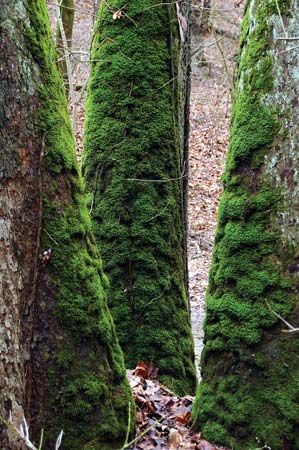
- Growth Habit: These plants typically grow in pale-green, loose tufts that can form large carpets.1
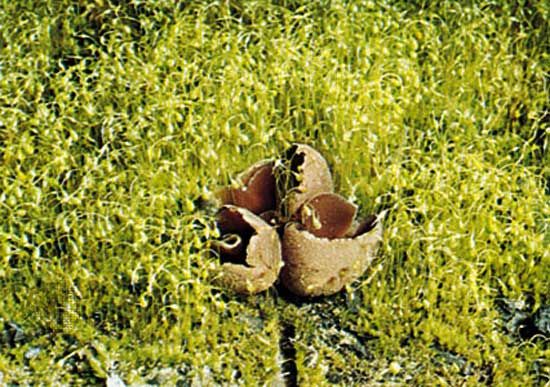
- Seta (Stalk): The most defining feature is the spirally twisted seta, or stalk, of the capsule (spore case). This stalk is hygroscopic, meaning it is moisture-sensitive; it curls when dry and unwinds when wet.12
- Capsules: The plant produces numerous curved, yellowish or orange-brown capsules that release spores through an obliquely placed “mouth”.1
- Reproductive Structures: Male and female reproductive organs are found on separate branches of the same plant. The clusters of male organs are surrounded by large, specialized leaves (phyllids), creating a structure that resembles a small green flower.1
Cord moss is frequently found in habitats such as limestone or areas that have been recently burned.12
How does cord moss reproduce and spread?
Cord moss (Funaria) reproduces through a complex life cycle involving both sexual and asexual phases.
Sexual Reproduction
Cord moss plants are gametophores that bear sex organs at the tips of their shoots. In this genus, male (antheridia) and female (archegonia) organs are located on separate branches of the same plant. These organs are often surrounded by specialized, prominent leaves that form a flowerlike cup.14
Fertilization requires the presence of water, such as rain or heavy dew, which facilitates the movement of biflagellate sperm from the antheridia to the archegonia. Following fertilization, a sporophyte develops, which remains attached to the gametophyte and relies on it for nutrients. The sporophyte eventually produces a capsule (sporangium) containing spores generated through meiosis.4
Spore Dispersal and Growth
Once mature, the capsule sheds its spores through an obliquely placed “mouth”. The capsule stalk (seta) is hygroscopic, meaning it curls when dry and unwinds when wet, a mechanism that helps regulate spore release. Peristome teeth around the capsule mouth also respond to moisture, swelling and contracting to open spaces for spore dispersal.14
When a spore germinates, it produces a protonema—a filamentous or branching structure that grows along the soil surface. This protonema can proliferate under favorable conditions, forming new buds that develop into leafy shoots, thereby expanding the population.4
How does cord moss differ from other types of mosses?
Cord moss, which belongs to the genus Funaria, is primarily distinguished from other mosses by its unique physical structure. Its most notable characteristic is the spirally twisted seta, or stalk, of the capsule. This stalk is highly hygroscopic, meaning it curls when dry and unwinds when wet, a mechanism that assists in the dispersal of spores.14
While many mosses share the general bryophyte life cycle, cord moss is frequently used as a textbook representative of the group due to its distinct features. Unlike some mosses that may have bisexual shoots with sex organs at the same apex, cord moss bears its male and female reproductive organs on separate branches of the same plant. Additionally, its capsules are curved and yellowish or orange-brown, releasing spores through an obliquely placed “mouth,” which differs from the varied dispersal mechanisms found in other genera like Polytrichum or Sphagnum.14
What is the scientific name for cord moss and what does it mean?
The scientific name for cord moss is the genus Funaria.18
The name is derived from the Latin word funis, meaning “rope,” combined with the New Latin suffix -aria. This etymology refers to the plant’s characteristic spirally twisted seta (stalk), which resembles a small rope and is highly sensitive to moisture, causing it to curl when dry and unwind when wet. The most common species within this genus is F. hygrometrica, which is frequently studied as a representative bryophyte.812
Sources
- cord moss — Encyclopædia Britannica
- cord moss — Merriam-Webster
- bryophyte - Form and function — Encyclopædia Britannica
- Plant reproductive system - Mosses — Encyclopædia Britannica
- bryophyte - Ecology and habitats — Encyclopædia Britannica
- Fern - Spore — Encyclopædia Britannica
- list of mosses — Encyclopædia Britannica
- Funaria — Merriam-Webster
Published on · 3 min read