Spanish Moss
Despite its name, Spanish moss (Tillandsia usneoides) is not a true moss. While true mosses are small, nonvascular, spore-bearing plants, Spanish moss is…
What is Spanish moss?
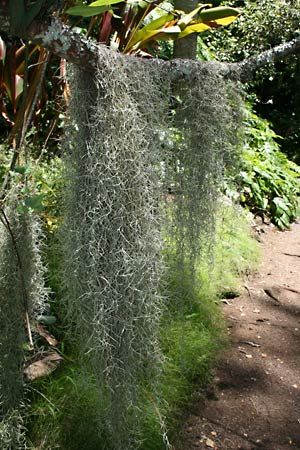
Despite its name, Spanish moss (Tillandsia usneoides) is not a true moss. While true mosses are small, nonvascular, spore-bearing plants, Spanish moss is actually an epiphyte—a nonparasitic plant that grows on other plants for support—belonging to the pineapple family (Bromeliaceae)1.1
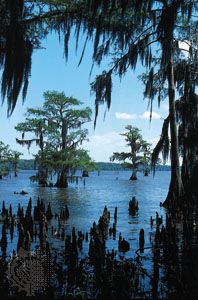
Found throughout southern North America, the West Indies, and Central and South America, this silvery-gray plant is characterized by long, threadlike stems that can reach up to 7.5 meters (25 feet) in length, often hanging in beardlike masses from trees. It does not rely on the host plant for nutrients; instead, it features hairlike scales covering its entire surface that absorb water and nutrients directly from the humid atmosphere. Though it rarely produces flowers, the plant has historically been utilized by humans as a filler for packing materials and upholstery.23
What is an epiphyte and how does it differ from a parasite?
An epiphyte is a plant that grows upon another plant or object solely for physical support. Epiphytes do not rely on their host for water or nutrients; instead, they obtain moisture from rain and water vapor in the air and gather nutrients from organic debris that collects on the host plant. Because they use other plants only as a structure, they are not considered parasitic.456
In contrast, a parasitic plant obtains all or part of its nutrition directly from a host plant, often causing it significant harm. The defining structural feature of a parasite is the haustorium, a specialized organ that penetrates the host to create a vascular union, allowing the parasite to siphon water, minerals, or carbohydrates. While epiphytes are independent in their nutritional needs, parasitic plants exist in a state of heterotrophy, ranging from hemiparasites, which can photosynthesize but still require host water, to holoparasites, which are entirely dependent on the host for survival.6
What other plants belong to the Bromeliaceae family?
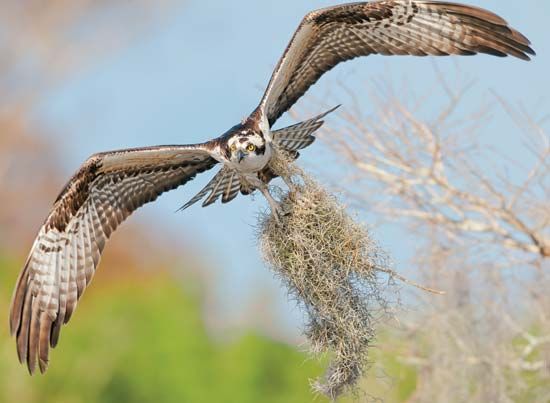
The Bromeliaceae family, commonly known as the pineapple family, comprises approximately 3,000 species across 56 genera. While the pineapple (Ananas comosus) and Spanish moss are its most famous members, the family includes a diverse range of plants, many of which are popular as ornamentals or valued for their fibers.78
Major genera within the family include:
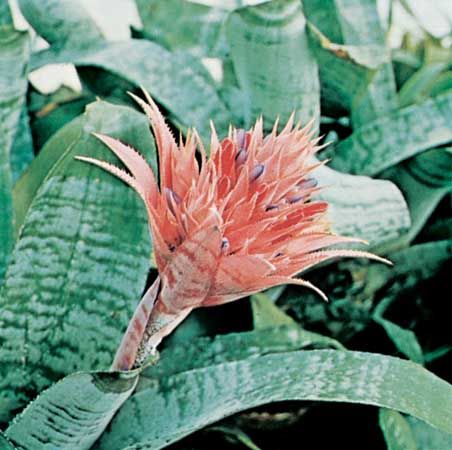
- Aechmea: Known for its striking foliage and flowers.
- Billbergia: Often grown for its unique, tubular flower spikes.
- Dyckia: Typically terrestrial plants with succulent-like leaves.
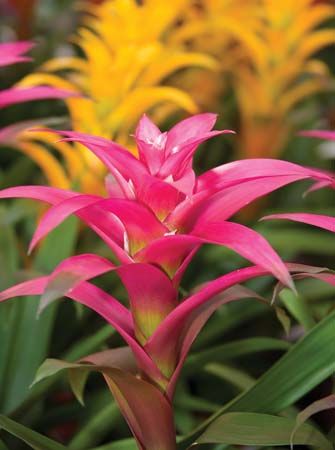
- Guzmania: Frequently cultivated as indoor ornamentals.
- Hechtia: Often found in drier, rocky environments.
- Neoglaziovia: Known for fibers used in textiles.
- Neoregelia: Prized for the colorful leaves surrounding their central water-collecting “tanks.”
- Nidularium: Characterized by flowers nestled deep within the leaf rosette.
- Puya: Includes the giant Puya raimondii, which can reach over 10 meters in height.
- Tillandsia: A large genus of epiphytes, including “air plants.”
- Vriesea: Known for their long-lasting, sword-shaped flower spikes.78
Additionally, some species, such as Brocchinia reducta and Catopsis berteroniana, have evolved to be carnivorous.8
How do air plants absorb moisture from the atmosphere?
Air plants, which are epiphytes, have evolved specialized mechanisms to survive without being rooted in the ground. While many epiphytes absorb water through their roots, epiphytic bromeliads—such as Spanish moss and other members of the genus Tillandsia—primarily absorb moisture and minerals directly from the atmosphere through specialized structures on their leaves called foliar trichomes.
These trichomes are specialized epidermal outgrowths that allow the plant to capture water from rain, mist, and water vapor in the air. By utilizing these structures, air plants can thrive in environments where they have no access to soil-based water sources, relying instead on the humidity and precipitation available in their canopy habitats.496
Sources
- Spanish moss — Encyclopædia Britannica
- Spanish moss — Merriam-Webster
- moss — Encyclopædia Britannica
- Epiphyte — Encyclopædia Britannica
- Parasitic plant — Encyclopædia Britannica
- Did you know? — Merriam-Webster
- list of plants in the family Bromeliaceae — Encyclopædia Britannica
- Bromeliaceae — Encyclopædia Britannica
- Angiosperm - Dermal tissue — Encyclopædia Britannica
- air plant — Merriam-Webster
Published on · 3 min read