Apterygote
Apterygote arthropods, which include primitive wingless groups such as silverfish, bristletails, springtails, diplurans, and proturans, occupy diverse…
In what types of habitats are apterygote arthropods commonly found?
Apterygote arthropods, which include primitive wingless groups such as silverfish, bristletails, springtails, diplurans, and proturans, occupy diverse environments.12
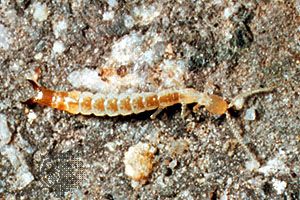
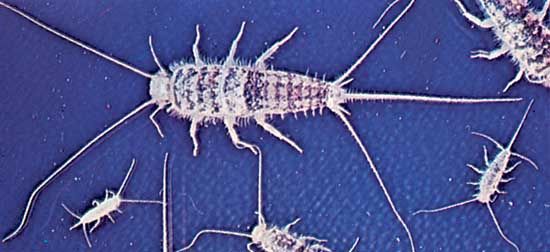
While specific habitat requirements vary by group, some species are well-adapted to human environments. For instance, silverfish and firebrats are commonly found indoors, where they feed on starchy materials like bookbindings, wallpaper, and fabric. In natural settings, these arthropods are often associated with soil and leaf litter, where they may deposit their eggs.34
Because the term “apterygote” encompasses a broad range of primitive hexapods—some of which are now classified as distinct classes rather than true insects—their ecological niches are varied, ranging from domestic settings to various soil-based ecosystems.1
How have apterygote arthropods evolved over time?
The evolutionary history of apterygote arthropods is complex, as the term traditionally grouped several distinct lineages of primitive, wingless hexapods that are now often classified as separate classes rather than true insects.1
Evolutionary Origins
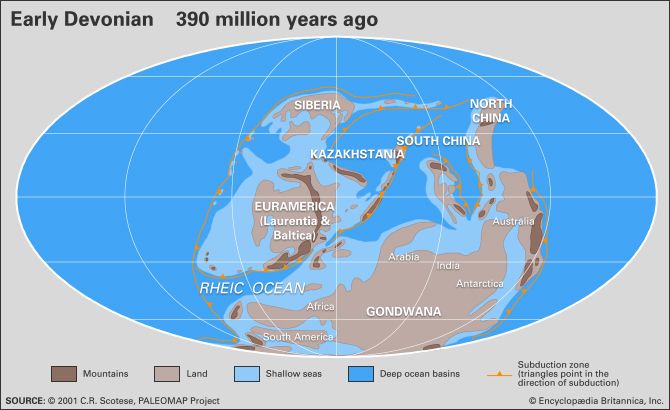
Insects are believed to have originated from an early, terrestrial, symphylan-like ancestor within the phylum Arthropoda within the phylum Arthropoda. While the exact origins of the broader arthropod group remain unknown, they likely emerged during Precambrian times. The earliest known insect fossils date back to the Middle Devonian Period, already exhibiting the characteristic body plan of a head with one pair of antennae, a thorax with three pairs of legs, and a segmented abdomen.97
Taxonomic Reclassification
Entomologists now distinguish between two primary groups of these “apterygotes” based on their mouthparts:
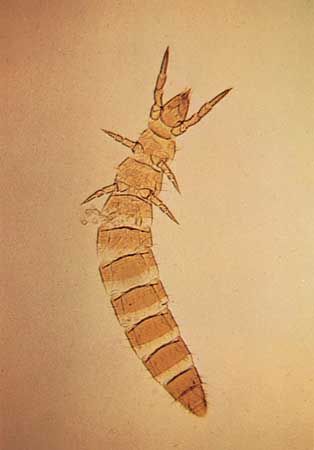
- Entognathous: Proturans, collembolans, and diplurans are now frequently viewed as independent evolutionary offshoots from the main insectan stem.18
- Ectognathous: Silverfish, bristletails, and the extinct monurans are considered more closely related to the ancestors of winged insects (Pterygota).18
Unlike winged insects, which evolved a complex flight mechanism, apterygotes retain a primitive state characterized by winglessness and simple metamorphosis.8
How do apterygote arthropods differ from other arthropod groups?
Apterygote arthropods are distinguished from other groups, particularly the pterygotes (winged insects), by several key biological and developmental traits.
Primary Distinctions
- Lack of Wings: The most defining characteristic of apterygotes is that they are primitively wingless, whereas pterygotes possess wings or are descended from winged ancestors.18
- Metamorphosis: Unlike many other insects that undergo complex transformations, apterygotes experience simple metamorphosis, meaning they do not go through the dramatic life-stage changes seen in higher insect groups.8
- Structural Differences: They are differentiated from other arthropods by the specific structure of the thorax and the development of abdominal appendages.8
Taxonomic Classification
The classification of these organisms is complex. While traditionally grouped together, they are now often separated based on their mouthparts:
- Entognathous: Proturans, collembolans, and diplurans possess mouthparts retracted into the head and are sometimes considered independent evolutionary offshoots rather than true insects.18
- Ectognathous: Silverfish, bristletails, and the extinct monurans have exposed mouthparts and are considered more closely related to the ancestors of winged insects.18
What are the main characteristics of apterygote arthropods?
The term apterygote broadly refers to a group of primitive, wingless hexapods. While traditionally classified together, their taxonomic status is debated, as some entomologists now categorize certain groups as independent classes rather than true insects.1
Key Characteristics
- Winglessness: Apterygotes are primitively wingless, distinguishing them from pterygotes, or winged insects.18
- Development: They undergo simple metamorphosis, where the immature stages, called nymphs, resemble adults and change little between molts. Notably, some species continue to molt throughout their adult lives.810
- Mouthparts: A primary criterion for classification is the structure of the mouthparts:
- Entognathous: Proturans, collembolans, and diplurans have mouthparts retracted into the head.18
- Ectognathous: Silverfish, bristletails, and the extinct monurans have exposed mouthparts and are considered more closely related to winged insects.18
Other distinguishing features include the structure of the thorax, the number of abdominal segments, and the development of abdominal appendages.8
Sources
- apterygote — Encyclopædia Britannica
- List of insects - apterygotes (subclass Apterygota) — Encyclopædia Britannica
- heteropteran - Wings — Encyclopædia Britannica
- silverfish — Encyclopædia Britannica
- homopteran - Habitats — Encyclopædia Britannica
- bristletail — Encyclopædia Britannica
- insect - Wings and flight — Encyclopædia Britannica
- apterygote - Distinguishing taxonomic features — Encyclopædia Britannica
- insect - Origin of insects — Encyclopædia Britannica
- apterygote - Life cycle — Encyclopædia Britannica
Published on · 3 min read