Devonian Period
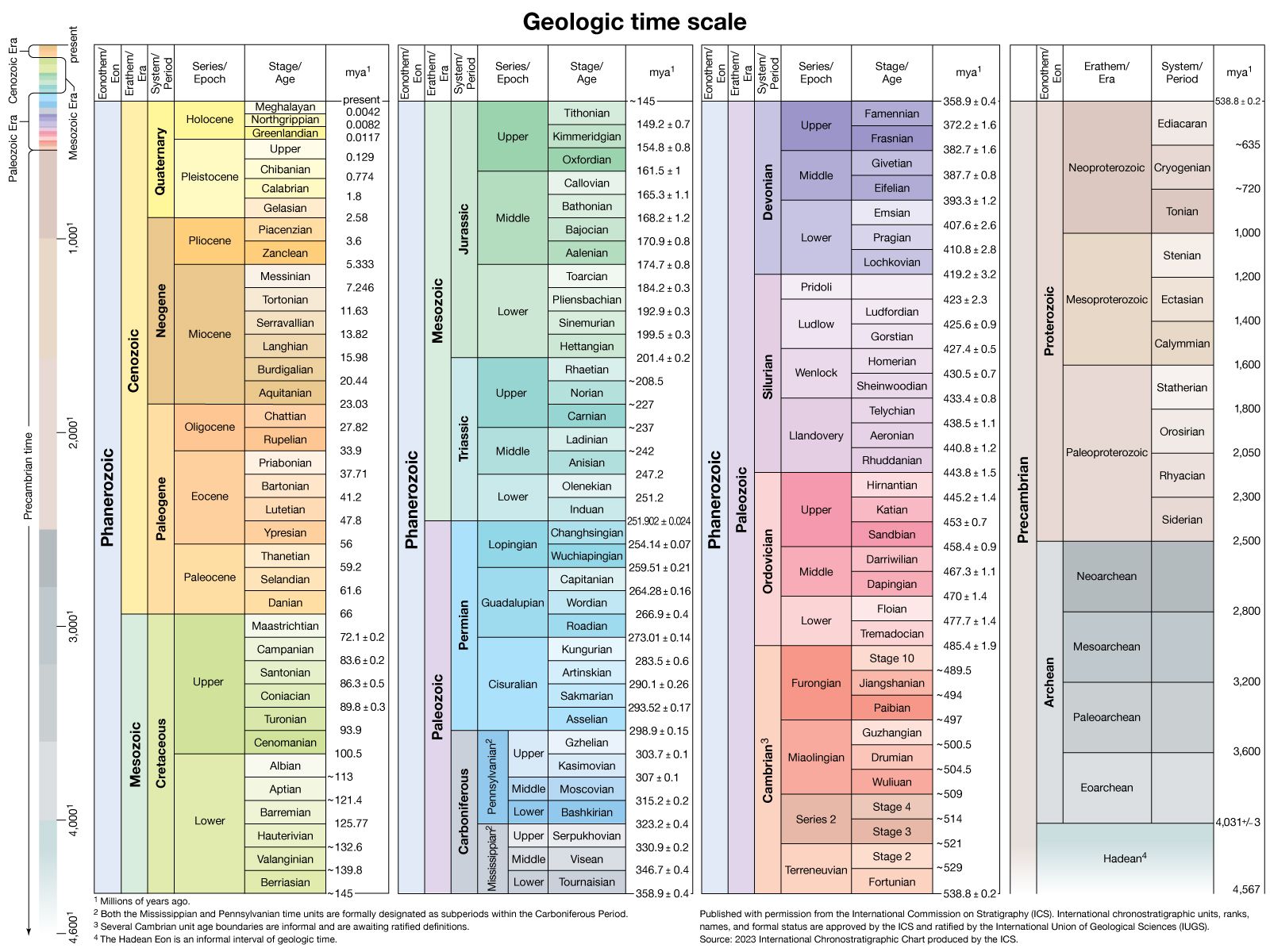
Geologists study and date the Devonian Period (approximately 419.2 to 358.9 million years ago) by integrating stratigraphy with fossil analysis and…
How do geologists use fossils and rock formations to study and date the Devonian Period?
Geologists study and date the Devonian Period (approximately 419.2 to 358.9 million years ago) by integrating stratigraphy with fossil analysis and radiometric dating.
Fossil Correlation
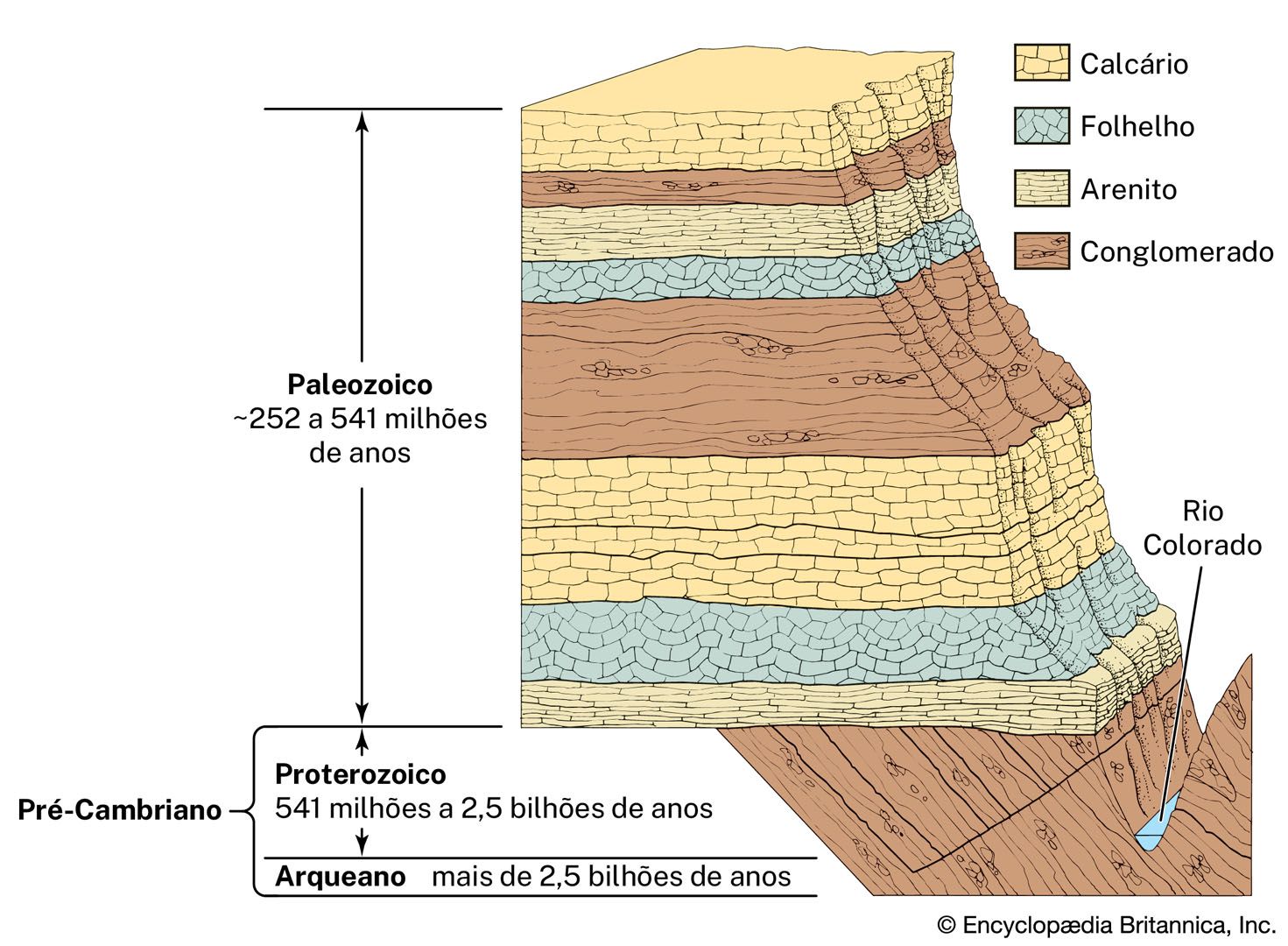
Geologists use index fossils to correlate rock layers globally. In marine strata, conodonts and ammonites are primary tools for defining time zones. Brachiopods also assist in subdivision, though some are environmentally sensitive. For terrestrial deposits, such as the Old Red Sandstone, researchers rely on fish fossils and plant spores to establish chronology.12
Rock Formations and Boundaries
The International Union of Geological Sciences defines Devonian boundaries using Global Stratotype Sections and Points (GSSPs). These physical rock exposures serve as the standard reference for specific stages. Additionally, unique geological events, such as the deposition of the Tioga Metabentonite, provide distinct volcanic ash horizons that act as markers for short-term temporal correlation.23
Numerical Dating
While fossils provide relative ages, radiometric dating provides an absolute temporal framework. By comparing stratigraphic sequences with laboratory-determined numerical ages, geologists have quantified the Devonian timeline, moving beyond simple superpositional analysis.4
What was the impact of the Devonian Period on the evolution of life on Earth?
The Devonian Period, spanning approximately 419.2 to 358.9 million years ago, was a transformative interval in the history of life on Earth, often referred to as the “Age of Fishes” due to the remarkable diversification of fish in both marine and freshwater environments.78
Evolutionary Milestones
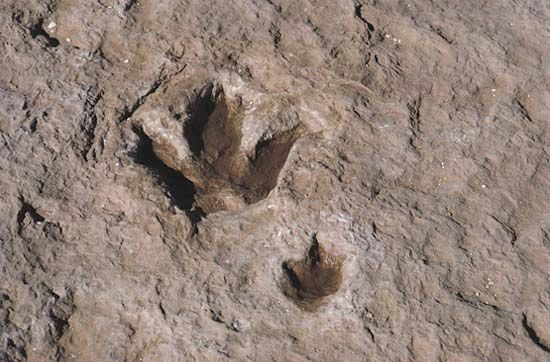
- Vertebrate Transition: The period marked the emergence of tetrapods, the four-legged ancestors of all land-dwelling vertebrates. While these creatures originated from lobe-finned fishes, fossil evidence—including footprints dated to 397 million years ago—indicates that the colonization of land by vertebrates was well underway by the middle of the period.798
- Plant Colonization: The Devonian saw the rise of vascular plants and the establishment of the first known forests by the late Middle Devonian. This terrestrial expansion, evidenced by fossils like those found in the Old Red Sandstone, fundamentally altered Earth’s ecosystems.710
Environmental Challenges
Despite this biological innovation, the period was punctuated by a series of mass extinction events. These episodes, such as the Kellwasser and Hangenberg events, eliminated 70 to 80 percent of all animal species. These extinctions were likely driven by environmental stresses, including rapid climate shifts, bolide impacts, and widespread anoxic conditions in marine environments, potentially exacerbated by nutrient runoff from the newly colonized landmasses.118
What is the Devonian Period, and when did it occur in Earth’s history?
The Devonian Period is a major interval of the Paleozoic Era that occurred between approximately 419.2 million and 358.9 million years ago, following the Silurian Period and preceding the Carboniferous Period.12
Often called the “Age of Fishes,” the period is characterized by the significant diversification of fish species in the world’s oceans. During this time, the first ammonites and forests appeared, and by the late Devonian, the first four-legged amphibians emerged, marking the colonization of land by vertebrates.112
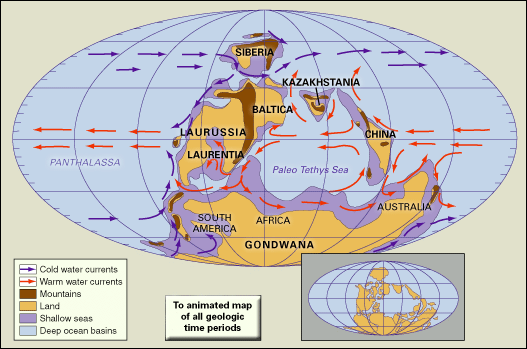
Geographically, much of the globe was covered by oceans, while landmasses like North America, Greenland, and Europe were united into the supercontinent Laurussia. The period’s name is derived from Devon, England, where geologists Adam Sedgwick and Roderick Murchison first proposed the designation in 1839 after studying local marine rock formations.112
How did the distribution of continents during the Devonian Period differ from today?
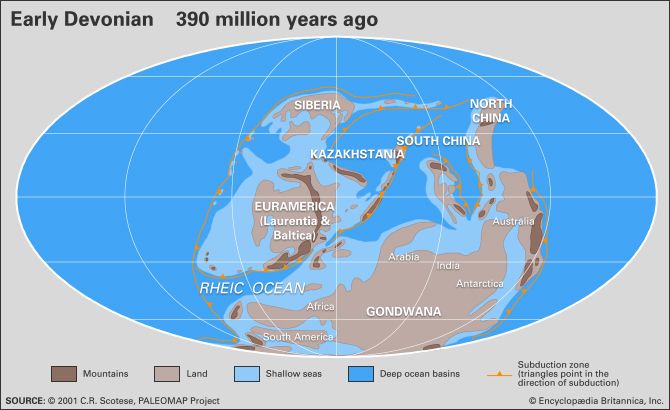
During the Devonian Period, the distribution of Earth’s landmasses differed significantly from the modern configuration, characterized primarily by two major continental groupings rather than the current arrangement of continents.139
- Laurussia (Euramerica): A minor supercontinent formed near the beginning of the Devonian by the collision of the paleocontinents Laurentia (comprising much of North America, Greenland, and parts of northern Europe) and Baltica (northern Europe and Scandinavia). This landmass was situated in the Northern Hemisphere, with the paleoequator passing through its northern regions.1914
- Gondwana: The southern continents of today—South America, Africa, Antarctica, Australia, and the Indian subcontinent—were united into this massive supercontinent. While its exact position relative to Laurussia remains a subject of study, fossil evidence suggests they were closer than some earlier models proposed, with parts of North Africa potentially adjacent to the eastern North American seaboard.1914
- Asia: Unlike today, Asia was not a single entity. It consisted of numerous separate microplates and landmasses, many of which were likely attached to or near the margins of Gondwana before migrating northward to fuse later in geological history.114
Sources
- Devonian Period — Encyclopædia Britannica
- Devonian Period - Sediment types — Encyclopædia Britannica
- Devonian Period - Correlation of Devonian strata — Encyclopædia Britannica
- geochronology - An absolute age framework for the stratigraphic time scale — Encyclopædia Britannica
- index fossil — Encyclopædia Britannica
- Devonian Period - Establishing Devonian boundaries — Encyclopædia Britannica
- Devonian Period - Devonian life — Encyclopædia Britannica
- Devonian extinctions — Encyclopædia Britannica
- Devonian Period - Significant geologic events — Encyclopædia Britannica
- Devonian Period - Plants — Encyclopædia Britannica
- tetrapod — Encyclopædia Britannica
- A Journey Through Time Since the Precambrian - Devonian Period: 419.2 million to about 359 million years ago — Encyclopædia Britannica
- Laurasia — Encyclopædia Britannica
- Devonian Period - Occurrence and distribution of Devonian deposits — Encyclopædia Britannica
- Devonian Period - Paleogeography — Encyclopædia Britannica
Published on · 4 min read