Aramis
The Aramis site in Ethiopia’s Middle Awash study area is a globally significant location for paleoanthropology, primarily known for the discovery of the…

What major fossil discoveries have been made at the Aramis site?
The Aramis site in Ethiopia’s Middle Awash study area is a globally significant location for paleoanthropology, primarily known for the discovery of the 4.4-million-year-old hominid species Ardipithecus ramidus.12
Major discoveries at the site include:
- Initial Hominid Fossils: In 1992, researchers recovered the first Ar. ramidus fossils, including an upper third molar, a partial female dentition, and a juvenile jaw.1
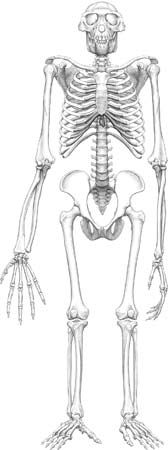
- “Ardi”: In 1994, the team discovered more than 100 fragments of an adult female skeleton (specimen ARA-VP-6/500), nicknamed “Ardi.” Ardi is widely recognized as the earliest known hominid skeleton, providing critical insights into the anatomy of the pelvis, limbs, and skull.13
- Diverse Fauna: Excavations have yielded a wealth of biological information, including abundant fossil wood and remains of small mammals, birds, kudus, and monkeys, which suggest the area was once a closed-canopy woodland.12
These findings have been instrumental in understanding the evolution of bipedalism and the divergence of the human lineage from that of African apes.23
What can the Aramis site tell us about the environment and climate of early hominins?
The Aramis site provides a detailed reconstruction of the environment inhabited by Ardipithecus ramidus 4.4 million years ago, challenging previous assumptions that early hominins lived primarily in open savannas.
Environmental Reconstruction
Geological and paleontological data indicate that the landscape was a broad, flat floodplain rather than a tropical forest or an open grassland. The presence of fossilized wood, pollen, and phytoliths, supported by soil isotope analysis, confirms that the region was a woodland environment.4
Biodiversity and Climate
The site contains a diverse array of over 7,000 catalogued fossils, reflecting a rich ecosystem that supported a variety of life, including:
- Invertebrates and Reptiles: Snails, millipedes, and various reptiles.4
- Avian and Mammalian Life: Forest-dwelling birds such as peafowl, as well as porcupines, kudus, and monkeys.4
This evidence suggests that Ar. ramidus was a woodland omnivore, utilizing its environment for both arboreal foraging and limited bipedalism on the ground. Its diet, reconstructed through carbon isotopes and dental wear, relied on woodland resources like fruits, nuts, and small vertebrates rather than the tougher vegetation associated with later hominins.4
What is the significance of the Aramis site in Ethiopia for paleoanthropology?
The Aramis site in Ethiopia’s Awash River valley is a cornerstone of paleoanthropology, primarily significant for the discovery of Ardipithecus ramidus, a hominid species dating back 4.4 million years.24
The site’s importance stems from several key factors:
- Evolutionary Insights: Ardipithecus provides a crucial look at the common ancestor of humans and African apes. It exhibits evolutionary novelties, such as reduced canine projection and a humanlike skull base, which bridge the gap between earlier primates and later hominins.2
- The “Ardi” Skeleton: The 1994 discovery of the partial skeleton nicknamed “Ardi”—the earliest well-documented hominid skeleton—offered unprecedented evidence of early anatomy, including a grasping big toe and adaptations for both climbing and bipedal walking.14
- Environmental Context: Unlike sites that suggest early hominins lived in open savannas, Aramis provides evidence of a closed-canopy woodland habitat. This has fundamentally shifted scientific understanding of the environments in which early human evolution occurred.21
How does the Aramis site contribute to our understanding of human evolution in East Africa?
The Aramis site in Ethiopia’s Awash River valley is a pivotal location for understanding human evolution in East Africa. Its significance is primarily defined by the following contributions:
Discovery of Ardipithecus ramidus
Aramis is best known for the 1992 discovery of Ardipithecus ramidus, a species dating to 4.4 million years ago. This find provided a crucial look at a hominid that shares evolutionary novelties with later hominins—such as reduced canine projection and a shorter skull base—while retaining apelike features. The recovery of “Ardi,” the earliest well-documented hominid skeleton, offered unprecedented anatomical detail, revealing a unique mosaic of traits adapted for both arboreal climbing and terrestrial bipedalism.2351
Insights into Evolutionary Patterns
The site supports the hypothesis that bipedalism preceded other major transformations in the human lineage, such as brain expansion or specialized chewing adaptations. Furthermore, the fossils found at Aramis, alongside those of Ardipithecus kadabba in nearby areas, illustrate that early human evolution was a complex process of experimentation rather than a simple, linear progression.213
Environmental Context
Evidence from Aramis, including fossilized wood and animal remains, indicates that these early hominins inhabited a closed-canopy woodland environment. This finding challenged long-held assumptions that early hominins lived primarily in open savannas, demonstrating that they were agile foragers capable of navigating both forest edges and woodland habitats.21
Sources
- Ardipithecus - The discovery of Ardipithecus — Encyclopædia Britannica
- Aramis — Encyclopædia Britannica
- Ardipithecus - Anatomical features — Encyclopædia Britannica
- Ardipithecus - Habitat — Encyclopædia Britannica
- Homo sapiens - Origin — Encyclopædia Britannica
Published on · 3 min read