A Journey Through Time Since the Precambrian
The phrase "A Journey Through Time Since the Precambrian" does not refer to a specific, recognized scientific title or formal geological concept in the…
What is A Journey Through Time Since the Precambrian?
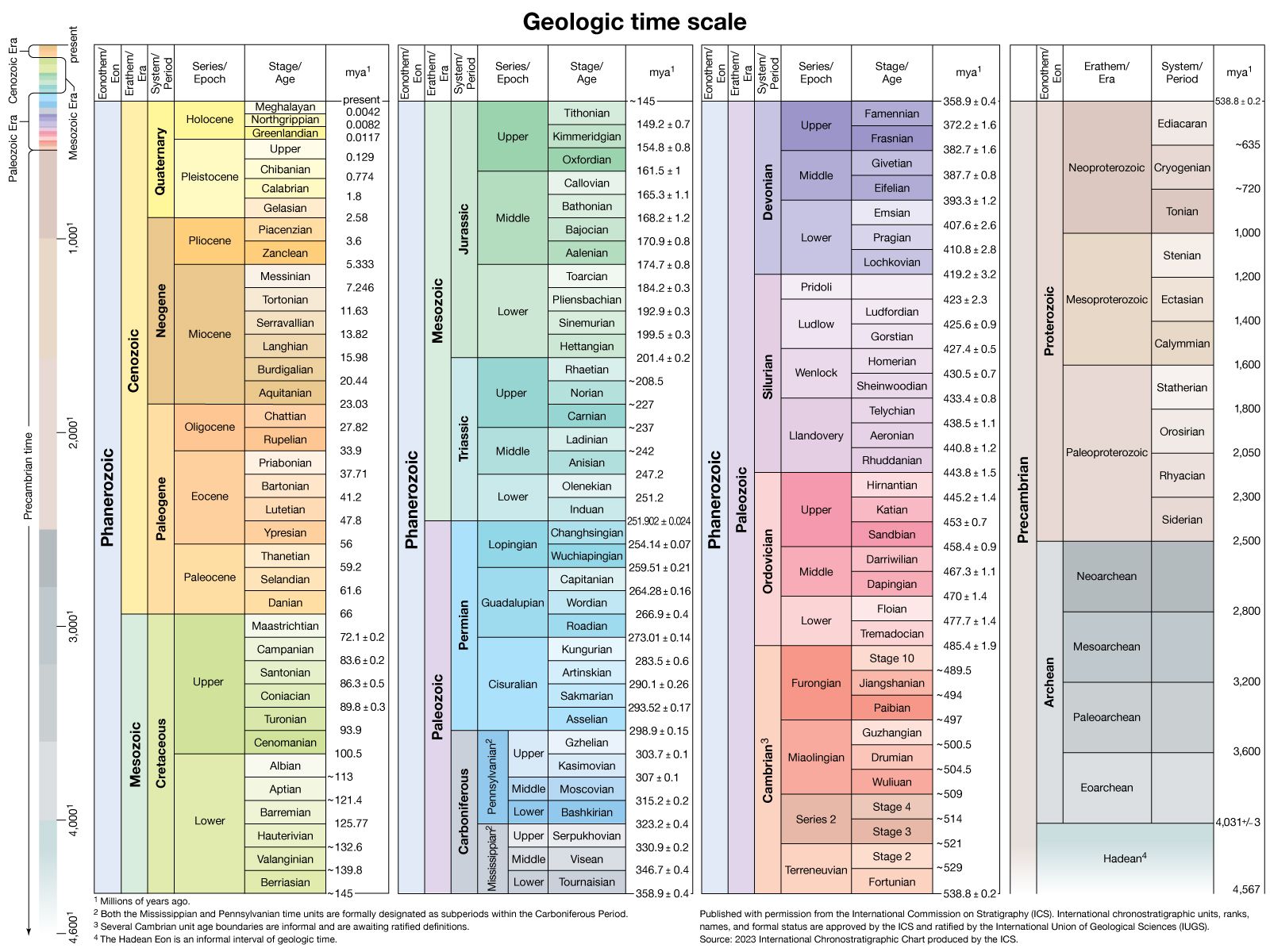
The phrase “A Journey Through Time Since the Precambrian” does not refer to a specific, recognized scientific title or formal geological concept in the Britannica knowledge base. It appears you may be conflating the study of geologic time with the Precambrian, which is the vast interval of Earth’s history extending from the planet’s formation about 4.6 billion years ago to the start of the Cambrian Period 541 million years ago.1
The Precambrian encompasses more than 80 percent of Earth’s history, including the Hadean, Archean, and Proterozoic eons. This era was marked by significant developments, such as the emergence of primitive life-forms, the formation of the first stable continents, and the deposition of unique rock types like banded-iron formations. Following this, the Phanerozoic Eon began with the “explosion” of life at the start of the Cambrian.12
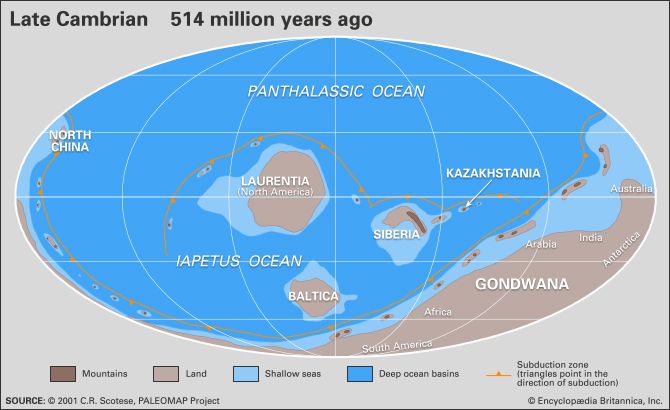
What was the Cambrian explosion?
The Cambrian explosion refers to the rapid, unparalleled emergence of complex life forms that occurred between 541 million and approximately 530 million years ago, marking the beginning of the Cambrian Period. During this geologically brief interval, many of the major animal phyla—estimated between 20 and 35—appeared in the fossil record.3
Key Characteristics and Causes
- Evolution of Hard Parts: The period is defined by the widespread evolution of hard body parts, such as calcium carbonate shells, which fossilize more readily than soft tissues, providing a clearer record of life.3
- Environmental Factors: Scientists believe rising oxygen levels in the atmosphere and oceans were critical, as they supported the metabolic demands of larger, complex organisms and the production of collagen, a structural protein.3
- Ecological Shifts: The Early Cambrian saw the development of seafloor-burrowing species and the first carbonate reefs built by archaeocyathids.3
Fossil Evidence
While the fossil record is often dominated by hard parts, rare deposits like the Burgess Shale in Canada and the Chengjiang biota in China have preserved soft-bodied organisms in remarkable detail. These sites reveal a complex, well-diversified aquatic ecosystem that included predators like Anomalocaris, as well as trilobites, mollusks, and sponges.435
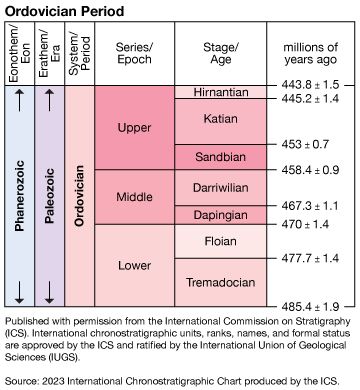
How do scientists determine the age of Earth’s rocks?
Scientists determine the age of Earth’s rocks through a combination of relative and absolute dating methods, a field of study known as geochronology.89
Relative Dating
Relative dating establishes the sequence of events without providing a specific numerical age.
- Stratigraphy: This discipline analyzes rock successions, often relying on the law of superposition, which states that in undisturbed deposits, the oldest layers are at the bottom.10
- Fossils: Index fossils are used to correlate rock strata across different locations. Because certain organisms evolved rapidly and were geographically widespread, their presence in a rock layer helps define specific intervals of geologic time.119
Absolute Dating
Absolute dating provides a numerical age by measuring the radioactive decay of isotopes within minerals.129
- Isotopic Dating: Radioactive parent isotopes decay into stable daughter isotopes at a constant, known rate. By measuring the ratio of parent to daughter atoms in a sample, scientists can calculate the time elapsed since the rock or mineral formed.12
- Common Methods: Techniques include uranium-lead dating, which is highly precise for ancient rocks, as well as rubidium-strontium and potassium-argon dating.813
- Requirements: For these ages to be accurate, the rock or mineral must have remained a “closed system,” meaning no parent or daughter atoms escaped or were added since its formation.129
What are stromatolites and why are they important?
Stromatolites are layered sedimentary structures, typically composed of limestone, that are formed by the growth of microbial communities, most notably filamentous blue-green algae (cyanobacteria). These structures are characterized by thin, alternating light and dark layers created by the trapping of sediment and the precipitation of minerals by the algae.1415
Why Stromatolites Are Important
- Evidence of Early Life: Stromatolites provide some of the oldest known evidence of life on Earth, with fossils dating back 3.5 billion years. They demonstrate that complex, integrated biological communities were already established during the Archean Eon.141615
- Oxygen Production: As early photosynthesizers, the microorganisms within stromatolites played a pivotal role in Earth’s history by releasing free oxygen as a byproduct of photosynthesis.science/oxygen) as a byproduct of photosynthesis. This process was fundamental in transitioning Earth’s atmosphere from an anoxygenic state to one that could eventually support more complex life-forms.1516
- Geologic Record: Because they were widespread and abundant throughout the Precambrian, they serve as vital markers for understanding the evolution of the early biosphere and the chemical changes in the ancient oceans and atmosphere.1615
Sources
- Precambrian — Encyclopædia Britannica
- Precambrian - Distinctive features — Encyclopædia Britannica
- A Journey Through Time Since the Precambrian - Cambrian Period: 541 million to 485.4 million years ago — Encyclopædia Britannica
- Cambrian explosion — Merriam-Webster
- Cambrian explosion — Encyclopædia Britannica
- Burgess Shale — Encyclopædia Britannica
- Cambrian Period - Deposits with soft-bodied organisms — Encyclopædia Britannica
- dating: Top Questions — Encyclopædia Britannica
- index fossil — Encyclopædia Britannica
- stratigraphy — Encyclopædia Britannica
- dating - Principles of isotopic dating — Encyclopædia Britannica
- dating - Origin of radioactive elements used — Encyclopædia Britannica
- dating - Distinctions between relative-age and absolute-age measurements — Encyclopædia Britannica
- stromatolite — Encyclopædia Britannica
- geologic history of Earth - Formation of the secondary atmosphere — Encyclopædia Britannica
- Precambrian - Microfossils and stromatolites — Encyclopædia Britannica
Published on · 4 min read