Arborvitae
Arborvitae, belonging to the genus Thuja, are popular evergreen conifers widely utilized in landscaping and gardening for their ornamental value.
How are arborvitae trees used in landscaping and gardening?
Arborvitae, belonging to the genus Thuja, are popular evergreen conifers widely utilized in landscaping and gardening for their ornamental value.12
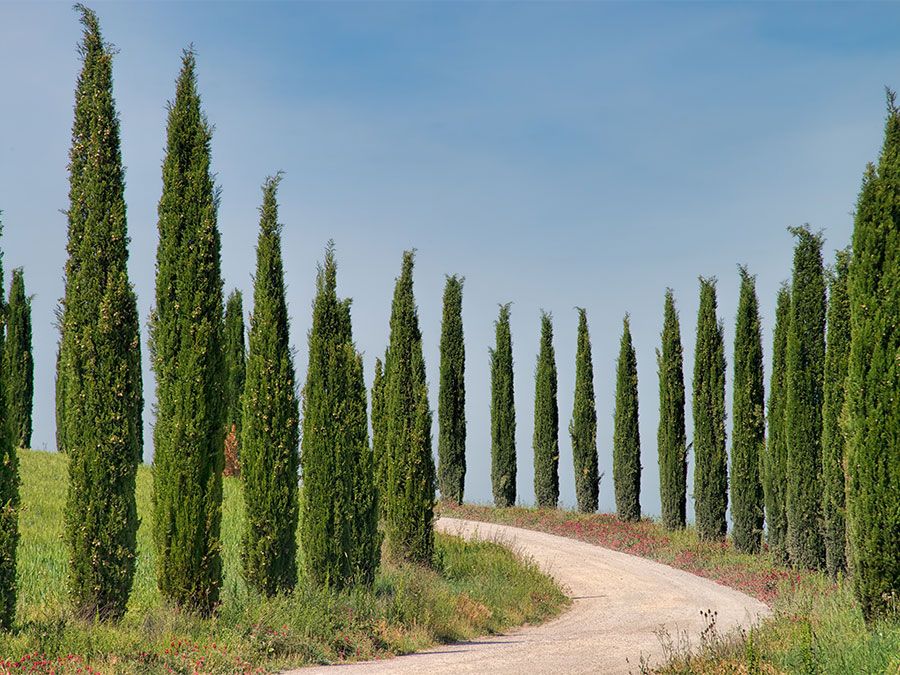
These trees and shrubs are prized for their typically pyramidal habit and dense, spraylike foliage, which makes them an excellent choice for creating privacy screens or formal hedges. Because they are often grown as narrow, densely branched specimens, they serve as effective structural elements in garden design.132
Gardeners frequently select specific varieties of the American arborvitae (Thuja occidentalis) for their hardiness and the interesting variations in foliage color available among cultivated types. Additionally, the Chinese arborvitae (T. orientalis) is a favored ornamental known for its gracefully symmetrical form. Beyond their aesthetic appeal, these plants are valued for their durability and relatively low-maintenance nature in various landscape settings.312
What are the distinctive features of arborvitae foliage and bark?
The arborvitae (genus Thuja) possesses distinct characteristics in its foliage and bark that define its appearance as a member of the cypress family.
Foliage
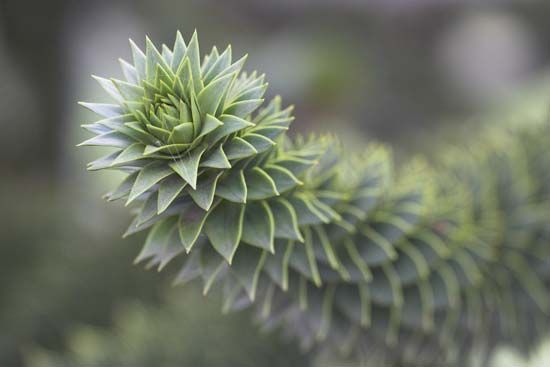
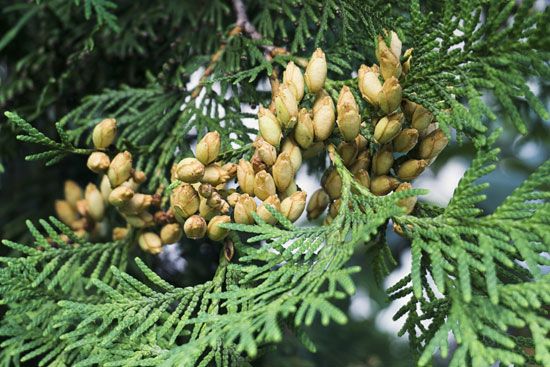
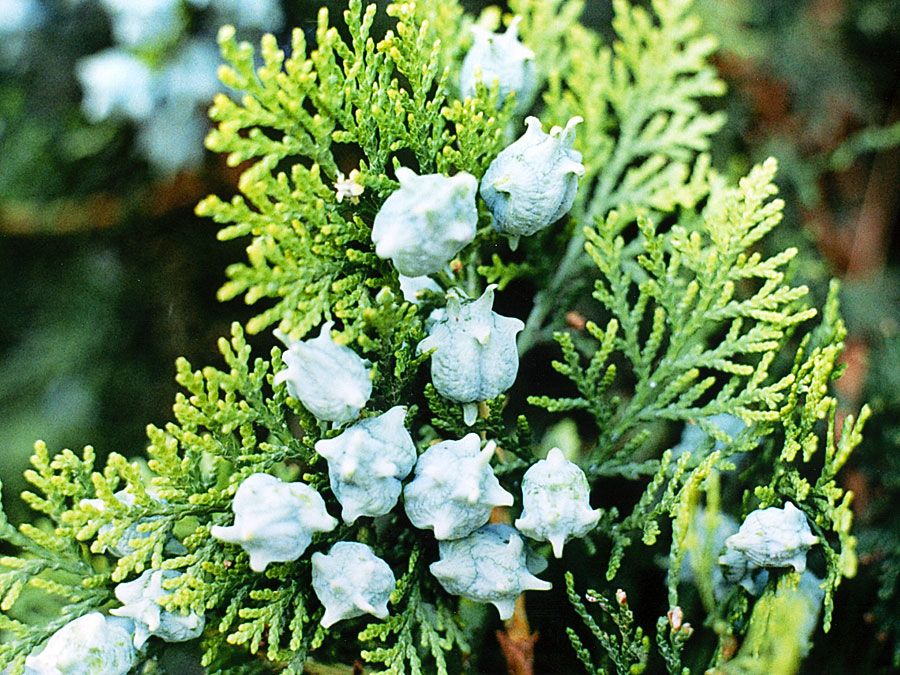
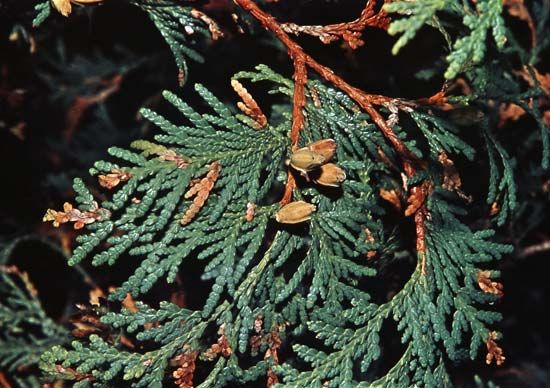
The foliage is characteristically arranged in flattened, spraylike branchlet systems. Each branchlet features four rows of tiny, scalelike leaves. While mature foliage is scalelike, juvenile leaves are often longer and needlelike, and in some species, these juvenile forms may persist alongside the mature leaves. In the case of the Chinese arborvitae, the branchlet systems are notably arranged in vertical, fanlike patterns.1
Bark
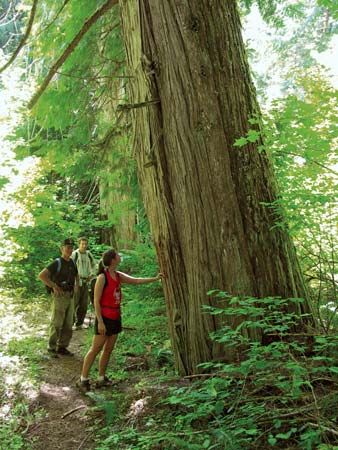
The bark of the arborvitae is composed of a thin, scaling outer layer and a fibrous inner layer. On the American arborvitae, the trunk is often covered in reddish-brown bark and may occasionally fork near the ground into several main stems.12
What are the main species of arborvitae and where are they native to?
The genus Thuja, commonly known as arborvitae, consists of five species of evergreen conifers within the cypress family. These trees are native to regions across North America and eastern Asia.1
The primary species include:
- American arborvitae (Thuja occidentalis): Native to eastern North America, this is the most common and hardy species, frequently utilized for both timber and ornamental purposes.12
- Western red cedar (Thuja plicata): Native to the Pacific coast of North America, this species is the most significant for timber production and is widely used as an ornamental hedge tree.14
- Chinese arborvitae (Thuja orientalis): Native to Asia, this popular ornamental is distinguished by its symmetrical form and fanlike branchlet systems. Some botanists classify it in a separate genus, Biota, due to its unique structural characteristics.1
What is arborvitae and what does its name mean?
Arborvitae refers to any of the five species of resinous, evergreen conifers belonging to the genus Thuja within the cypress family (Cupressaceae). These trees and shrubs are native to North America and eastern Asia and are widely cultivated for their ornamental value and durable timber.13
The name “arborvitae” is derived from the New Latin arbor vitae, which literally translates to “tree of life”. This name has been in use since at least 1664.13
Botanically, these plants are recognized by their pyramidal growth habit, thin scaling bark, and flattened, spraylike branchlet systems covered in tiny, scalelike leaves. While they are primarily known for their aesthetic appeal in landscaping and hedges, species such as the American arborvitae and the Western red cedar are also valued for their lightweight, fragrant, and rot-resistant wood.12
Sources
- arborvitae — Encyclopædia Britannica
- American arborvitae — Encyclopædia Britannica
- arborvitae — Merriam-Webster
- Western red cedar — Encyclopædia Britannica
Published on · 3 min read