Cypress
Cypress trees and their relatives, such as false cypress, are primarily valued in landscaping for their graceful, often pyramidal habit and attractive…
How are cypress trees used in landscaping and gardening?
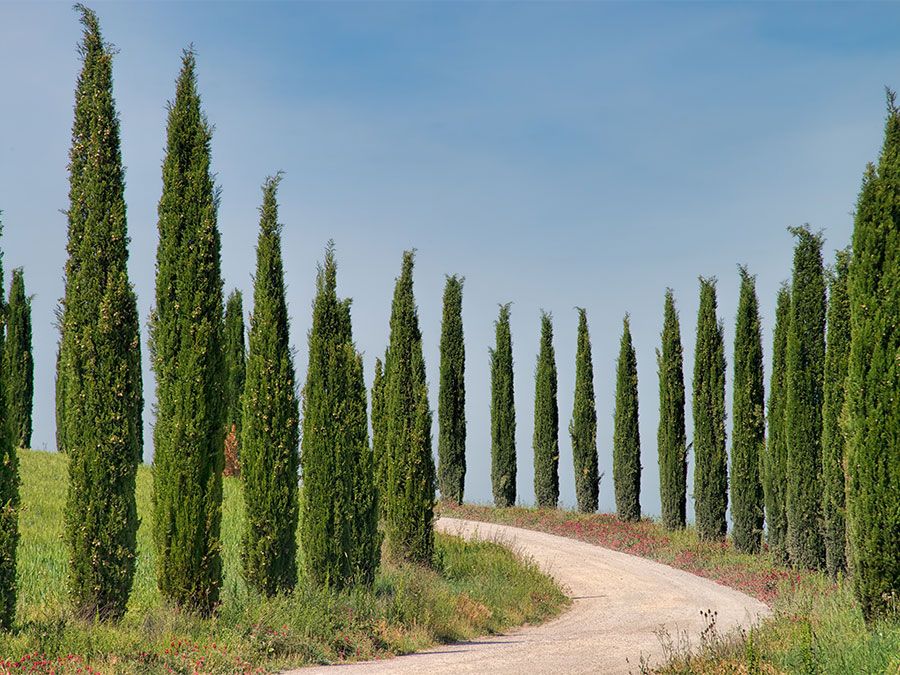
Cypress trees and their relatives, such as false cypress, are primarily valued in landscaping for their graceful, often pyramidal habit and attractive foliage.12
In gardening and ornamental design, these trees are utilized in several ways:
- Ornamental Specimens: Many species, including Italian cypress and Monterey cypress, are cultivated for their aesthetic appeal. Varieties of false cypress, such as the hinoki cypress, are frequently used for bonsai and decorative dwarfing.12
- Windbreaks: The Leyland cypress is a popular hybrid specifically developed to serve as an effective ornamental windbreak.1
- Variety and Form: Because many species—particularly the Lawson cypress—have numerous horticultural forms, gardeners can select from a wide range of sizes, including dwarf varieties suitable for smaller spaces.2
- Symbolism: Historically, certain species like the mourning and Italian cypresses have been planted for their symbolic associations with immortality and death.1
What are the main characteristics of cypress trees?
Cypress trees, belonging to the genus Cupressus within the Cupressaceae family, are evergreen conifers characterized by several distinct features:
- Growth Habit: These trees often reach heights of 25 meters (80 feet) and typically exhibit a pyramidal shape, especially when young. Some species mature into shrubs or develop flattened, spreading heads.1
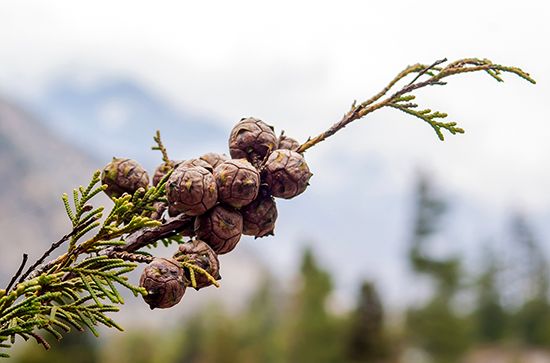
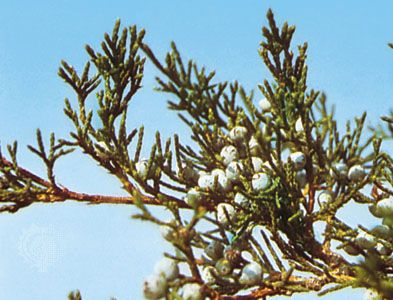
- Foliage: The leaves are aromatic and change with age. On young shoots, they are spreading and awl-shaped, while on older branchlets, they become small, scalelike, and appressed to the stem in opposite pairs, creating a four-sided appearance.1
- Reproduction: Both male and female cones are found on the same tree. The cones are generally small, spherical, and woody or leathery, containing winged seeds that may be retained for several years.1
- Bark and Wood: The bark often sheds in thin plates or strips. The wood is typically light, moderately hard, and durable in soil, though it can be knotty and aromatic.1
- Hardiness: Most species are native to warm-temperate and subtropical regions and generally do not withstand severe frost.1
What are the economic uses of cypress wood?
While true cypresses (Cupressus) are of limited importance as timber, several species provide wood that is light, moderately hard, and notably durable in contact with the soil, though often knotty and aromatic. The most useful timber is obtained from the Bhutan, Italian, and Monterey cypresses.1
In contrast, many species of false cypress (Chamaecyparis) are economically significant timber trees:
- Construction and Interior: The hinoki cypress is highly valued in Japan for construction, furniture, and interior work. The Formosan cypress is used locally for construction.2
- Structural and Utility: The white cypress provides fragrant wood used for mine timbers, fence posts, and other supporting structures.2
- Craft and Specialty: The Nootka cypress (yellow cedar) is used for boats, furniture, and paneling. The Sarawa cypress produces fragrant wood used for boxes and doors.2
- Lumber: The Lawson cypress is one of the most important North American lumbers, prized for its oily, spicy, and lightweight wood.2
Where are cypress trees typically found in the world?
Cypress trees are found in various regions across the globe, though their distribution depends on the specific genus:
- True Cypresses (Cupressus): These evergreen conifers are native to warm-temperate and subtropical regions throughout Asia, Europe, and North America.1
- False Cypresses (Chamaecyparis): These species are native to North America and eastern Asia.4
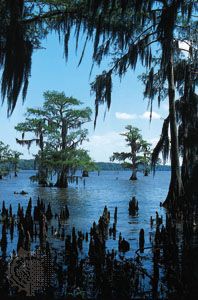
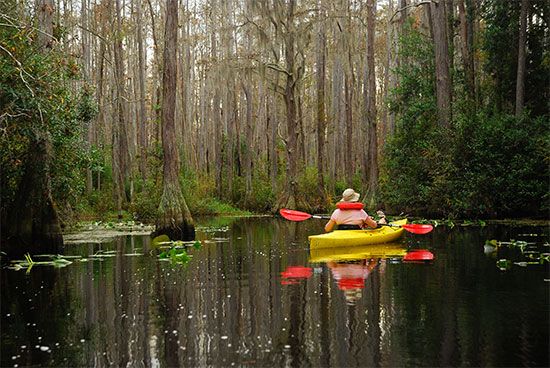
- Bald Cypress (Taxodium distichum): This tree is native to wetland areas of southern North America, particularly in swamps and riverine ecosystems. Its relative, the Montezuma cypress, is found in the southwestern United States, Mexico, and Guatemala.2
Because the term “cypress” is often applied to various unrelated trees within the Cupressaceae family, their geographic range is quite broad, spanning diverse climates from temperate forests to humid wetlands.
Sources
- cypress — Encyclopædia Britannica
- false cypress — Encyclopædia Britannica
- Cupressaceae — Encyclopædia Britannica
- false cypress — Merriam-Webster
- bald cypress — Encyclopædia Britannica
Published on · 3 min read