Aruba
Aruba is an autonomous country within the Kingdom of the Netherlands. Since 1986, it has maintained this self-governing status, having seceded from the…
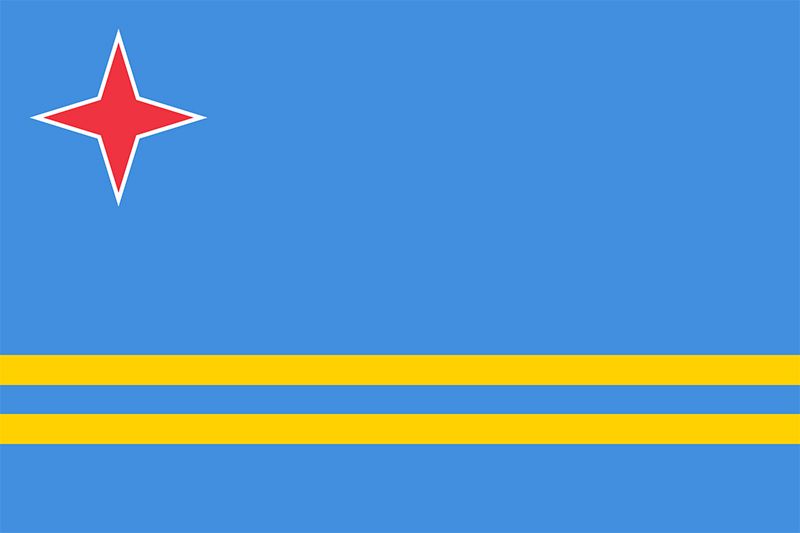
How does Aruba’s government system work, and what is its relationship with the Dutch monarchy?
Aruba is an autonomous country within the Kingdom of the Netherlands. Since 1986, it has maintained this self-governing status, having seceded from the former Netherlands Antilles federation.12
Government Structure
Aruba’s government operates through a parliamentary system:
- Executive Authority: This is vested in a Council of Ministers, which is led by a prime minister.1
- Legislature: The island has a 21-member unicameral legislature known as the Staten (Parliament of Aruba), whose members are elected by universal adult suffrage.31
Relationship with the Dutch Monarchy
Aruba’s connection to the Dutch monarchy is represented by a governor, who serves as the formal head of government. This official is appointed to a six-year term by the Dutch crown and acts as the representative of the reigning monarch of the Netherlands. While Aruba possesses autonomy in its internal affairs, it remains a constituent part of the Kingdom of the Netherlands, and the transition to full independence has been postponed indefinitely.12
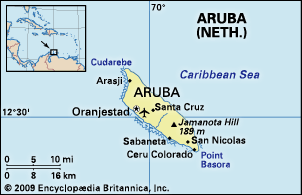
What is the geographical location of Aruba and its relationship to the Netherlands?
Aruba is an island located in the Caribbean Sea, situated southwest of the Lesser Antilles. It lies approximately 50 miles (80 km) northwest of Curaçao and 18 miles (29 km) north of the Paraguaná Peninsula in Venezuela.1
Regarding its relationship with the Netherlands, Aruba is an autonomous country within the Kingdom of the Netherlands. Formerly part of the Netherlands Antilles, Aruba achieved its separate self-governing status in 1986. While it maintains this autonomy, it remains a constituent part of the Kingdom, and the transition to full independence has been postponed indefinitely. The island’s formal head of government is a governor, who is appointed by the Dutch crown to represent the reigning monarch.214
What is the cultural heritage and demographic makeup of Aruba?
Aruba’s cultural heritage and demographic makeup reflect a diverse history shaped by its Indigenous roots and colonial influences.
Demographic Makeup
The majority of Aruba’s population is ethnically mixed, featuring a blend of American Indian ancestry combined with Dutch, Spanish, and African heritage. Unlike many other Caribbean islands, Aruba has a relatively small population of predominantly African descent, as the island historically lacked large-scale slave-based plantations.2
Cultural Heritage and Language
Aruba’s culture is a vibrant synthesis of its past. The official languages are Dutch and Papiamentu, a creole language that evolved from Portuguese, Spanish, and Dutch. English and Spanish are also widely spoken.2
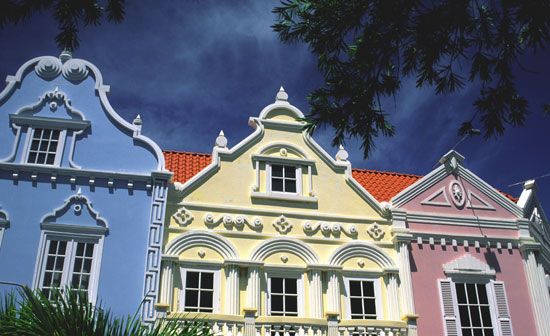
The island’s cultural life is celebrated through various events, including pre-Lenten Carnival and New Year’s Day festivities. In the capital, Oranjestad, visitors can observe the influence of Dutch colonial architecture, with restored landmarks like the bright green City Hall and the historic Fort Zoutman. Museums, such as the National Archaeological Museum, preserve the history of the island’s earliest Arawak inhabitants, while the Aruba Aloe Vera Factory highlights the island’s agricultural history.21
Religious life is predominantly Roman Catholic, with smaller minorities of Protestants and Jehovah’s Witnesses.2
How has Aruba’s history, including colonization and independence movements, shaped its current status?
Aruba’s current status as an autonomous country within the Kingdom of the Netherlands is the result of a long history of colonial shifts and a specific political movement for self-governance.
Colonial History
Originally inhabited by Arawak Indians, Aruba was claimed by Spain in 1499. In 1636, the island was seized by the Dutch and occupied by the Dutch West India Company. During the Napoleonic Wars, the island briefly fell under British rule before being returned to the Netherlands in 1816. For much of its colonial history, Aruba was administered as part of the Netherlands Antilles, a political arrangement that left Aruba subordinated to the main island of Curaçao.2
The Path to Autonomy
In the 1970s, a popular movement led by the People’s Electoral Movement (Movimento Electoral di Pueblo) emerged, driven by a desire to end Curaçaoan domination. This movement successfully pushed for a change in status, and in 1986, Aruba achieved its own autonomous government within the Kingdom of the Netherlands. While the island initially sought independence, the Aruban government, in agreement with the Netherlands and the Netherlands Antilles, decided in 1994 to postpone the transition to full independence indefinitely.24
Sources
- Aruba: Country Facts — Encyclopædia Britannica
- Aruba — Encyclopædia Britannica
- Netherlands Antilles — Encyclopædia Britannica
- flag of Aruba — Encyclopædia Britannica
- Aruba — Merriam-Webster
- Netherlands - Constitutional framework — Encyclopædia Britannica
- Netherlands: Country Facts — Encyclopædia Britannica
- Oranjestad — Encyclopædia Britannica
- Netherlands Antilles - Sint Eustatius — Encyclopædia Britannica
Published on · 3 min read