Aspleniaceae
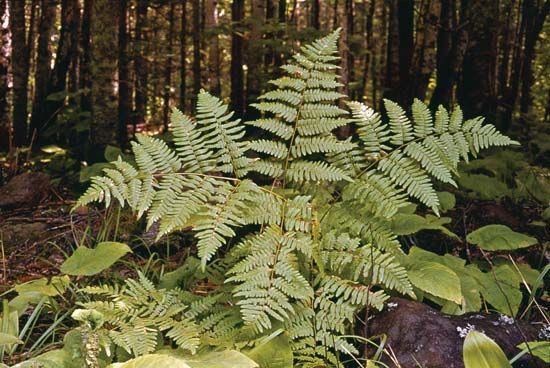
Aspleniaceae, commonly known as the spleenwort family, is a group of ferns belonging to the division Pteridophyta. This family includes approximately 800…
What is Aspleniaceae?
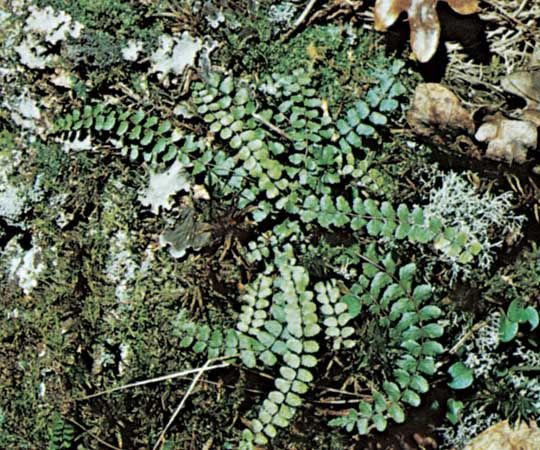
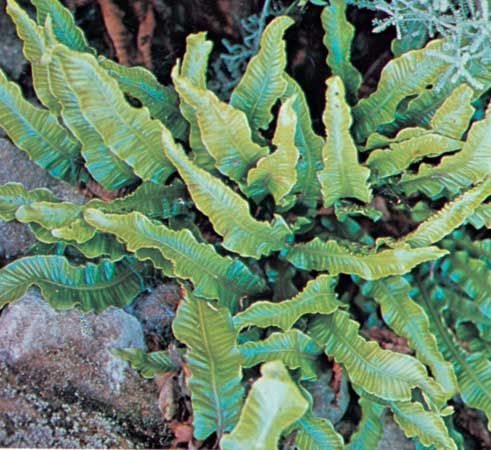
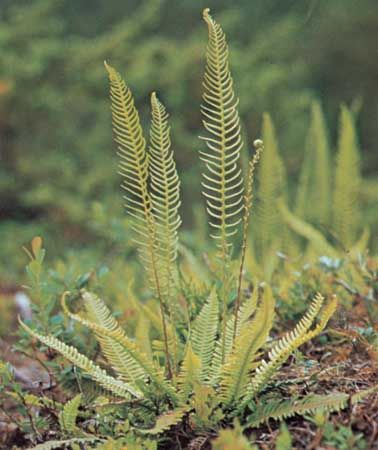
Aspleniaceae, commonly known as the spleenwort family, is a group of ferns belonging to the division Pteridophyta. This family includes approximately 800 species of vascular plants. While some botanists classify the entire family under the single genus Asplenium, others recognize up to nine additional genera, such as Camptosorus (walking fern) and Phyllitis (hart’s tongue fern).1
These plants are typically identified by their sporangia, which grow in lines along the veins. These are usually protected by an indusium, a narrow, membranous flap of tissue. The spores themselves are generally bean-shaped. Due to their aesthetic appeal, several species—most notably the bird’s nest ferns—are frequently cultivated as houseplants or in greenhouses.1
How do ferns reproduce using spores?
Ferns reproduce through a complex life cycle that alternates between two distinct stages: the sporophyte and the gametophyte.2
The Sporophyte Stage
The mature fern plant, or sporophyte, produces haploid spores within specialized structures called sporangia. These are often clustered on the undersides of leaves in groups known as sori, which may be protected by a flap of tissue called an indusium. Once mature, the sporangia release these spores into the wind.23
The Gametophyte Stage
If a spore lands in a suitable environment, it germinates to form a tiny, heart-shaped, or ribbonlike sexual plant called a gametophyte (or prothallium). These structures are typically bisexual, developing both male (antheridia) and female (archegonia) sex organs on their undersurface.234
Fertilization and Growth
Fertilization requires the presence of free water. Sperm produced in the antheridia swim using hairlike cilia toward the archegonia, guided by organic acids. Once a sperm fertilizes an egg, a zygote is formed. This embryo develops into a new, independent sporophyte, eventually causing the parental gametophyte to wither and die as the young fern becomes established.423
What are the main differences between vascular and non-vascular plants?
The primary distinction between vascular and non-vascular plants lies in the presence of specialized tissues for internal transport and structural support.
Vascular Plants
Vascular plants, or tracheophytes, possess vascular tissue consisting of xylem and phloem. Xylem conducts water and minerals from the roots, while phloem transports food materials throughout the plant. The presence of lignin in xylem cells provides the structural rigidity necessary for these plants to grow to significant heights and develop true roots, stems, and leaves. In these plants, the sporophyte is the dominant, conspicuous phase of the life cycle.5678
Non-vascular Plants
Non-vascular plants, or bryophytes, lack this specialized vascular tissue and do not possess true roots, stems, or leaves. Because they lack efficient internal transport systems and a well-developed cuticle to prevent water loss, they are generally restricted to moist environments and rarely grow more than a few centimeters tall. In bryophytes, the gametophyte is the dominant, free-living photosynthetic phase, while the sporophyte remains dependent on the gametophyte for nourishment.8
Why are some spleenworts called walking ferns?
The common name “walking fern” refers to species such as Asplenium rhizophyllum (often classified under the genus Camptosorus). These ferns are called “walking” because of their unique method of vegetative reproduction: new plantlets sprout wherever the elongated, arching tips of the parent plant’s leaves touch the ground.9110
As these new plantlets take root and grow, the parent plant appears to “walk” or spread across the landscape from its original location. These hardy, evergreen plants are typically found in shaded areas, often growing on limestone ledges or in limey wooded environments.109
Sources
- Aspleniaceae — Encyclopædia Britannica
- fern - Life cycle — Encyclopædia Britannica
- plant reproductive system - Ferns — Encyclopædia Britannica
- fern - Sexual reproduction — Encyclopædia Britannica
- plant - Definition of the category — Encyclopædia Britannica
- xylem — Encyclopædia Britannica
- plant - Definition of the category — Encyclopædia Britannica
- lower vascular plant - Vascular system — Encyclopædia Britannica
- walking fern — Encyclopædia Britannica
- fern - Ecology — Encyclopædia Britannica
- walking fern — Merriam-Webster
Published on · 3 min read