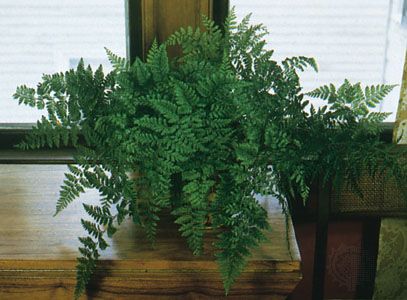
Dennstaedtiaceae
The Dennstaedtiaceae family, often referred to as the bracken family, comprises about 10 genera and 250 species of ferns.
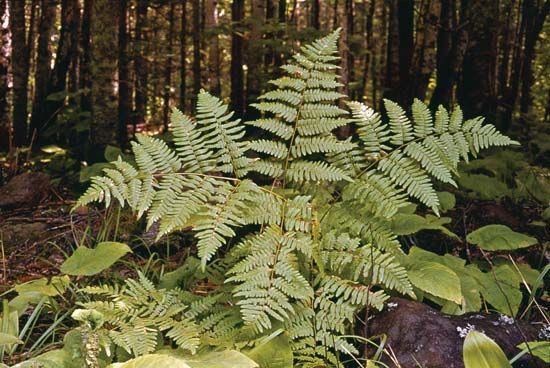
What are some common names for ferns in the Dennstaedtiaceae family?
The Dennstaedtiaceae family, often referred to as the bracken family, comprises about 10 genera and 250 species of ferns.1
The most prominent member of this family is the bracken (Pteridium aquilinum), which is one of the most widely distributed fern species in the world. Within the bracken group, several common names are used to identify specific subspecies or varieties, including:12
- Hairy bracken (or western bracken; P. aquilinum pubescens)2
- Eastern bracken (P. aquilinum latiusculum)2
- Tailed bracken (P. aquilinum pseudocaudatum)2
While Pteridium is the most economically significant genus, other genera within the Dennstaedtiaceae family, such as Dennstaedtia, Hypolepis, and Microlepia, are frequently cultivated as ornamentals.1
Which notable genera are included in the Dennstaedtiaceae family?
The Dennstaedtiaceae family, commonly known as the bracken family, consists of approximately 10 genera and 250 species of ferns. While the family is distributed worldwide, it is most diverse in tropical regions.
Notable genera within this family include:
- Pteridium: The most economically significant genus, which includes the widespread and often invasive bracken (P. aquilinum).
- Dennstaedtia: A genus of ferns often cultivated for ornamental purposes.
- Hypolepis: Another genus containing species frequently grown as ornamentals.
- Microlepia: A genus also noted for its ornamental species.
While some older classifications may associate certain genera with the Polypodiaceae family, modern botanical taxonomy recognizes these groups as part of the Dennstaedtiaceae.14
What are the defining characteristics of the Dennstaedtiaceae fern family?
The Dennstaedtiaceae family, commonly known as the bracken or cup fern family, is a group of ferns within the order Polypodiales that includes approximately 10 to 11 genera and 250 species. While most diverse in tropical regions, the family is distributed nearly worldwide.17
Defining characteristics of the family include:
- Growth Habit: Most species are terrestrial, though some are known to climb on surrounding vegetation. They typically possess long-creeping, hairy rhizomes, which can reach significant lengths in some species.17
- Leaf Morphology: The leaves (fronds) are highly variable but are generally 2 to 4 times pinnately compound. They may be glabrous (smooth) or hairy.17
- Reproductive Structures: The sori are typically marginal or submarginal and can be discrete or form a continuous line. They are often protected by a cup-shaped or lateral, elongate indusium, sometimes accompanied by a reflexed leaf margin. The sporangia feature a vertical annulus.17
- Spores: The family produces mostly trilete (tetrahedral-globose) spores.7
The most economically significant member is the bracken (Pteridium aquilinum), which is noted for its aggressive, invasive nature and toxicity to livestock.1
How are Dennstaedtiaceae ferns distributed geographically around the world?
The Dennstaedtiaceae family of ferns exhibits a nearly worldwide distribution. While the family is most diverse within tropical regions, it is also well represented in temperate floras across the globe.1
The family’s geographic reach is exemplified by the genus Pteridium, which includes the widely distributed bracken (P. aquilinum). This species is particularly notable for its ability to act as an aggressive invasive species when introduced to areas outside of its native range, where it can dominate open or disturbed landscapes.1
Sources
- Dennstaedtiaceae — Encyclopædia Britannica
- bracken — Encyclopædia Britannica
- list of ferns — Encyclopædia Britannica
- Dennstaedtia — Merriam-Webster
- Pteridium — Merriam-Webster
- Pteris — Merriam-Webster
- fern - Annotated classification — Encyclopædia Britannica
- plant reproductive system - Ferns — Encyclopædia Britannica
- plant - Subclass Polypodiidae — Encyclopædia Britannica
Published on · 2 min read