Davalliaceae
Davalliaceae, commonly known as the rabbit’s foot fern family, is a group of plants within the order Polypodiales. This family consists of a single genus…
What is Davalliaceae?
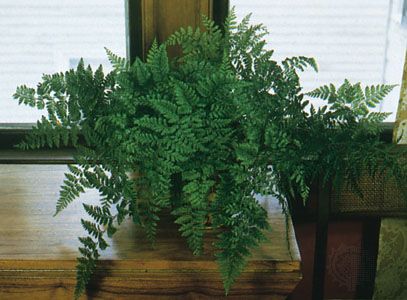
Davalliaceae, commonly known as the rabbit’s foot fern family, is a group of plants within the order Polypodiales. This family consists of a single genus, Davallia, which comprises approximately 65 species.1
These ferns are primarily found in tropical regions, particularly in the Old World. Most species are epiphytes characterized by long-creeping, densely scaly rhizomes. Their leaf structures are variable, often appearing pinnately compound, and they produce spores within sori that are typically protected by a membranous indusium.12
Due to their attractive appearance, some species are popular as ornamentals in homes and greenhouses, frequently grown in hanging baskets where their hairy rhizomes can drape over the sides.1
What are epiphytes and how do they grow on other plants?
An epiphyte is any plant that grows upon another plant or object solely for physical support. It is important to clarify that epiphytes are not parasitic; they do not derive nourishment from their host, but rather use them as a platform to reach sunlight in dense environments like tropical forest canopies.34
These “air plants” obtain water and nutrients through specialized mechanisms:
- Water Absorption: They collect moisture from rain and water vapor in the air. While many use their roots to absorb water, some species utilize specialized leaves for this purpose.3
- Nutrient Acquisition: Minerals are occasionally taken from rain, but most nutrients are absorbed from organic debris—such as decaying leaves—that accumulates on the supporting plant.3
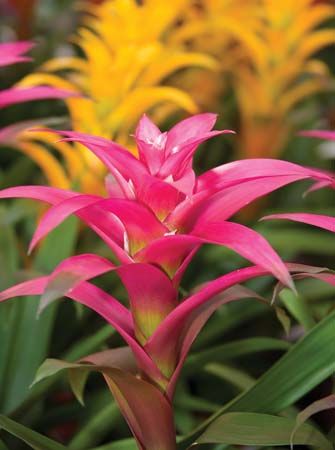
Common examples include orchids, ferns, mosses, and members of the Bromeliaceae family.34
How do ferns reproduce using spores instead of seeds?
Ferns reproduce through a complex life cycle that alternates between two distinct stages: the sporophyte and the gametophyte.5
The Sporophyte Stage
The familiar fern plant—consisting of roots, stems, and leaves—is the sporophyte. As it matures, it produces spores within specialized structures called sporangia. These sporangia are often grouped into clusters known as sori, which are frequently visible on the undersides of the fronds. When mature, these spores are released and dispersed by wind currents.567
The Gametophyte Stage
If a spore lands in a suitable, moist environment, it germinates to form a tiny, heart-shaped, or ribbonlike sexual plant called a gametophyte, or prothallium. This stage is typically very small and ephemeral.568
- Fertilization: The prothallium produces male and female sex organs. Sperm and eggs are generated, and fertilization occurs, usually requiring a film of water for the sperm to swim to the egg.56
- New Sporophyte: Once the egg is fertilized, it develops into a new, independent sporophyte plant. As this juvenile plant establishes itself, the parental gametophyte withers and dies.56
While this sexual cycle allows ferns to colonize new habitats, much of their spread in nature occurs through vegetative reproduction via rhizomes, which allows them to form large, genetically uniform colonies.58
What is the function of a rhizome in a fern’s growth?
A rhizome is a horizontal stem that grows partially or entirely underground and serves several critical functions in a fern’s growth and survival:
- Structural Support: In many ferns, the rhizome is the only stem of the plant, acting as the central axis from which the roots and fronds (leaves) emerge.105
- Storage: Rhizomes function as storage organs for starches and proteins, providing the energy reserves necessary for the plant to perennate, or survive through unfavorable seasons.10
- Vegetative Propagation: Rhizomes enable ferns to reproduce asexually. By branching and spreading, they allow the parent plant to form large, genetically uniform colonies or clones, which is a primary method of expansion for many species.1011
In some ferns, the rhizome is the only part of the plant that persists, while the leaves and reproductive structures are the only visible components.10
Sources
- Davalliaceae — Encyclopædia Britannica
- fern - Distribution and abundance — Encyclopædia Britannica
- epiphyte — Encyclopædia Britannica
- Did you know? — Merriam-Webster
- fern - Life cycle — Encyclopædia Britannica
- fern - The sorus — Encyclopædia Britannica
- plant reproductive system - Ferns — Encyclopædia Britannica
- fern - Ecology — Encyclopædia Britannica
- water fern — Encyclopædia Britannica
- rhizome — Encyclopædia Britannica
- plant - Subclass Polypodiidae — Encyclopædia Britannica
- fern - Annotated classification — Encyclopædia Britannica
- fern - Root — Encyclopædia Britannica
Published on · 3 min read