Atiu
Atiu, also known as Enuamanu ("land of birds"), is the third-largest island in the Cook Islands, a self-governing state in free association with New Zealand…
What is Atiu?
Atiu, also known as Enuamanu (“land of birds”), is the third-largest island in the Cook Islands, a self-governing state in free association with New Zealand located in the South Pacific Ocean.1
Settled by Polynesian voyagers around 500 CE, the island was later explored by James Cook’s crew in 1777. Geologically, Atiu is a raised coral atoll featuring a high central plateau surrounded by a 66-foot-high coral reef known as makatea, which is notable for its many underground caves.1
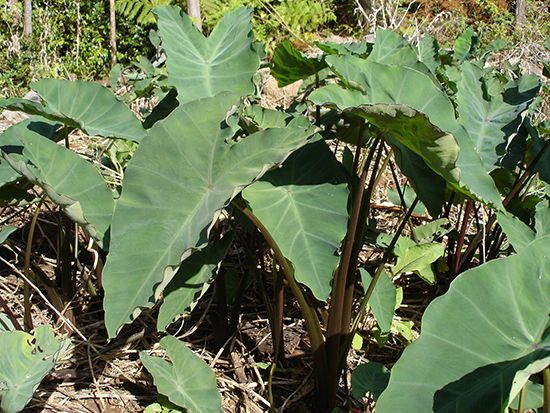
The island’s fertile volcanic soil supports the cultivation of crops such as taro, citrus fruits, and copra, which are exported despite the lack of a traditional lagoon behind the fringing reef that complicates shipping. Settlement is concentrated entirely in the island’s interior.1
What makes a raised coral atoll different from other types of islands?
A raised coral atoll differs from typical coral islands primarily in its geological origin and physical structure. While most coral islands are formed by accretion—the accumulation of reef debris, sand, and sediment piled up by waves and storms—a raised coral atoll is created through uplift.3
The key distinctions include:
- Formation Process: Typical coral islands are low-lying, unstable features built upon the flat tops of reefs near sea level. In contrast, raised coral atolls result from crustal movements that push an entire reef system above the high-tide mark.34
- Topography: Because they have been elevated, these islands often form rocky, plateaulike features characterized by cliffs. Their surfaces are frequently sculpted by solution weathering, creating a rugged, karst-like landscape.3
- Interior Structure: While a standard atoll features a lagoon at sea level, a raised atoll may have a dry or very shallow interior basin. Over time, subaerial erosion can carve these islands into a saucer-shaped form, with a prominent rim and a depressed central region.34
- Stability: Unlike accreted islands, which are precarious and subject to constant reshaping by storms, raised atolls are generally more permanent landmasses due to their solid limestone foundations.3
Why is Atiu nicknamed the land of birds?
Atiu is nicknamed Enuamanu, which translates to “land of birds,” because of its historical and ecological significance as a habitat for various avian species. While the provided search results confirm this name and its meaning, they do not specify the exact historical or biological reasons behind the moniker, such as the presence of specific endemic bird populations or historical cultural practices associated with birds on the island.1
How did Polynesian voyagers navigate to islands like Atiu?
Polynesian voyagers navigated the vast Pacific Ocean using sophisticated, non-instrumental methods that relied on an intimate understanding of the natural world. Rather than using modern tools, these navigators utilized traditional techniques that were passed down through generations and have been revived in recent decades through the work of organizations like the Polynesian Voyaging Society.
Key aspects of their navigational expertise included:
- Environmental Observation: Navigators relied on the careful observation of stars, ocean swells, wind patterns, and the behavior of birds and marine life to determine their position and direction while at sea.
- Traditional Vessels: They utilized double-hulled voyaging canoes, such as the Hokule’a, which were designed for long-distance travel and proved capable of traversing thousands of miles of open ocean.
- Oral Tradition and Mentorship: Navigation was considered an art form, learned through rigorous training that emphasized listening to elders, observing the environment, and practicing hands-on skills. This knowledge was preserved through oral history and storytelling, which remain central to Polynesian cultural identity.
These methods allowed Polynesians to settle islands across the Pacific, including long-distance voyages such as the journey from the Marquesas Islands to Hawaii by approximately 400 CE.910
Sources
- Atiu — Encyclopædia Britannica
- Atiuan — Merriam-Webster
- atoll — Encyclopædia Britannica
- Makatea — Encyclopædia Britannica
- coral island — Encyclopædia Britannica
- coral reef - Origin and development of reefs — Encyclopædia Britannica
- Cook Islands - Plant and animal life — Encyclopædia Britannica
- Seychelles - Plant and animal life — Encyclopædia Britannica
- navigation - Development of marine navigation — Encyclopædia Britannica
- Polynesian culture - Contemporary Polynesia — Encyclopædia Britannica
- Stone Age - Oceania — Encyclopædia Britannica
Published on · 3 min read