Taro
Taro (Colocasia esculenta) is a herbaceous plant belonging to the Araceae family, likely native to southeastern Asia. It is widely cultivated in tropical…
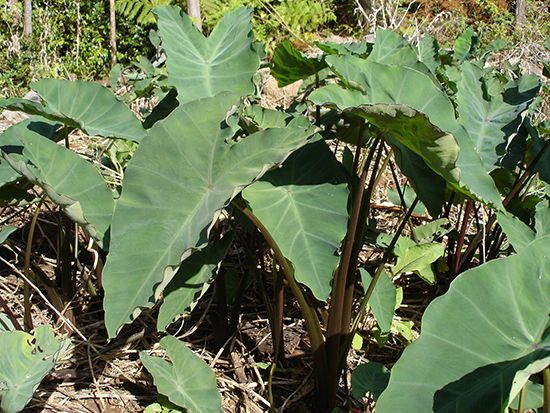
What is Taro?
Taro (Colocasia esculenta) is a herbaceous plant belonging to the Araceae family, likely native to southeastern Asia. It is widely cultivated in tropical regions for its large, starchy, underground stems known as corms.12
These corms are a staple food source, often cooked as a vegetable or processed into puddings, breads, and flour. In Polynesia, taro is famously used to make poi, a traditional paste created by pounding cooked roots. Additionally, the plant’s large leaves are frequently consumed as a stewed vegetable.123
It is essential to note that taro corms and leaves are poisonous if eaten raw due to their content of acrid calcium oxalate; they must be thoroughly heated to destroy these compounds before consumption. Nutritionally, taro contains resistant starch, which supports gut health and aids in blood sugar regulation.1
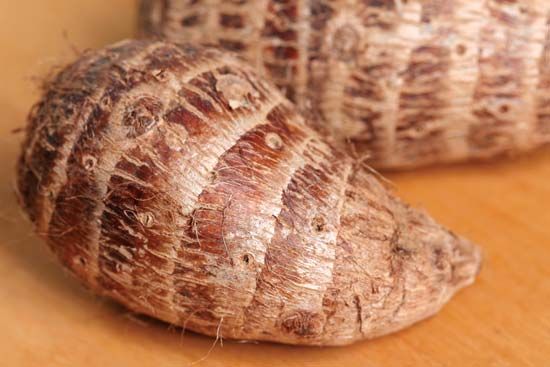
How is poi traditionally prepared in Hawaii?
In Hawaii, poi is a traditional staple food made almost exclusively from the taro root. The preparation process involves several distinct steps:2
- Cooking: The taro roots are first peeled and cooked.2
- Pounding: The cooked roots are pounded into a pulp. The word “poi” itself originally referred to this specific action of pounding food into a paste.2
- Mixing and Straining: Water is added to the pulp to achieve the desired consistency, and the mixture is strained to remove any remaining fibers.2
The resulting product is a bland, bluish-gray paste. It can be consumed fresh or allowed to ferment for up to a week, which gives the dish a tangy flavor. Traditionally, Hawaiians did not use utensils to eat poi; instead, it is categorized as “one-finger,” “two-finger,” or “three-finger” poi, depending on the number of fingers required to scoop up a mouthful.2
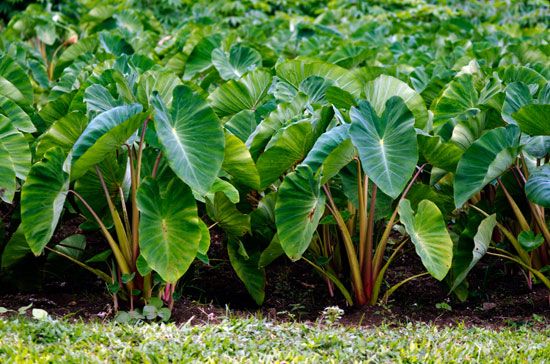
Why must taro be cooked before it is eaten?
Taro must be cooked before consumption because both its corms and leaves contain calcium oxalate, a crystalline salt that is poisonous if ingested raw.15
This substance is highly acrid and can cause significant irritation or harm to the body. Thorough heating is required to destroy these compounds, rendering the plant safe to eat. Once properly cooked, taro becomes a nutritious, highly digestible source of starch that can support gut health and assist in blood sugar regulation.1
What are some other common starchy root vegetables?
Starchy root vegetables are a diverse group of underground plant structures—including roots, tubers, corms, and rhizomes—that serve as essential sources of carbohydrates and calories in many global cuisines.6
Common examples include:
- Potatoes: The most widely cultivated tuber, which also provides protein and vitamin C.76
- Sweet Potatoes: Tuberous roots that are often rich in beta-carotene.76
- Yams: Important staple crops in tropical regions, botanically distinct from sweet potatoes.78
- Cassava: A tuberous root that is a primary calorie source in many tropical areas, though it must be processed correctly to remove toxic, cyanide-forming compounds.76
- Taro: A corm that serves as a staple food, particularly in tropical climates.76
- Other varieties: The category also includes vegetables like Jerusalem artichokes, jícama, beets, and turnips, as well as rhizomes like ginger and turmeric, which are often valued for their flavor.6
These vegetables are prized for their hardiness, ability to store well, and versatility in cooking, often serving as the foundation for regional dishes worldwide.6
Sources
- Taro — Encyclopædia Britannica
- poi — Encyclopædia Britannica
- taro — Merriam-Webster
- Hawaii - Cultural life — Encyclopædia Britannica
- calcium oxalate — Merriam-Webster
- human nutrition - Starchy roots — Encyclopædia Britannica
- Root vegetable — Encyclopædia Britannica
- Angiosperm - Root systems — Encyclopædia Britannica
- Yam — Encyclopædia Britannica
Published on · 3 min read