Auklet
An auklet is any of six species of small seabirds belonging to the family Alcidae. These birds are primarily found breeding in the North Pacific and the…
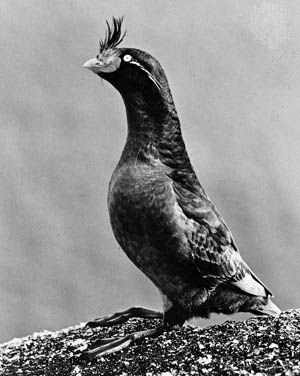
What is Auklet?
An auklet is any of six species of small seabirds belonging to the family Alcidae. These birds are primarily found breeding in the North Pacific and the Bering Sea, with some populations wintering as far south as Mexico and Japan.1
Auklets are distinguished from their relatives, the murrelets, by their unique breeding plumage, which often includes head ornaments and brightly colored bill plates similar to those of puffins. They typically nest in coastal rock crevices and lay a single egg, with the young remaining in the nest until they are fully fledged.1
Notable species include:
- Least auklet (Aethia pusilla): The smallest member of the family, measuring about 15 cm (6 inches) in length.1
- Cassin’s auklet (Ptychoramphus aleuticus): A common, relatively plain, and gray species found from the Aleutian Islands to Baja California.1
Auklets are part of the broader group of diving birds known as alcids, which are entirely dependent on the sea for their diet of fish, crustaceans, and plankton.2
What are the main differences between auklets and puffins?
Auklets and puffins are both members of the Alcidae family of diving birds, sharing characteristics such as short wings, webbed feet, and a reliance on the sea for food. However, they differ in several key ways:13
- Size and Diet: Auklets are generally smaller than puffins. While both groups feed on small fish and invertebrates, auklets—particularly the smaller species—subsist almost entirely on tiny, planktonic crustaceans like euphausiids, whereas larger alcids like puffins consume a broader range of small fish and invertebrates.2
- Appearance: During the breeding season, auklets are known for developing distinct head ornaments, such as plumes or crests. While they do possess brightly colored bill plates similar to those of puffins, these ornaments are a defining feature that helps distinguish them from other related groups like murrelets.4
- Nesting Habits: Auklets typically nest in rock crevices near the sea, where they lay a single egg and keep their young until they are fully fledged.4
How do auklets survive in the cold waters of the Bering Sea?
Auklets are highly adapted to the harsh, cold environment of the Bering Sea and the North Pacific through their specialized reliance on the marine ecosystem. As members of the Alcidae family, these seabirds are entirely dependent on a marine food base, which allows them to thrive in regions where food is abundant due to upwelling currents. These currents bring nutrient-rich waters to the surface, supporting the fish and invertebrates that auklets require for survival.15
In the High Arctic, where sea ice can be a barrier, auklets and other marine birds often utilize polynyas—areas of open water within the pack ice—to access food and maintain nesting colonies at high latitudes. While some auklets migrate to more temperate waters during the winter, species like the least auklet are remarkably resilient, capable of wintering in the rough, freezing northern waters. Their ability to nest in protected coastal rock crevices also provides essential shelter from the extreme elements of their polar habitat.51
What other birds belong to the Alcidae family?
The Alcidae family, often referred to as alcids, comprises 22 species of diving birds within the order Charadriiformes. In addition to auklets and puffins, this family includes several other distinct groups:26
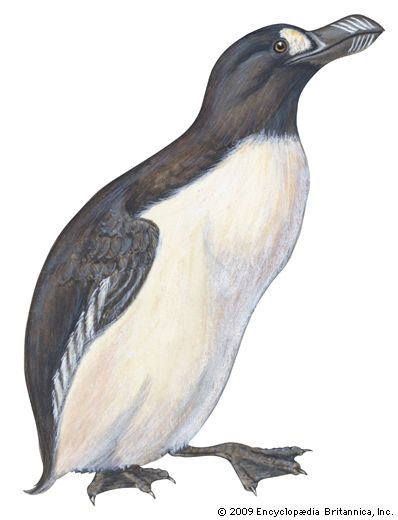
- Auks: This group includes the great auk (which has been extinct since 1844), the dovekie (also known as the little auk), and the razorbill.2
- Murres: These birds are known for their upright posture on land, similar to penguins.2
- Guillemots: Closely related to other alcids, these birds are also adapted to life in northern marine environments.26
- Murrelets: These are smaller seabirds related to the auklets, though they generally lack the elaborate head plumes found on breeding auklets.23
These birds are characterized by their short wings, webbed feet, and reliance on the sea for food, typically nesting in colonies on cliff ledges, in burrows, or within rock crevices.21
Sources
- Auklet — Encyclopædia Britannica
- Auk — Encyclopædia Britannica
- Alcidae — Merriam-Webster
- Charadriiform - Locomotion and feeding behaviour — Encyclopædia Britannica
- Polar ecosystem - Biota of the Arctic — Encyclopædia Britannica
- Alcidae — Encyclopædia Britannica
Published on · 3 min read