Bird
Conservation efforts for endangered bird species involve a variety of targeted interventions designed to reverse population declines caused by human…
What conservation efforts are in place to protect endangered bird species?
Conservation efforts for endangered bird species involve a variety of targeted interventions designed to reverse population declines caused by human activity. These strategies generally fall into three categories:1
Habitat Management and Restoration
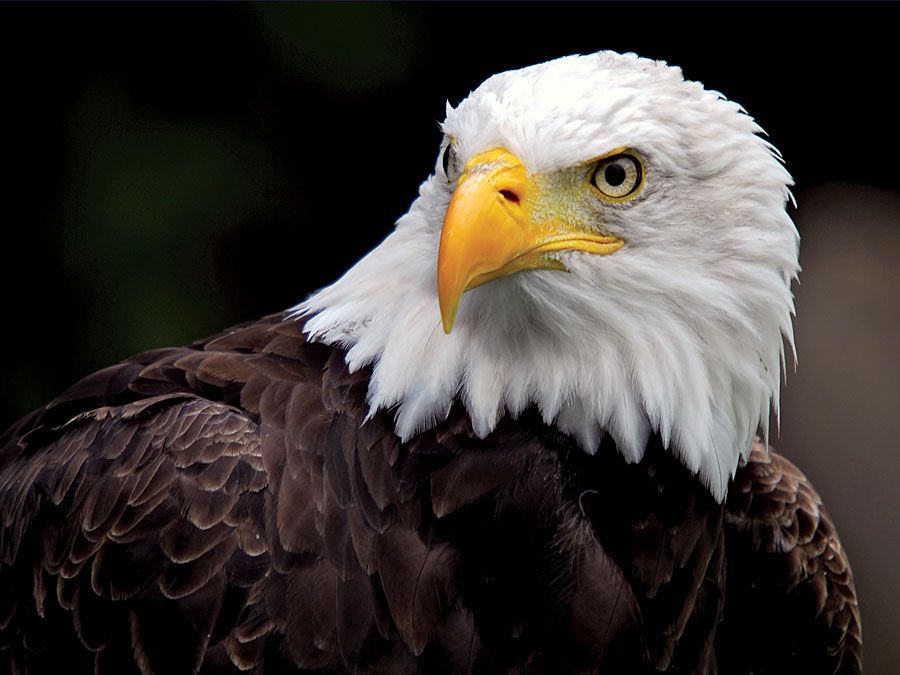
Protecting and restoring natural environments is essential for species survival. For example, the recovery of the Cape Sable seaside sparrow requires the restoration of natural water levels and flow regimes in the Everglades to prevent unnatural flooding or drying of nesting sites. Additionally, legal protections, such as those implemented by the U.S. Fish and Wildlife Service, have successfully criminalized the hunting of specific birds and banned harmful pesticides like DDT, which was instrumental in the recovery of the bald eagle.21
Protective Custody and Captive Breeding
When a species is at extreme risk, individuals may be brought into captivity to ensure survival. This approach was used for the California condor, where all remaining birds were brought into captivity in the 1980s to manage breeding and mitigate threats like lead poisoning. Captive-breeding programs often involve:3
- Genetic Screening: Carefully managing populations to minimize inbreeding and preserve genetic variability.3
- Reintroduction: Releasing captive-reared birds back into the wild, though this process is complex and requires overcoming challenges such as teaching birds necessary survival skills.34
Addressing Specific Threats
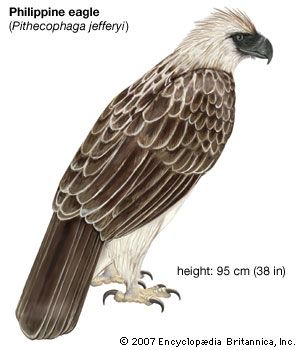
Conservationists also work to mitigate direct pressures such as deforestation, pollution, and the impact of invasive species, which are major drivers of decline for birds like the Philippine eagle.56
How do birds navigate during long-distance flights?
Birds navigate during long-distance flights using a combination of sophisticated biological mechanisms and environmental cues. Their ability to orient themselves is generally categorized into two types: compass orientation, which allows them to maintain a constant direction, and true navigation, which enables them to determine their position relative to a specific goal.7
Celestial and Magnetic Navigation
- Sun Compass: During the day, birds use the Sun as a compass. By utilizing an internal clock, they compensate for the Sun’s movement across the sky to maintain a consistent heading.7
- Star Navigation: Migrants that travel at night use celestial navigation by observing the position of the stars. They can determine their latitude and longitude based on the arrangement of the night sky.7
- Magnetoreception: Birds possess a sensitivity to the intensity and direction of the Earth’s magnetic field, which serves as a vital tool for orientation during migration.78
Landmarks and Homing
For shorter distances or when nearing their destination, birds rely on familiar topographical and ecological landmarks, such as coastlines, mountain ranges, and vegetation zones. While these landmarks are crucial for homing, they do not fully explain the complex navigation required for journeys spanning thousands of miles.9
How do birds’ respiratory and circulatory systems differ from those of other animals?
Birds possess highly specialized respiratory and circulatory systems that support their high metabolic demands, particularly during flight.
Respiratory System
Unlike other vertebrates that utilize a tidal, bidirectional flow of air, birds employ a unidirectional ventilation system.11
- Air Sacs: The lungs are connected to a series of voluminous air sacs that act like bellows. These sacs ensure that the lungs, which maintain a constant volume, are continuously ventilated with fresh air during both inspiration and expiration.11
- Efficiency: This arrangement allows for superior gas exchange compared to the mammalian lung. The flow of gas and blood is carefully organized to maximize oxygen uptake, which is essential for the high energy requirements of flight.11
Circulatory System
While birds share a four-chambered heart with mammals, their circulatory system exhibits distinct evolutionary modifications.121314
- Separation of Circulation: There is a complete separation between pulmonary circulation and systemic circulation.12
- Structural Differences: Unlike the symmetrical arches found in many other vertebrates, birds possess only the right systemic arch, with the left being suppressed. Additionally, their hearts are proportionally larger than those of most mammals, and the renal portal system is significantly reduced.1214
How have birds evolved and adapted to their environments over time?
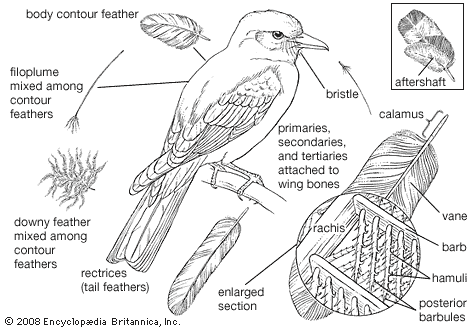
Birds have evolved from a lineage of theropod dinosaurs, a transition marked by the development of feathers and the eventual mastery of powered flight. Initially, feathers likely served functions such as thermal insulation, communication, or camouflage rather than aerodynamics. Over time, these structures, combined with the evolution of wings and lightweight, hollow bones, enabled birds to occupy diverse ecological niches.15161718
Evolutionary Adaptations
- Feeding Specializations: Birds have evolved a vast array of bill shapes and feeding behaviors to exploit specific food sources, ranging from probing bark or soil to catching insects on the wing or seizing larger prey with talons.1920
- Physiological Resilience: To survive in extreme environments, such as high altitudes or cold regions, birds have developed highly efficient respiratory systems that maximize oxygen uptake. Species like the bar-headed goose can even modulate their metabolic rates to thrive in oxygen-poor conditions.18
- Behavioral Plasticity: The success of modern birds, particularly passeriforms, is often attributed to superior neural capacities, large brain sizes, and complex behaviors like nest-building, which allow them to adapt to novel habitats.21
Sources
- What Makes a Species Endangered? — Encyclopædia Britannica
- conservation - Protective custody — Encyclopædia Britannica
- Philippine eagle: Top Questions — Encyclopædia Britannica
- conservation - Flood control — Encyclopædia Britannica
- critically endangered species — Encyclopædia Britannica
- conservation - Introducing species — Encyclopædia Britannica
- Migration - Birds — Encyclopædia Britannica
- Migration - Navigation and orientation — Encyclopædia Britannica
- Migration - Other animals — Encyclopædia Britannica
- cetacean - Magnetic sensitivity — Encyclopædia Britannica
- Respiratory system - Birds — Encyclopædia Britannica
- Bird - Muscles and organs — Encyclopædia Britannica
- Bird: Top Questions — Encyclopædia Britannica
- Circulatory system - Birds — Encyclopædia Britannica
- Bird - Evolution and paleontology — Encyclopædia Britannica
- How high do birds fly? — Encyclopædia Britannica
- Bird - The origin of feathers — Encyclopædia Britannica
- Bird - Feeding habits — Encyclopædia Britannica
- Feeding behaviour - Types of food procurement — Encyclopædia Britannica
- Cold desert — Encyclopædia Britannica
- Origins of Birds — Encyclopædia Britannica
- Tundra - Birds — Encyclopædia Britannica
- Passeriform - Evolution and paleontology — Encyclopædia Britannica
Published on · 4 min read