Brambling
The term "Brambling" refers to a specific songbird (Fringilla montifringilla) in the finch family, rather than a type of plant. It is important to…
What is Brambling?
The term “Brambling” refers to a specific songbird (Fringilla montifringilla) in the finch family, rather than a type of plant. It is important to distinguish this bird from a “bramble,” which is a prickly shrub in the genus Rubus that produces fruits like blackberries and raspberries.12
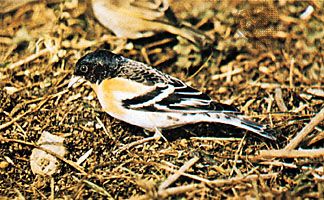
The brambling is a 15-centimetre (6-inch) bird that breeds in coniferous and birch forests ranging from Scandinavia to Japan. During the winter, these birds migrate southward, sometimes appearing in Europe in the millions. Physically, the male is characterized by a mostly black appearance with a white rump and a light red-brown breast and shoulders, while the female is brown with a streaked back. Both belong to the family Fringillidae.1
What are the main differences between finches and other songbirds?
Finches are a diverse group of songbirds belonging to the order Passeriformes, but the term is often applied broadly to species across several different families, including Fringillidae, Emberizidae, Thraupidae, and Estrildidae. Because “finch” is a common name rather than a strictly defined taxonomic category, distinguishing them from other songbirds relies primarily on physical adaptations and feeding habits.34
The primary characteristics that define many birds referred to as finches include:
- Conical Bills: Most finches possess heavy, conical bills specifically adapted for cracking the seeds of grasses and weeds. While bill shape is an evolutionary adaptation to diet, the stout, seed-cracking bill is a hallmark of many finch species.35
- Dietary Habits: Finches are primarily seed-eaters, though many supplement their diet with insects, particularly when feeding their nestlings, which cannot yet crack seeds.3
- Social Behavior: Many finches are highly gregarious, often gathering in large flocks outside of the breeding season, even though they typically nest in scattered pairs.3
- Physical Appearance: Many species exhibit bright, colorful plumage—often featuring shades of red or yellow—while others living in dense vegetation possess protective, streaked coloration.3
In contrast, other songbirds in the order Passeriformes exhibit a vast array of bill shapes and feeding strategies, ranging from insectivorous types with pointed or hooked bills to omnivorous species like crows and jays.5
How do birds migrate across different continents?
Birds migrate across continents by following specific routes determined by geographical features, such as river systems, valleys, and coastlines, as well as meteorological conditions like wind direction and force. While some species follow well-defined paths, many travel along broad airways, with populations sometimes scattering across territories hundreds of miles wide.7
The physiological preparation for these long-distance journeys is governed by an internal rhythm involving the pituitary gland, which triggers metabolic changes such as the accumulation of fat for energy. While this internal cycle prepares the bird, the actual initiation of migration is often triggered by ecological factors, including food availability, temperature, and barometric pressure.8
During flight, birds utilize various strategies to navigate and conserve energy:
- Formation Flying: Species like geese, ducks, and cranes often fly in a “V” formation, allowing members to take turns leading to reduce energy expenditure.7
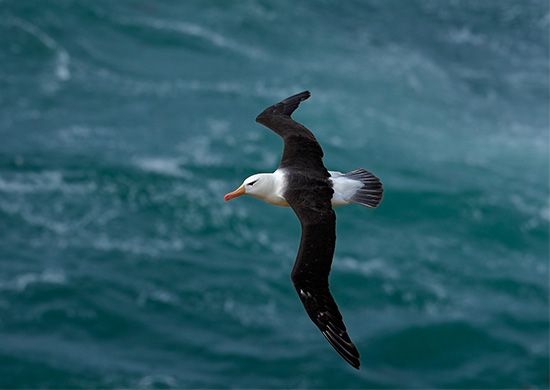
- Wind Utilization: Many pelagic birds, such as albatrosses, drift with prevailing winds to cover vast distances across oceans.9
- Stops: Journeys are frequently interrupted by periods of rest and feeding to replenish energy stores.7
What is the difference between a brambling bird and a bramble plant?
The terms “brambling” and “bramble” refer to entirely different biological entities: one is a bird, and the other is a plant.
The Brambling
The brambling (Fringilla montifringilla) is a songbird in the finch family (Fringillidae). It is a migratory species that breeds in birch and coniferous forests across northern regions, ranging from Scandinavia to Japan. Physically, it is a small bird, measuring about 15 centimeters (6 inches) in length, with males displaying distinctive black, white, and red-brown plumage.1
The Bramble
A bramble refers to a large genus of flowering plants (Rubus) within the rose family (Rosaceae). These are typically prickly shrubs that produce aggregate fruits, such as blackberries and raspberries. Unlike the mobile bird, these plants are rooted, often spread vegetatively, and are found in temperate regions worldwide.2
Sources
- Brambling — Encyclopædia Britannica
- bramble — Encyclopædia Britannica
- Finch — Encyclopædia Britannica
- Fringillidae — Encyclopædia Britannica
- Galapagos finch — Encyclopædia Britannica
- Passeriform - Bill — Encyclopædia Britannica
- Migration - Modes of migration — Encyclopædia Britannica
- Migration - Physiological stimulus of migration — Encyclopædia Britannica
- Migration - In coastal and pelagic regions — Encyclopædia Britannica
Published on · 3 min read