Australian Cattle Dog
The Australian Cattle Dog is a generally robust and active breed, but it is known to be prone to hip dysplasia.
What health issues are common in Australian Cattle Dogs?
The Australian Cattle Dog is a generally robust and active breed, but it is known to be prone to hip dysplasia.1
Hip dysplasia is a hereditary condition involving abnormalities in the hip joint, specifically where the head of the thighbone meets the receiving socket in the hip bone. To help mitigate the risk of developing this condition, it is recommended that puppies be fed a diet specifically formulated for large breeds, which is designed to slow their growth rate.21
While the breed is hardy, owners should remain mindful of this specific orthopedic concern as part of their routine care and health management.1
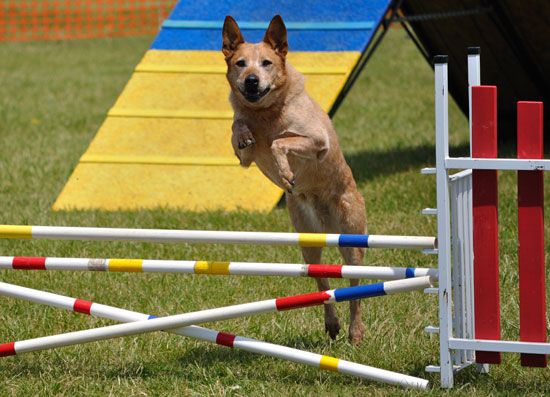
What are the physical characteristics and appearance of Australian Cattle Dogs?
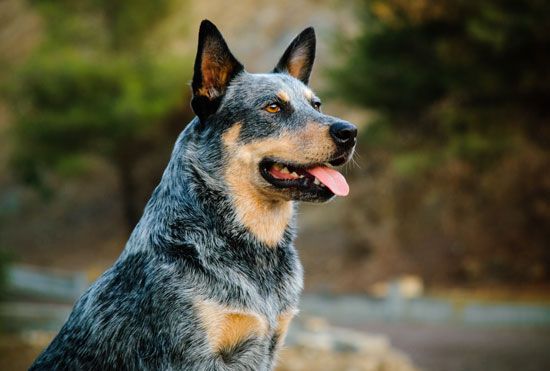
The Australian Cattle Dog is a sturdy, medium-sized breed characterized by its rugged build and high level of physical agility. Standing between 17 and 20 inches (43–51 cm) at the withers and weighing 35 to 50 pounds (16–23 kg), the breed features distinct prick ears and a dense, weather-resistant double coat designed for demanding environments.12
The coat coloration is a defining feature of the breed:
- Blue: Often appears with speckling or mottling, sometimes featuring tan or black markings on the head. Tan may also appear on the throat, chest, and lower legs.
- Red: Appears as a red speckle pattern, typically with darker red markings on the head.
While puppies are born white with facial markings, they develop their characteristic adult coloration as they mature. It is important to note that the breed’s typical roan coat is distinct from a merle pattern, as it does not carry the same genetic health risks associated with double-merle breeding.1
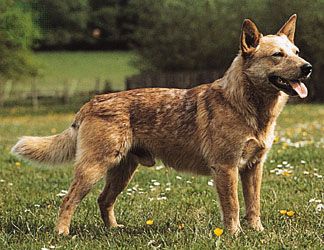
How does the Australian Cattle Dog differ from other herding breeds?
The Australian Cattle Dog, often referred to as a “heeler,” is distinct from many other herding breeds primarily due to its unique ancestry and specific herding technique. While many herding dogs are bred to gather or drive livestock by circling or barking, the Australian Cattle Dog was developed in the 19th century by crossing a Blue Merle Collie with a dingo to work in the demanding conditions of the Australian Outback.12
Key differences include:
- Herding Style: Unlike breeds that rely on “eye” or barking to control stock, the Australian Cattle Dog is a “heeler.” It moves cattle by nipping at their heels, a trait directly inherited from its dingo ancestry.12
- Temperament: The breed is known for being exceptionally tough, rugged, and independent. While highly intelligent, it is often more headstrong and suspicious of strangers than some other herding breeds, making it an excellent watchdog and protection dog.1
- Adaptability: Its dense, weather-resistant coat and sturdy build reflect its development for survival in harsh climates, allowing it to excel in high-intensity dog sports like agility and dock diving.12
What are the origins and history of the Australian Cattle Dog breed?
The Australian Cattle Dog was developed in 19th-century Australia to meet the rigorous demands of working cattle in the harsh Outback environment.21
Breeders created the Australian Cattle Dog by crossing a Blue Merle Collie with a dingo. The primary goal of this crossbreeding was to instill the emerging breed with the dingo’s natural herding instincts, specifically its tendency to nip at the heels of livestock to drive them forward. This unique herding technique is the reason the breed is commonly referred to as a “heeler” or “Blue heeler”.21
The incorporation of dingo traits resulted in a robust, intelligent, and independent dog capable of thriving in challenging conditions. Since its development, the breed has gained recognition for its versatility, excelling in dog sports and obedience, and it has been officially recognized by the American Kennel Club since 1980.21
Sources
- Australian Cattle Dog — Encyclopædia Britannica
- What Dog Breed Is Closest to a Dingo? — Encyclopædia Britannica
- dysplasia — Encyclopædia Britannica
Published on · 3 min read