Badlands National Park
Badlands National Park holds significant cultural and historical importance for the Oceti Sakowin (Sioux), particularly those of the Oglala Sioux Tribe.…
What is the cultural and historical significance of Badlands National Park to Native American tribes?
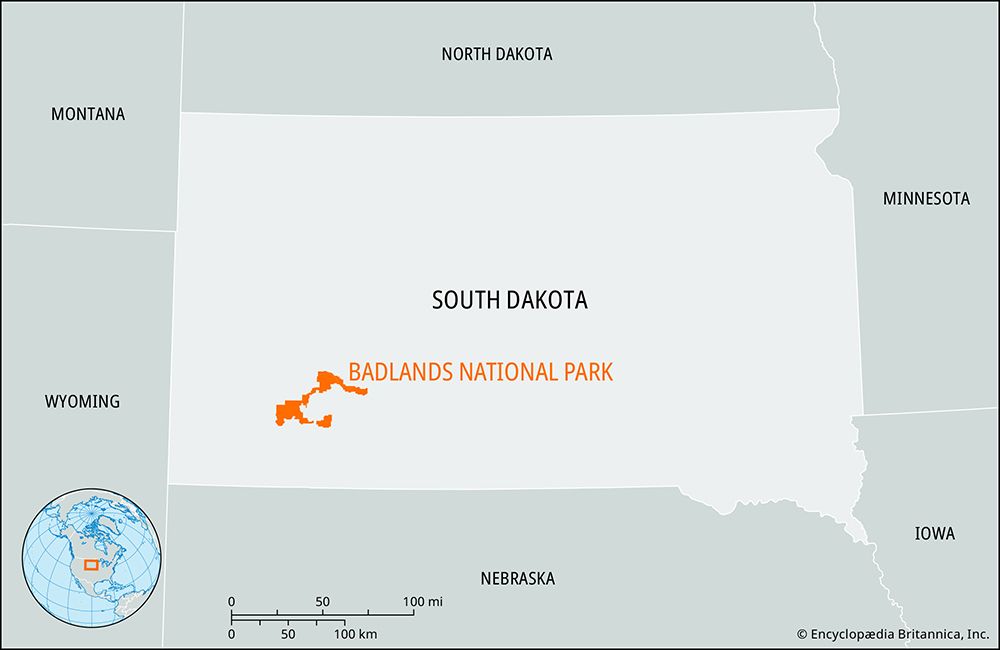
Badlands National Park holds significant cultural and historical importance for the Oceti Sakowin (Sioux), particularly those of the Oglala Sioux Tribe. Portions of the park, specifically the Stronghold and Palmer Creek units, are located within the Pine Ridge Indian Reservation.1
Historically, the Stronghold Unit is recognized as a site where Sioux warriors performed the Ghost Dance rituals during the 1890s. This religious movement emerged during a period of intense hardship and conflict as the Lakota and other Indigenous peoples faced forced relocation onto reservations following the Plains Wars. The Ghost Dance represented a spiritual effort to restore traditional ways of life and resist the pressures of 19th-century expansionism.12
The landscape itself remains deeply connected to the heritage of the region’s Indigenous peoples, who have long maintained a relationship with the land and its resources, such as the bison that historically figured prominently in Lakota religion and culture.2
How was Badlands National Park formed, and over what time period?
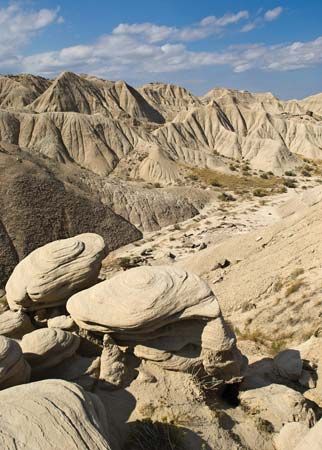
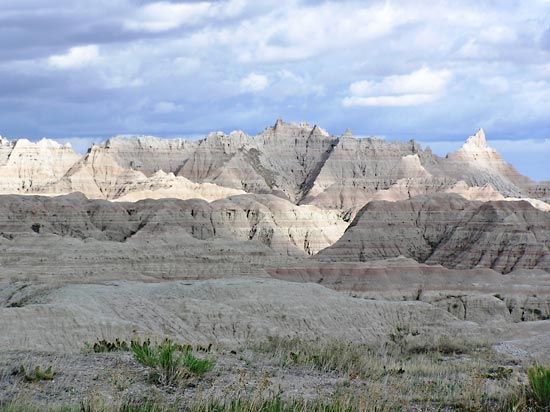
Badlands National Park was formed through the ongoing erosion of sedimentary rock deposits by wind and water. This process, which continues today at a rate of approximately 1 inch (25 mm) per year, has carved the region’s characteristic landscape of peaks, pinnacles, ridges, and gullies.1
The geological foundation of the park is composed of poorly cemented bedrock, which is particularly susceptible to erosion from cloudbursts and intermittent rainfall. This rugged topography is situated within a semiarid high-plains region between the Cheyenne and White rivers.5617
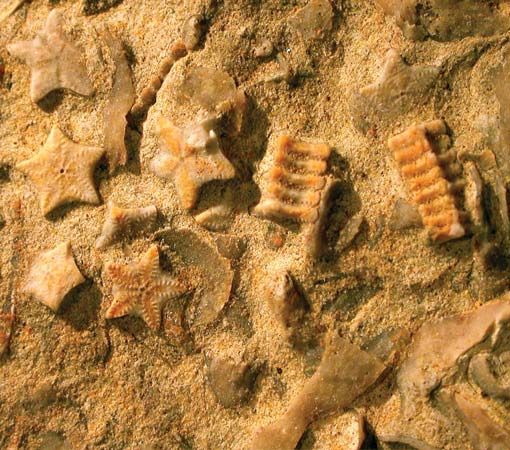
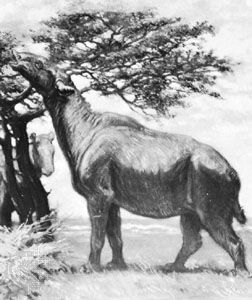
While the erosional forces that created the current landscape are ongoing, the park is also renowned for its extensive fossil beds. These deposits date back to the Oligocene Epoch, which occurred approximately 33.7 to 23.8 million years ago, providing a record of the region’s climate and wildlife from that era.1
What types of wildlife can be found in Badlands National Park?
Badlands National Park is home to a diverse array of wildlife that inhabits its expansive mixed-grass prairie, which is the largest protected area of its kind in the United States.1
Commonly observed mammals in the park include:
- Bison: Large herds that roam the grasslands.1
- Bighorn sheep: Often found navigating the rugged terrain.1
- Pronghorn antelope: Frequently seen across the open plains.1
- Mule deer: Common throughout the park’s varied landscape.1
- Coyotes: Widespread predators within the region.1
- Prairie dogs: These animals are a special feature of the park, living in extensive colonies known as “prairie dog towns”.1
- Jackrabbits: Plentiful throughout the area.1
The park also provides a critical habitat for the black-footed ferret, an endangered species that relies on prairie dog colonies for both food and shelter.16
In addition to mammals, the park supports numerous species of birds. Visitors may spot golden eagles, which are known to inhabit the Badlands, along with a variety of other avian species.19
What unique geological features can be found in Badlands National Park?
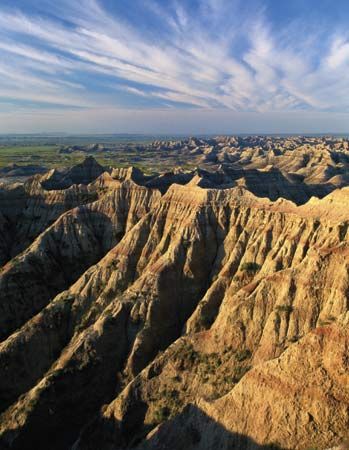
Badlands National Park is defined by its rugged, eroded topography, primarily shaped by the weathering of sedimentary rock deposits. The park’s most prominent feature is an 80-mile-long ridge known as “the wall,” which serves as the park’s backbone and separates the northern and southern prairie grasslands.6
The landscape is characterized by a variety of distinct geological formations, including:
- Erosional Features: Wind and water have carved the terrain into a complex array of peaks, pinnacles, ridges, spires, saw-toothed divides, and deep gullies.168
- Delicate Banding: The formations are noted for their distinct, colorful layers, which reflect the composition of the sediment:
Additionally, the park contains some of the world’s richest fossil beds from the Oligocene Epoch, which preserve the remains of ancient wildlife that inhabited the region millions of years ago.16
Sources
- Badlands National Park — Encyclopædia Britannica
- Sioux: At a Glance — Encyclopædia Britannica
- Custer State Park — Encyclopædia Britannica
- Badlands — Merriam-Webster
- badland — Encyclopædia Britannica
- Badlands — Encyclopædia Britannica
- Badlands National Park — Merriam-Webster
- White River — Encyclopædia Britannica
- ferret — Encyclopædia Britannica
- South Dakota - Plant and animal life — Encyclopædia Britannica
Published on · 3 min read