Oglala National Grassland
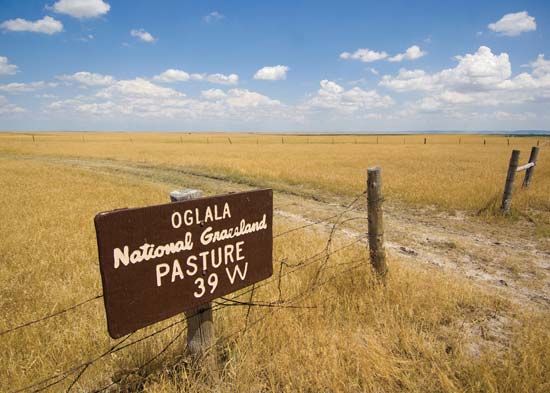
The Oglala National Grassland, located in northwestern Nebraska, was established in 1960 and is administered as part of the Nebraska National Forest. It…
How was the Oglala National Grassland formed, and what is its geological history?
The Oglala National Grassland, located in northwestern Nebraska, was established in 1960 and is administered as part of the Nebraska National Forest. It covers approximately 150 square miles of noncontiguous land in Sioux and Dawes counties.1
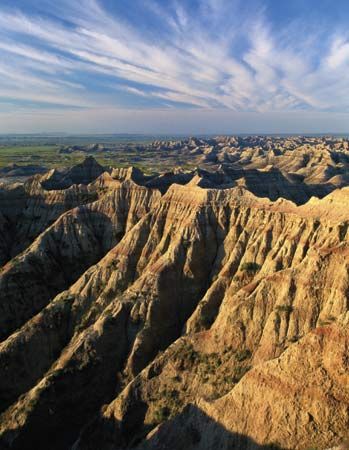
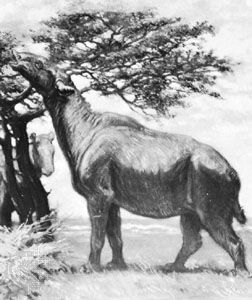
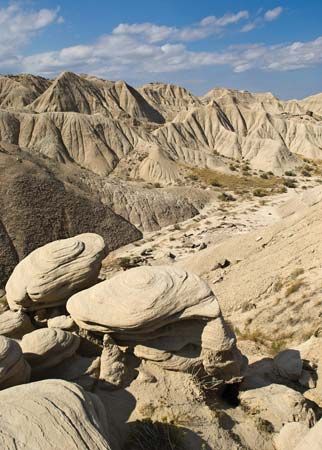
Regarding its geological history, the landscape features badland formations, which are characterized by the erosion of sedimentary rock deposits. These areas contain unique geological features such as toadstool formations—rocks eroded into mushroom-like shapes—and significant fossil deposits. While the provided information does not detail the specific chronological formation of the strata within the Oglala National Grassland itself, the broader region, including nearby areas like Badlands National Park, is renowned for its rich fossil beds dating back to the Oligocene Epoch (33.7 to 23.8 million years ago), which reveal a history of a once warmer and moister climate.12
What role does the Oglala National Grassland play in agriculture and ranching in the region?
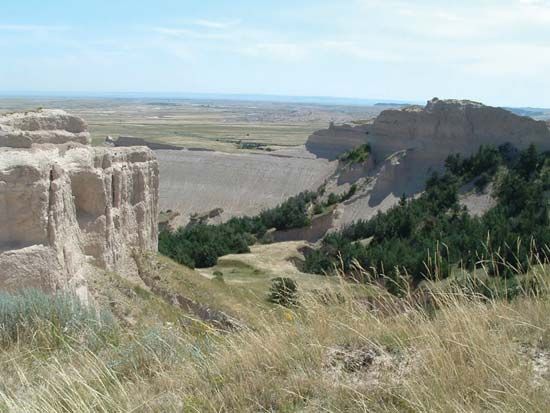
The Oglala National Grassland serves as a significant resource for the regional agricultural economy, primarily by providing ideal rangeland for cattle. Grazing is recognized as an important and established use of the land within this federally managed prairie.1
By maintaining these grasslands, the area supports local ranching operations that rely on the availability of forage for livestock. Beyond its agricultural utility, the land is also managed for multiple uses, including wildlife habitat for species such as pronghorn, deer, and wild turkeys, as well as providing opportunities for hunting and fishing.1
Are there any significant archaeological or paleontological sites within the Oglala National Grassland?
The Oglala National Grassland contains notable sites of both paleontological and archaeological interest, most notably the Hudson-Meng Bison Bonebed.1
- Hudson-Meng Bison Bonebed: Discovered in the 1950s, this site contains the remains of hundreds of prehistoric bison that perished simultaneously approximately 10,000 years ago.1
- Archaeological Significance: Stone artifacts belonging to the Paleo-Indian Alberta culture were found alongside the bison remains. While early theories suggested these nomadic hunters killed the herd, modern scholarship leans toward natural causes, such as suffocation during a prairie fire, as the reason for the mass mortality.1
- Geological and Paleontological Features: The grassland’s badland terrain features unique erosion patterns, such as toadstool formations, and serves as a site for various fossil deposits.1
How does the Oglala National Grassland compare to other national grasslands in the United States?
The Oglala National Grassland, established in 1960, is a federally managed prairie covering approximately 150 square miles in northwestern Nebraska. When compared to other national grasslands, it is notably smaller than some counterparts, such as the Little Missouri National Grassland in North Dakota, which spans over 1,600 square miles and stands as the largest in the United States.14
While these grasslands share common characteristics—such as their use for cattle grazing, the presence of badland terrain, and their role as habitats for wildlife like pronghorn—they differ in scale and industrial activity. For instance, the Little Missouri National Grassland supports significant energy extraction through hundreds of active oil wells, a feature not highlighted in the Oglala region. Additionally, while both areas contain archaeological and paleontological sites, the Oglala is specifically recognized for the Hudson-Meng Bison Bonebed, whereas the Little Missouri contains a broader array of dinosaur skeletons and petrified wood.14
Sources
- Oglala National Grassland — Encyclopædia Britannica
- Badlands National Park — Encyclopædia Britannica
- Buffalo Gap National Grassland — Encyclopædia Britannica
- Little Missouri National Grassland — Encyclopædia Britannica
- North America - Temperate grasslands — Encyclopædia Britannica
- Grassland - Biological productivity — Encyclopædia Britannica
Published on · 3 min read