Fossil Record
The fossil record serves as a vital natural archive, providing scientists with essential proxy evidence to reconstruct Earth's history.
What can the fossil record tell us about past climate changes and extinctions?
The fossil record serves as a vital natural archive, providing scientists with essential proxy evidence to reconstruct Earth’s history.1
Climate Change
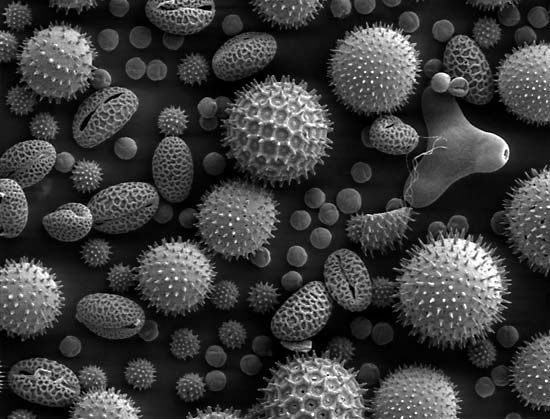
Fossils act as indicators of past environmental conditions. Because specific organisms have distinct habitat requirements—such as coral needing warm, shallow water—their presence in sedimentary rock reveals the climate of that site at the time of deposition. Additionally, palynology—the study of fossilized pollen and spores—allows researchers to track shifts in regional vegetation, which directly reflect long-term climatic changes over thousands of years.23
Extinctions
The fossil record documents five major mass extinction events, characterized by a sudden, significant decline in biodiversity across geologic time. By analyzing these layers, scientists can identify the collapse of biological communities and the subsequent recovery of ecosystems as surviving species fill vacant ecological niches. Today, the record is being used to compare current, human-driven extinction rates—which are significantly higher than background levels—to these historical catastrophes.45
What types of information can scientists gather from the fossil record?
The fossil record provides a comprehensive history of life on Earth, preserved within sedimentary rock. Scientists utilize this record to gather several types of critical information:
- Evolutionary History: By observing progressive morphological changes in animal groups over successive generations, researchers can describe the evolution of species and their adaptation to specific environments.1
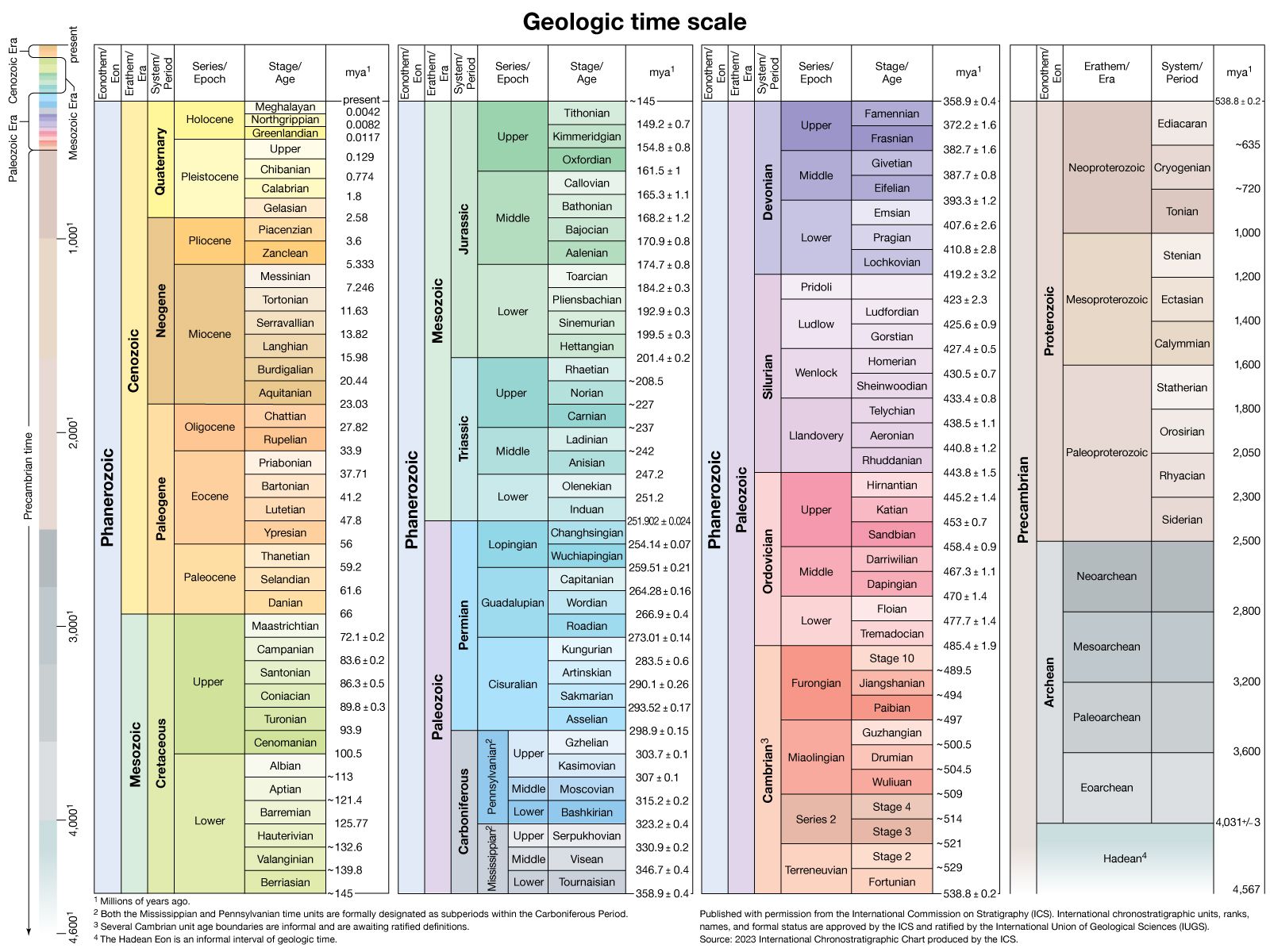
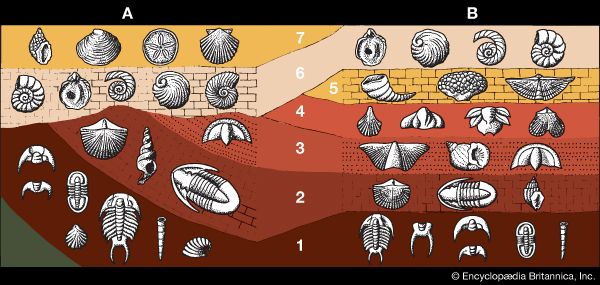
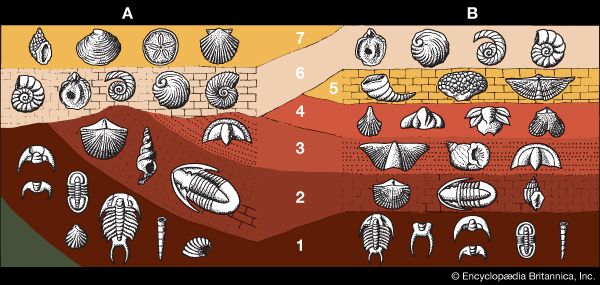
- Geochronology: Fossils serve as tools for stratigraphy. Through the principle of faunal succession, geologists can assign relative ages to rock strata based on the unique fossil assemblages they contain.2
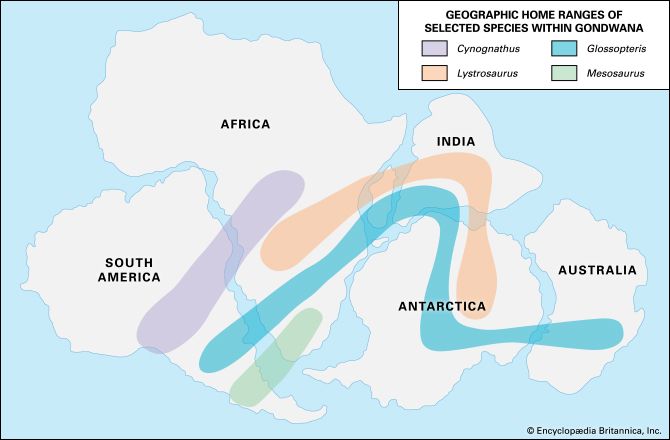
- Paleoclimatology and Environment: Organisms often have specific habitat requirements. Finding fossils of species that require warm, shallow water in polar regions, for example, indicates that the Earth’s crust has shifted over time. Additionally, fossilized distributions of plants and animals act as proxy evidence for past climatic changes.17
- Extinction Patterns: The record documents both constant “background” extinctions and major mass extinction events. This allows scientists to study the collapse of biodiversity and the subsequent recovery of ecosystems as new species fill vacant ecological niches.89
What is the fossil record and how is it formed?
The fossil record is the complex collection of all fossils found worldwide, serving as the primary source of information regarding the history of life on Earth. It consists of the remnants, impressions, or traces of ancient organisms preserved within the Earth’s crust, typically in sedimentary rock.1011
How Fossils Are Formed
The formation of a fossil—a process studied under taphonomy—is relatively rare, as most organisms decompose before they can be preserved. For an organism to become a fossil, two primary conditions are generally required: the possession of hard, resistant parts (such as bones, teeth, or shells) and rapid burial to prevent scavenging and slow decomposition.1017
Once buried, several processes can occur:
- Permineralization: Minerals from surrounding groundwater seep into the pores of bones or shells, turning them into stone.107
- Replacement: The original skeletal material is completely dissolved and replaced by different mineral matter.1011
- Impression/Mold: Circulating solutions may dissolve the original remains entirely, leaving behind a cavity or mold that reflects the organism’s shape.1011
- Exceptional Preservation: In rare cases, such as insects trapped in amber or carcasses frozen in ice, soft tissues may be preserved.107
What are some of the different types of fossils found in the fossil record?
The fossil record contains a diverse array of remains and evidence that provide insight into Earth’s history. These can be categorized based on how they are preserved:
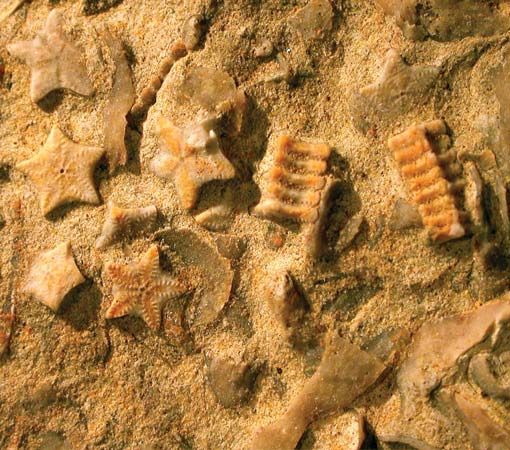
- Hard-Part Fossils: The most common type, these include shells, bones, and teeth that have been preserved through processes like permineralization (where minerals fill pores) or total replacement by mineral matter.13
- Soft-Tissue Preservation: While rare, soft parts can be preserved in unique environments, such as insects trapped in amber or carcasses frozen in ice.1413
- Carbonized Remains: Plants and other organic matter can be preserved through carbonization, where the organism is flattened between rock layers, leaving a carbon film.13
- Microfossils: These are remains too small to be seen without magnification, often used by geologists to study subsurface stratigraphy.13
- Trace Fossils: These do not contain the organism itself but provide evidence of its activity, such as tracks, trails, borings, and waste products.1413
- Index Fossils: These are specific fossils used to define geologic time boundaries due to their wide distribution, abundance, and short existence in the record.10
Sources
- fossil record — Encyclopædia Britannica
- Climate change - Evidence for climate change — Encyclopædia Britannica
- mass extinction event — Encyclopædia Britannica
- palynology — Encyclopædia Britannica
- Cretaceous Period - Mass extinction — Encyclopædia Britannica
- Anthropocene Epoch - Evidence in layers of rock — Encyclopædia Britannica
- dating - Principles and techniques — Encyclopædia Britannica
- Devonian extinctions — Encyclopædia Britannica
- dinosaur - Faunal changes — Encyclopædia Britannica
- fossil — Encyclopædia Britannica
- How are fossils formed? — Encyclopædia Britannica
- taphonomy — Merriam-Webster
- index fossil — Encyclopædia Britannica
- Did you know? — Merriam-Webster
Published on · 4 min read