Oligocene Epoch
The Oligocene Epoch is the third and final major division of the Paleogene Period, spanning the interval from 33.9 million to 23 million years ago. The term…
What is the Oligocene Epoch?
The Oligocene Epoch is the third and final major division of the Paleogene Period, spanning the interval from 33.9 million to 23 million years ago. The term, derived from Greek, means “epoch of few recent forms,” reflecting the relative scarcity of modern animal species that originated during this time.12
Key characteristics of the Oligocene include:
- Climate: The epoch was generally temperate, with many regions experiencing subtropical conditions. However, it also marked a significant cooling trend following the Eocene, leading to the development of a continental ice sheet in Antarctica.23
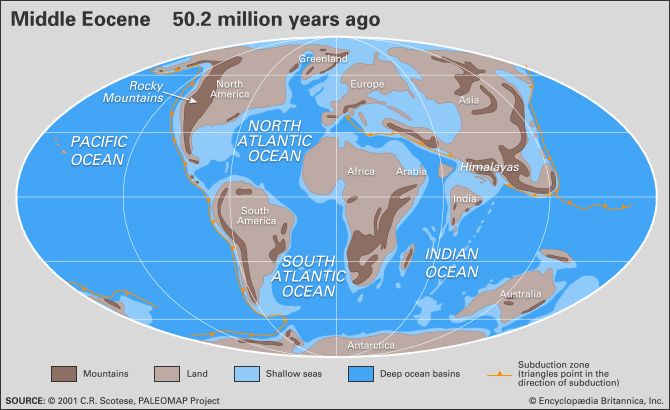
- Geography: Grasslands expanded while forested regions dwindled. Tectonic activity, such as the opening of the Drake Passage, isolated Antarctica and fundamentally altered global oceanic and atmospheric circulation.23
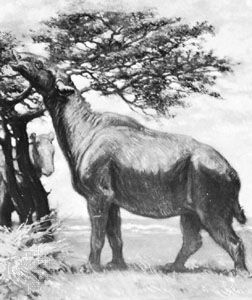
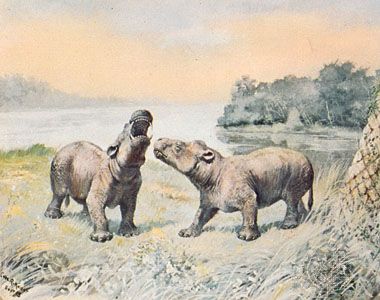
- Life: Modern groups of carnivores and herbivores became diverse. Notable fauna included the giant hornless rhinoceros Indricotherium and early mastodons. The epoch also saw the emergence of early apelike forms and monkeys.2
When did the Oligocene Epoch occur?
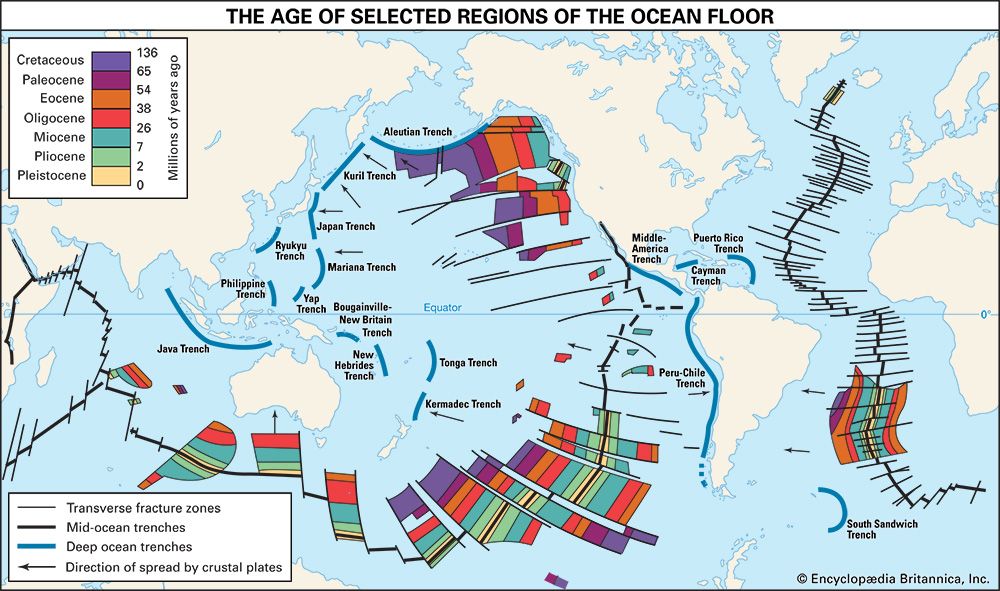
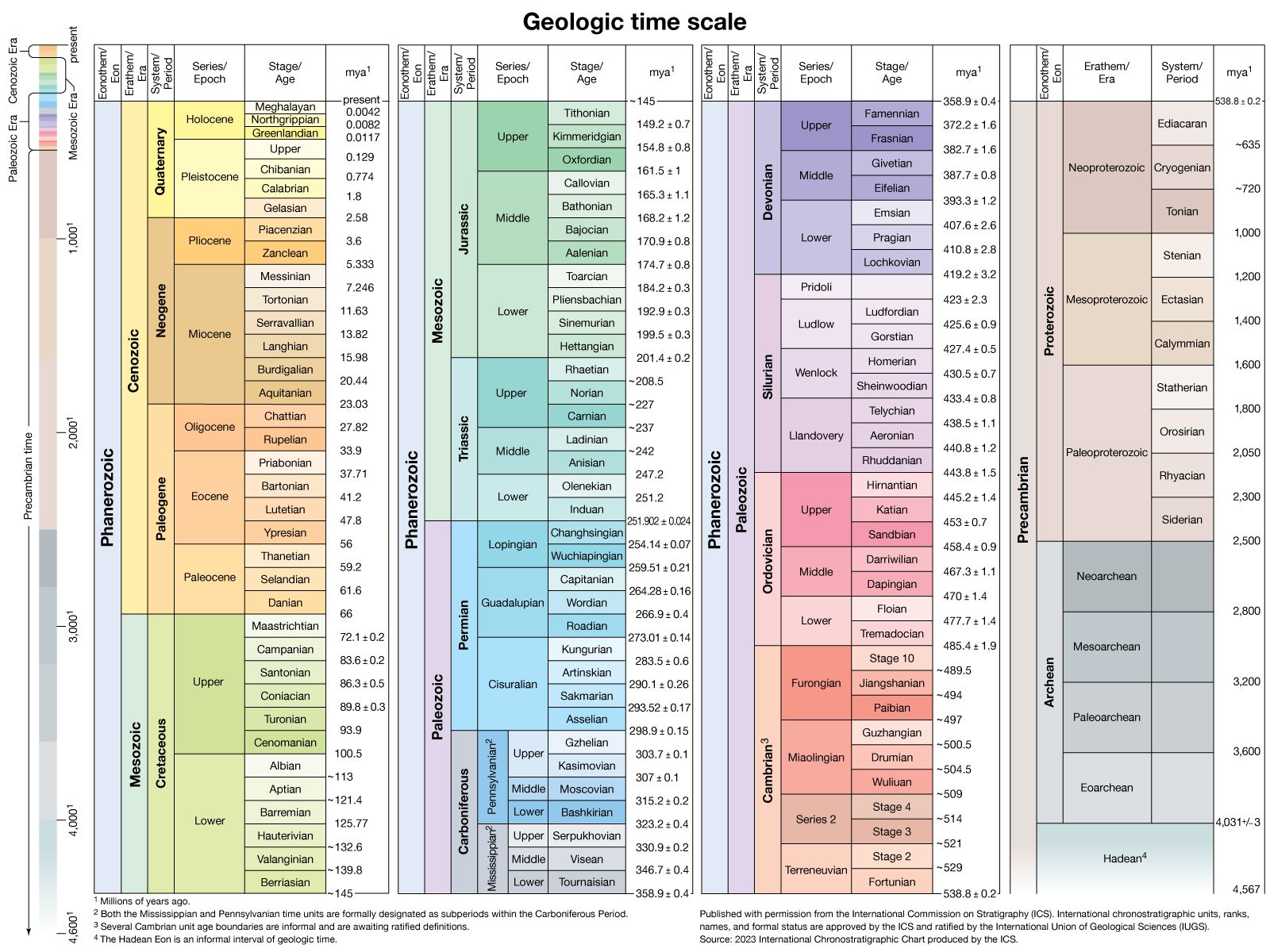
The Oligocene Epoch occurred from 33.9 million to 23 million years ago. It represents the third and final major division of the Paleogene Period, following the Eocene Epoch and preceding the Miocene Epoch of the Neogene Period.12
How is the Oligocene Epoch identified in geochronology?
In geochronology, the Oligocene Epoch is identified and defined through a combination of stratigraphy, biostratigraphy, and absolute dating methods.35
The primary reference points for this epoch are Global Boundary Stratotype Sections and Points (GSSPs), which serve as the official markers where time and rock record coincide. The lower boundary of the Oligocene, marking the transition from the Eocene, is stratotypically established in southern Italy and dated to approximately 33.9 million years ago. The upper boundary, which separates the Oligocene from the Miocene, is located in Carrosio, Italy, and is dated to roughly 23 million years ago.2
Geologists further refine these divisions using:
- Biostratigraphy: The identification of specific fossil assemblages, particularly foraminiferans, helps correlate rock strata globally. For example, the base of the Rupelian Stage is defined by the extinction of the foraminiferan genera Hantkenina and Cribrohantkenina.365
- Radioisotopic Dating: Techniques such as potassium-argon dating allow for the numerical quantification of the geologic time scale.35
- Magnetostratigraphy: The study of Earth’s magnetic field reversals recorded in rocks provides a chronological framework that is integrated with biostratigraphic data to create a high-resolution time scale.5
What significant climate changes happened during the Oligocene Epoch?
The Oligocene Epoch was characterized by significant climatic shifts, marked by a transition from the warmer conditions of the Eocene to a cooler, more differentiated global climate.410
Key climatic developments during this period included:
- Antarctic Glaciation: The most defining feature of the epoch was the development of a continental ice sheet in Antarctica. This was largely driven by tectonic changes, specifically the opening of the Drake Passage between South America and Antarctica, which isolated the continent within a cold polar sea and fundamentally altered global oceanic circulation.410
- Temperature Trends: While the early Oligocene saw a rapid cooling trend, the late Oligocene (approximately 28.4 million to 23 million years ago) experienced a period of relative warmth, though temperatures remained lower than those of the Eocene.4
- Regional Conditions: Despite the global cooling trend, many regions maintained temperate or subtropical conditions. In areas such as Germany, warm and swampy environments supported the formation of extensive lignite coal deposits.2
- Vegetation Shifts: As the climate cooled, grasslands expanded while forested regions dwindled in many parts of the world.2
Sources
- A Journey Through Time Since the Precambrian - Paleogene Period: 66 million to 23 million years ago, and Neogene Period: 23 million to 2.6 million years ago — Encyclopædia Britannica
- Oligocene Epoch — Encyclopædia Britannica
- Oligocene — Merriam-Webster
- Climate change - Cenozoic climates — Encyclopædia Britannica
- Eocene Series — Encyclopædia Britannica
- geologic time — Encyclopædia Britannica
- Tertiary Period - Major subdivisions of the Tertiary System — Encyclopædia Britannica
- Rupelian Stage — Encyclopædia Britannica
- Tertiary Period - Correlation of Tertiary strata — Encyclopædia Britannica
- Tertiary Period - Paleoclimate — Encyclopædia Britannica
Published on · 3 min read