Bagworm Moth
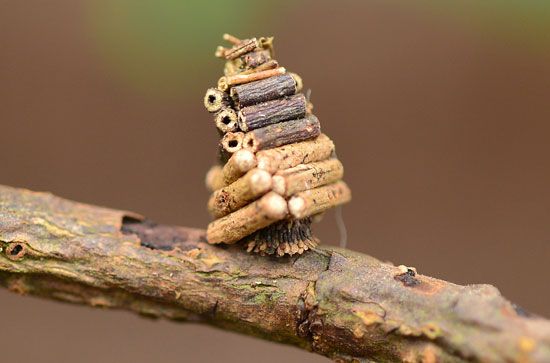
The bagworm moth (family Psychidae) is a group of approximately 1,350 insect species recognized primarily for the protective cases their larvae construct.
What are the defining characteristics of bagworm moths?
The bagworm moth (family Psychidae) is a group of approximately 1,350 insect species recognized primarily for the protective cases their larvae construct.1
Key characteristics include:
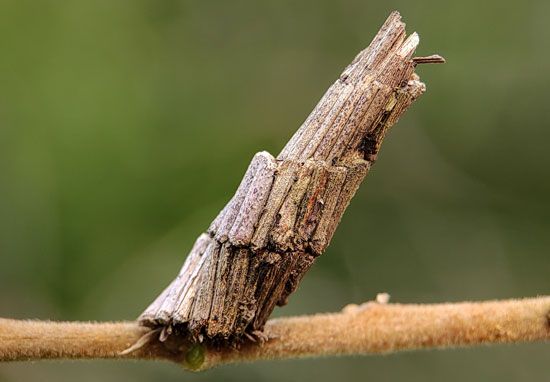
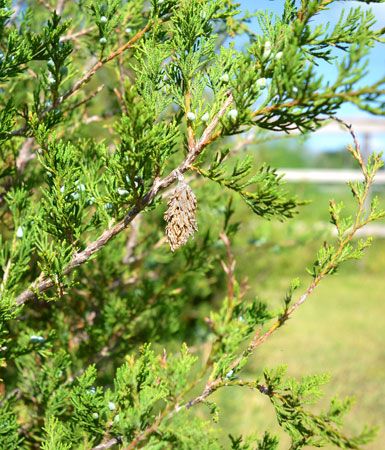
- Case Construction: Larvae build baglike cases ranging from 6 to 152 mm in size using silk reinforced with bits of twigs, leaves, and other debris. These structures serve as both a home during the larval stage and a pupal case.1
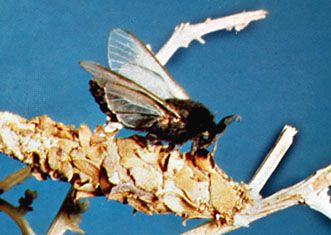
- Sexual Dimorphism: Adult males are strong-bodied with broad, fringed wings, while females are wingless. In most species, the female remains inside her bag to mate and deposit her eggs.12
- Life Cycle: After metamorphosis, the male emerges to find a mate. In some species, such as the evergreen bagworm (Thyridopteryx ephemeraeformis), the female dies after laying her eggs within the bag.1
- Ecological Impact: These moths are plant-feeders, and certain species can become destructive pests to both deciduous and evergreen trees.12
What are some interesting facts about bagworm moths that make them unique among insects?
Bagworm moths (family Psychidae) exhibit several unique biological traits that distinguish them from other insects:
- Portable Architecture: Unlike many insects that build stationary nests, bagworm larvae construct portable, baglike cases. These structures are fashioned from silk and reinforced with local materials like twigs, leaves, and debris, serving as both a protective mobile home and a pupal chamber.134
- Extreme Sexual Dimorphism: These moths display a stark contrast between the sexes. Adult males are strong-bodied, winged insects capable of flight, while females are wingless and wormlike.14
- Life-Long Seclusion: In most species, the female never leaves her protective bag. She remains inside to mate and deposit her eggs, often dying within the case after her reproductive duties are complete.14
- Specialized Survival: The case provides essential protection for the soft-bodied larvae against predators and environmental elements. This strategy is so effective that the larvae can remain hidden and secure while they feed and grow.453
How do bagworm moths impact plants and trees?
Bagworm moths can have a significant negative impact on vegetation, as their larvae are plant-feeders that consume the foliage of various trees.12
The damage caused by these insects includes:
- Defoliation: Larvae feed on the leaves of both deciduous and evergreen trees, which can lead to significant loss of foliage.12
- Destructive Infestation: Certain species, most notably the evergreen bagworm (Thyridopteryx ephemeraeformis), are recognized as destructive pests. In the eastern United States, these infestations can severely weaken or damage the health of the trees they inhabit.12
- Structural Use of Plant Material: Beyond direct consumption, the larvae incorporate bits of twigs and leaves into the construction of their protective silk cases, further utilizing the host plant’s resources for their survival.12
Because these insects can compromise the vitality of ornamental and forest trees, they are often monitored by arborists and gardeners to prevent widespread damage.12
How do bagworm moths reproduce and lay their eggs?
The reproductive process of bagworm moths (family Psychidae) is highly specialized due to the physical limitations of the adult females, which are wingless and wormlike.16
- Attracting a Mate: Because females cannot fly, they rely entirely on sex-attractant pheromones to signal their presence to males. When ready to mate, the female exposes glands in her abdomen to disperse these chemicals into the air, a behavior known as “calling”.6
- Mating: In most species, the female remains inside her protective silk-and-debris bag during the mating process, where she is visited by the strong-bodied, winged male.16
- Egg Deposition: Following mating, the female deposits her eggs within the safety of her bag. The specific behavior after this stage can vary by species; for example, the female evergreen bagworm (Thyridopteryx ephemeraeformis) lays her eggs inside the bag and then crawls out to fall to the ground, where she dies.1
This unique reproductive strategy ensures that the eggs are protected within the durable, camouflaged structure the female inhabited throughout her development.17
Sources
- bagworm moth — Encyclopædia Britannica
- bagworm — Merriam-Webster
- Insects That Wear Things — Encyclopædia Britannica
- Lepidoptera - Protection against danger — Encyclopædia Britannica
- Lepidoptera - Larva, or caterpillar — Encyclopædia Britannica
- Chemoreception - Sex-attractant pheromones — Encyclopædia Britannica
- Lepidoptera - Egg — Encyclopædia Britannica
Published on · 3 min read