Baḥr al-Ghazāl
The Bahr al-Ghazal region, which includes the provincial capital of Wau, has been significantly impacted by the historical conflicts in South Sudan. During…
How has the Baḥr al-Ghazāl region been affected by conflicts in South Sudan?
The Bahr al-Ghazal region, which includes the provincial capital of Wau, has been significantly impacted by the historical conflicts in South Sudan. During the civil wars, the region became a focal point of military struggle between the government and the SPLA.
The government’s strategy involved arming militias to target local populations, such as the Dinka, while simultaneously obstructing humanitarian aid. These actions, compounded by persistent drought, created a dire humanitarian crisis. Civilians were caught between warring factions, leading to widespread displacement as many fled to northern cities or sought refuge in Ethiopia. Tragically, thousands of people perished due to famine and a lack of relief in camps for the displaced, as the government prioritized military objectives over the welfare of the non-Muslim population.12
What is the meaning of ‘Baḥr al-Ghazāl’ in English, and why was the river given this name?
The name Baḥr al-Ghazāl is derived from Arabic, where baḥr translates to “sea” or “large river” and ghazāl means “gazelle.” Consequently, the name is commonly translated as “River of the Gazelle.”
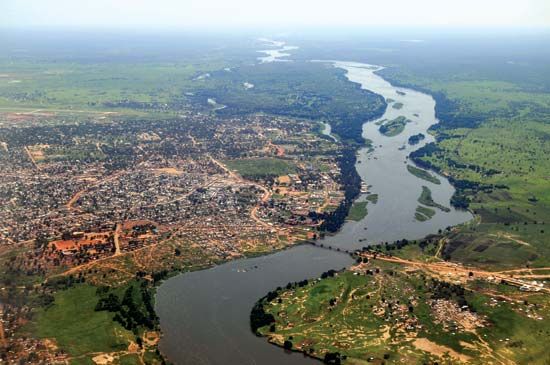
The river, which serves as the chief western affluent of the Nile River, is 445 miles (716 km) long and flows through South Sudan. While the provided sources confirm the etymological meaning of the name, they do not explicitly detail the specific historical or geographical reason why the river was given this particular name, other than its identification as a major waterway in the region.56
What is the significance of the Baḥr al-Ghazāl river for the region’s ecology and wildlife?
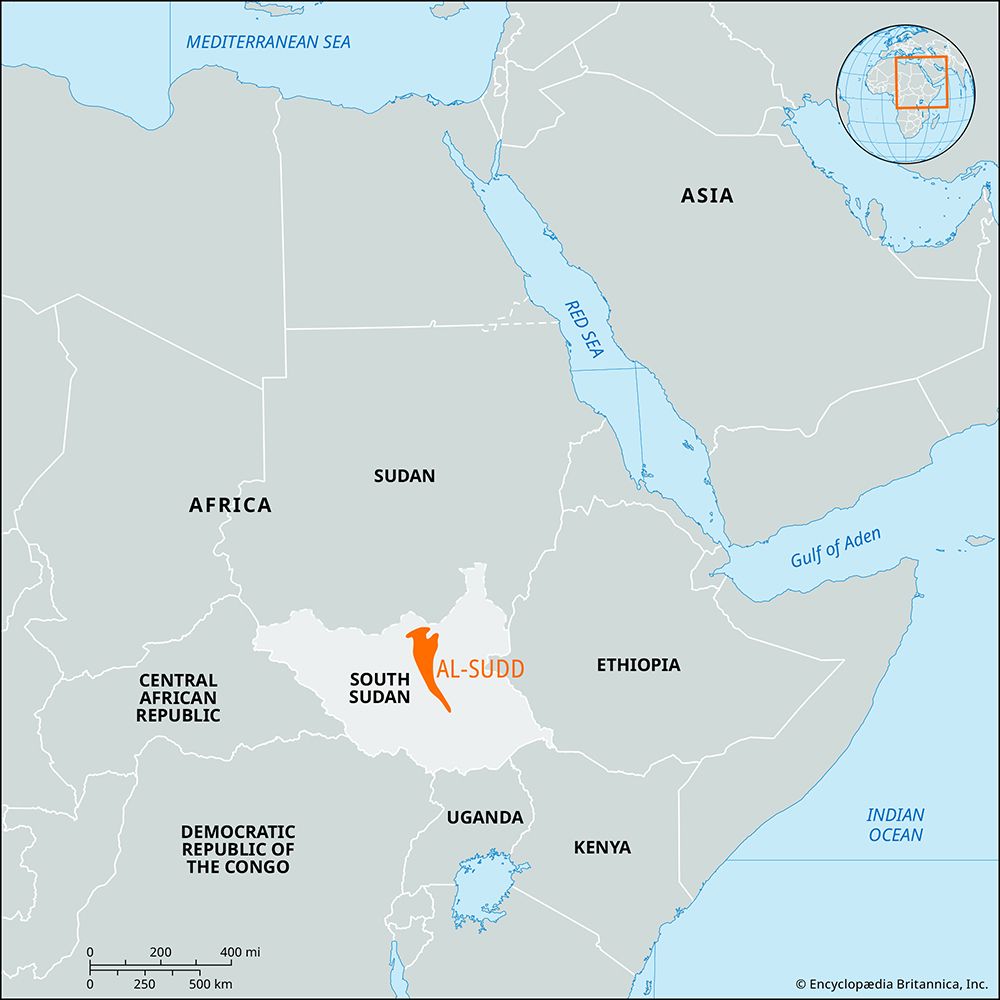
The Baḥr al-Ghazāl river plays a significant role in the regional landscape, primarily through its interaction with the Al-Sudd swampy lowland region. As a major western affluent of the Nile River, the river system drains a vast catchment area of over 328,000 square miles, extending into the Central African Republic and the Democratic Republic of the Congo6.
The river’s ecology is defined by its passage through the Sudd, where extensive evaporation and transpiration significantly reduce its water flow before it reaches Lake No. This swampy environment is characterized by dense vegetation, including tall papyrus, aquatic grasses, and water hyacinth, which create complex, often impenetrable habitats. While the provided search results highlight these hydrological and botanical features, they do not offer specific details regarding the diverse wildlife species that inhabit or rely on the river’s ecosystem.657
What historical explorations or expeditions have been conducted along the Baḥr al-Ghazāl river?
Historical exploration of the Baḥr al-Ghazāl river was characterized by early mapping efforts followed by intensive 19th-century investigations by traders and scientists.
- Early Mapping: While the river was vaguely known to early Greek geographers, it was first mapped in 1772 by the French geographer Jean-Baptiste Bourguignon d’Anville.9
- John Petherick: A British trader and explorer, Petherick investigated the western tributaries of the Nile, specifically focusing on the Baḥr al-Ghazāl. In 1853, he reached the borders of the Zande nation and later published accounts of his travels in Egypt, the Soudan and Central Africa (1861).10
- Georg August Schweinfurth: A German botanist who received a grant to conduct botanical exploration in the region, Schweinfurth traveled into the southwestern Sudan with ivory traders in 1869. His work provided significant insights into the region’s geography and peoples, and he published his findings in The Heart of Africa (1873). His discovery of the Uele River helped finalize the understanding of the Nile system’s extent.11
Sources
- Sudan: Top Questions — Encyclopædia Britannica
- history of Sudan - Ongoing civil war — Encyclopædia Britannica
- South Sudan - History — Encyclopædia Britannica
- Sudan - Ongoing civil war — Encyclopædia Britannica
- Bahr al-Ghazal — Merriam-Webster
- Baḥr al-Ghazāl — Encyclopædia Britannica
- Al-Sudd — Encyclopædia Britannica
- Baḥr al-Jabal — Encyclopædia Britannica
- Nile River - Study and exploration — Encyclopædia Britannica
- John Petherick — Encyclopædia Britannica
- Georg August Schweinfurth — Encyclopædia Britannica
- Nile River - Physiography of Nile River — Encyclopædia Britannica
Published on · 3 min read