Boojum Tree
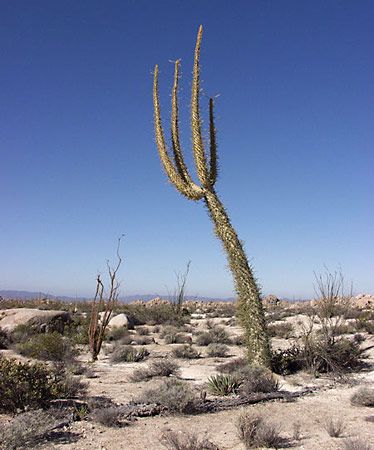
The boojum tree (Fouquieria columnaris) is a distinctive, long-lived flowering plant in the family Fouquieriaceae that is endemic to the deserts of Baja…
What is Boojum tree?
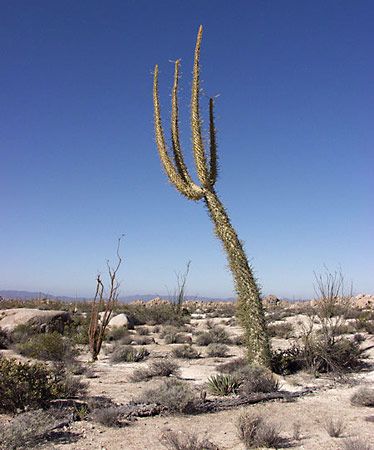
The boojum tree (Fouquieria columnaris) is a distinctive, long-lived flowering plant in the family Fouquieriaceae that is endemic to the deserts of Baja California and a small region of Sonora, Mexico.12
Often described as resembling a slender, upside-down carrot, the tree can reach heights of up to 15 meters (50 feet). It is characterized by a swollen, spongy trunk and spiny twigs that produce yellowish flowers in hanging clusters. Like its relative the ocotillo, the boojum tree is drought-deciduous; its leaves emerge following rainfall and drop during dry periods to conserve water. Because the leaves are ephemeral, the tree relies on its greenish stems to perform the majority of its photosynthesis.1
The name “boojum” is believed to be derived from an imaginary creature in Lewis Carroll’s The Hunting of the Snark, a nod to the plant’s unique and somewhat grotesque appearance.2
How does the ocotillo differ from the Boojum tree?
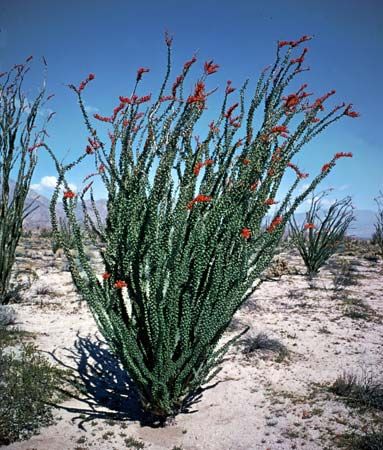
While both the boojum tree (Fouquieria columnaris) and the ocotillo (Fouquieria splendens) belong to the same family, Fouquieriaceae, they exhibit distinct physical characteristics:
- Growth Form: The boojum tree is a tree that can reach heights of 15 meters (50 feet) and is known for its thick, swollen, and often hollow trunk that tapers toward the top, resembling an upside-down carrot. In contrast, the ocotillo typically grows as a shrub with many long, slender, unbranched stems that grow upward from a common base.13
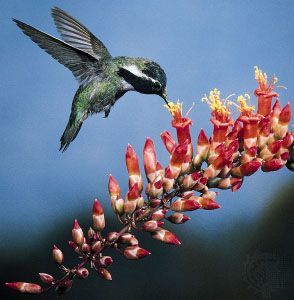
- Flowers: The boojum tree produces clusters of yellowish flowers. The ocotillo is known for its vibrant red or orange flowers, which are a primary food source for hummingbirds.13
- Trunk Composition: The boojum tree features a spongy, water-retaining trunk.1
Both plants share the adaptation of being drought-deciduous, shedding their leaves during dry periods to conserve water and relying on their green stems for photosynthesis.13
What are some other plants that survive in the Baja California desert?
The Baja California peninsula features a diverse array of vegetation adapted to its arid climate. Beyond the boojum tree, the central desert region is notably home to the cardon, a giant columnar cactus that can reach heights of up to 60 feet and is a relative of the saguaro.45
Other common plants found throughout the Baja California desert and the broader Sonoran Desert include:
- Cacti: Various species such as the barrel cactus, organ-pipe cactus, prickly pear, and cholla.4
- Shrubs and Trees: The elephant tree, mesquite, creosote bush, palo verde, and ironwood.64
- Succulents: The yucca and the century plant.4
- Other: The ocotillo, which is well-adapted to dry conditions by shedding its leaves during droughts.4
In the southern part of the peninsula, the landscape transitions to include desert shrub in the lowlands and semideciduous forests in the more humid higher elevations.5
Why do some desert plants lose their leaves during dry seasons?
Some desert plants lose their leaves during dry seasons as a critical survival strategy to prevent dehydration. In botany, leaves are the primary sites of transpiration, a process where plants lose water through stomata to the atmosphere.1011
Because leaves have a large surface area, they facilitate significant water loss, which can be fatal in arid environments where water intake is limited. By becoming deciduous during drought periods, these plants effectively eliminate this major pathway for water loss, allowing them to survive until more favorable conditions return. While the plant is leafless, it may enter a state of dormancy or rely on other adaptations, such as green stems that can perform photosynthesis without the need for leaves.10119
This shedding process is a highly controlled physiological response, similar to how temperate plants drop leaves in autumn to protect themselves from freezing temperatures and physical damage. By minimizing transpiration, these plants conserve their internal water reserves, which is essential for maintaining life during prolonged moisture shortages.12119
Sources
- Boojum tree — Encyclopædia Britannica
- boojum — Merriam-Webster
- Fouquieriaceae — Encyclopædia Britannica
- North American Desert - Plant life — Encyclopædia Britannica
- Sonoran Desert — Encyclopædia Britannica
- North America - Deserts — Encyclopædia Britannica
- cardon — Merriam-Webster
- Baja California — Encyclopædia Britannica
- Desert - Flora — Encyclopædia Britannica
- Transpiration — Encyclopædia Britannica
- welwitschia — Encyclopædia Britannica
- Biosphere - Humidity — Encyclopædia Britannica
- Desert - Population and community development and structure — Encyclopædia Britannica
- Why Do Leaves Fall in Autumn? — Encyclopædia Britannica
Published on · 3 min read