Banas River
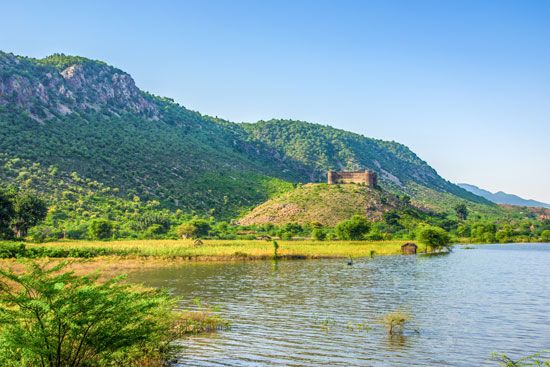
The Banas River is a river located in the state of Rajasthan in northwestern India.
What is Banas River?
The Banas River is a river located in the state of Rajasthan in northwestern India.1
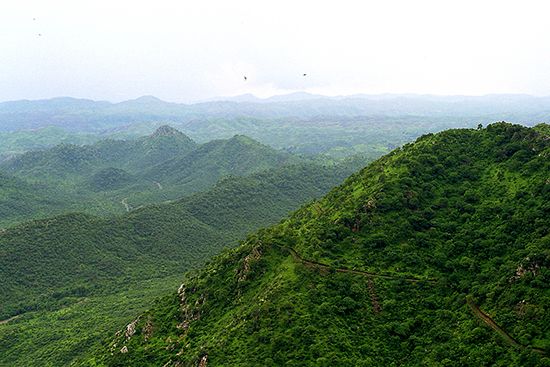
Rising near Kumbhalgarh, the river winds through the Aravalli Range before flowing northeast across the plains. It travels for approximately 310 miles (500 km) before joining the Chambal River just north of Sheopur.1
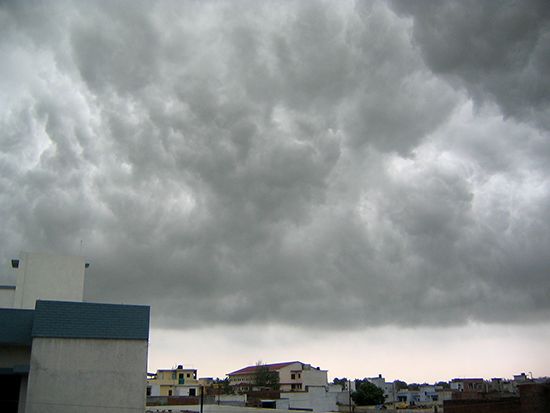
The Banas is characterized as a seasonal river, meaning it often dries up during the hotter months; however, it remains a vital source of irrigation for the region. Its primary tributaries include the Berach and Kotari rivers.1
What is the significance of the Aravalli Range in India?
The Aravalli Range is the oldest mountain system in India, estimated to be over 2 billion years old. It holds immense significance for the region’s ecology and climate:
- Environmental Barrier: The range acts as a critical buffer, checking the eastward expansion of the Thar Desert into neighboring states. It also influences monsoon wind patterns and blocks cold westerly winds from Central Asia during winter.34
- Hydrological Role: It serves as a vital source for several rivers, including the Banas, Luni, and Sabarmati, and plays a key role in recharging groundwater.34
- Biodiversity: The range hosts significant wildlife conservation areas, such as the Sariska Tiger Reserve and Ranthambore National Park.3
While the range is rich in minerals, it faces ongoing debates regarding land protection and mining regulations following recent judicial rulings.3
How do seasonal rivers impact agriculture in Rajasthan?
Seasonal rivers like the Banas River play a complex role in the agriculture of Rajasthan. Because these rivers are often dry during the hot summer months, they cannot provide a consistent, year-round water supply on their own. Consequently, they serve as a supplemental source of irrigation rather than a primary one.1
To maintain agricultural productivity in a state characterized by scant rainfall and high evaporation, Rajasthan relies heavily on a broader water infrastructure network. This includes:
- Multipurpose Projects: Large-scale initiatives, such as the Chambal Valley project, help manage water distribution for both irrigation and drinking purposes.
- Canal Systems: The Indira Gandhi Canal is essential for transforming arid desert regions into fertile, cultivable land by transporting water from distant rivers.56
- Diverse Techniques: Farmers utilize various methods, including wells, tanks, and efficient drip irrigation, to mitigate the risks posed by erratic monsoon patterns.76
What are the main characteristics of the Chambal River?
The Chambal River is a prominent river in northern India and serves as the chief tributary of the Yamuna River. Its primary characteristics include:
- Course and Geography: Rising in the Vindhya Range in western Madhya Pradesh, the river flows north into Rajasthan, turns northeast past Kota, and eventually flows through Uttar Pradesh to join the Yamuna. Its total course spans approximately 550 miles (900 km).2
- Tributaries: The river is fed by several major tributaries, including the Banas, Kali Sindh, Sipra, and Parbati rivers.2
- Topography and Erosion: The lower course of the river is notable for a 10-mile (16-km) wide belt of badland gullies, which are the result of accelerated soil erosion. This area is currently the site of significant soil conservation efforts.2
- Economic Importance: The river is central to the Chambal Valley project, a joint initiative between Rajasthan and Madhya Pradesh that provides essential water for both irrigation and drinking purposes.25
Sources
- Banas River — Encyclopædia Britannica
- Chambal River — Encyclopædia Britannica
- Aravalli Range — Encyclopædia Britannica
- Aravalli Range: Top Questions — Encyclopædia Britannica
- Rajasthan - Agriculture — Encyclopædia Britannica
- Fruit farming - Irrigation — Encyclopædia Britannica
- India - Importance to agriculture — Encyclopædia Britannica
- water infrastructure in India - Irrigation systems — Encyclopædia Britannica
- Rajasthan - Climate — Encyclopædia Britannica
- Rajasthan - Soils — Encyclopædia Britannica
Published on · 2 min read