Aravalli Range
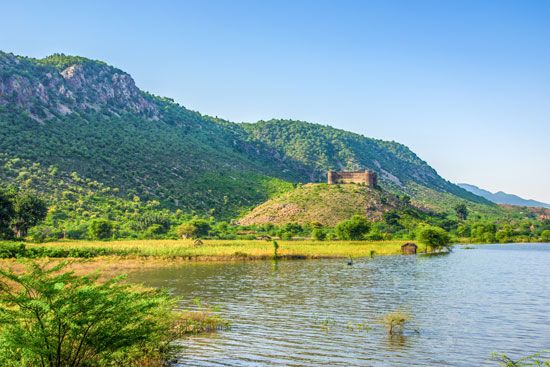
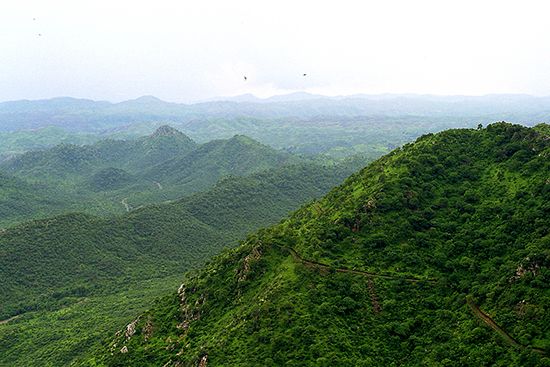
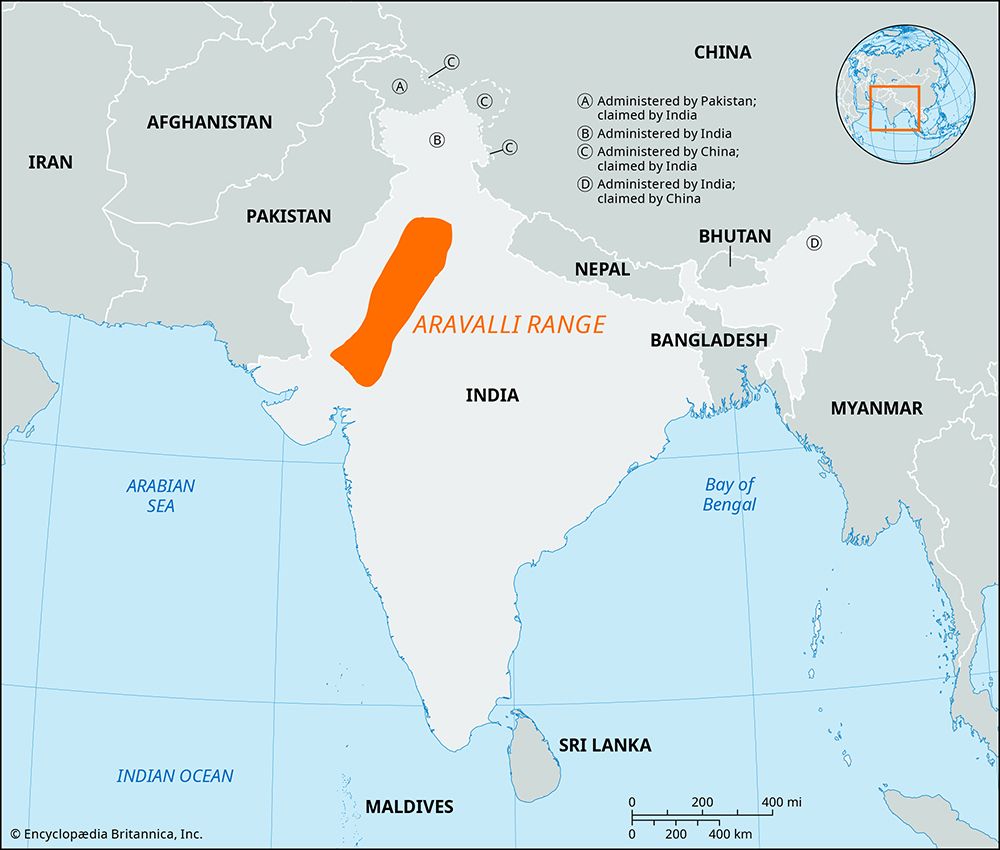
The Aravalli Range is the oldest mountain system in India, estimated to be over 2 billion years old. Spanning across Gujarat, Rajasthan, Haryana, and Delhi…
What is the cultural and historical significance of the Aravalli Range to the people of India?
The Aravalli Range is the oldest mountain system in India, estimated to be over 2 billion years old. Spanning across Gujarat, Rajasthan, Haryana, and Delhi, it serves as a critical environmental barrier and resource hub.1
Environmental and Economic Significance
The range acts as a vital check against the expansion of the Thar Desert into eastern states and influences monsoon patterns while blocking cold winds from Central Asia. It is a source of essential groundwater and gives rise to rivers such as the Luni. Historically, the range has been a significant source of minerals and building materials, though this has led to ongoing tensions regarding land protection and mining regulations.12
Conservation
The region hosts important biodiversity and protected areas, including the Sariska Tiger Reserve and Ranthambore National Park, which are crucial for ecological preservation.12
What role did the Aravalli Range play in ancient Indian history and mythology?
The provided search results do not contain information regarding the role of the Aravalli Range in ancient Indian history or mythology. The available documentation focuses on the range’s geological age, its role as an environmental barrier against the Thar Desert, its function in groundwater recharge, and contemporary issues surrounding mining regulations and land classification.1
How does the Aravalli Range influence the water systems and river basins in the region?
The Aravalli Range serves as the primary watershed for the state of Rajasthan, playing a pivotal role in shaping the region’s drainage patterns and groundwater levels.15
River Systems
The range acts as a divide, directing water flow into distinct basins:
- Eastern Drainage: Rivers to the east of the range generally flow northeast. The Banas River, a major tributary of the Chambal River, originates in the Aravallis and collects drainage from the Mewar plateau. Other streams, such as the Banganga, also rise in the range before flowing toward the Yamuna River.5
- Western Drainage: The Luni River is the most significant waterway west of the range, flowing southwest into the Rann of Kachchh1.5
- Internal Drainage: The area northeast of the Luni basin features internal drainage systems, most notably the Sambhar Salt Lake5.
Beyond these rivers, the range is essential for recharging groundwater, which is vital for the arid regions it traverses.12
How old is the Aravalli Range, and what is its geological significance?
The Aravalli Range is recognized as the oldest mountain system in India, estimated to be more than 2 billion years old.1
Geological Significance
The range is a critical site for understanding Precambrian geology. Its composition includes significant sequences of quartzites and dolomites, which provide insights into ancient sedimentary processes. Beyond its age, the range holds immense geological and environmental importance:6
- Natural Barrier: It acts as a vital check against the eastward expansion of the Thar Desert, protecting the fertile plains of northern India.12
- Climate Regulation: The mountains influence the movement of monsoon winds and serve as a shield against cold westerly winds originating from Central Asia during the winter.12
- Hydrological Role: The range is a primary watershed, giving rise to several rivers—such as the Banas, Luni, and Sabarmati—and is essential for groundwater recharge.12
Sources
- Aravalli Range — Encyclopædia Britannica
- Aravalli Range: Top Questions — Encyclopædia Britannica
- Aravalli Range — Merriam-Webster
- East Rajasthan Uplands — Encyclopædia Britannica
- Rajasthan - Drainage — Encyclopædia Britannica
- Precambrian - Shelf-type sediments — Encyclopædia Britannica
Published on · 3 min read