Ranthambore National Park
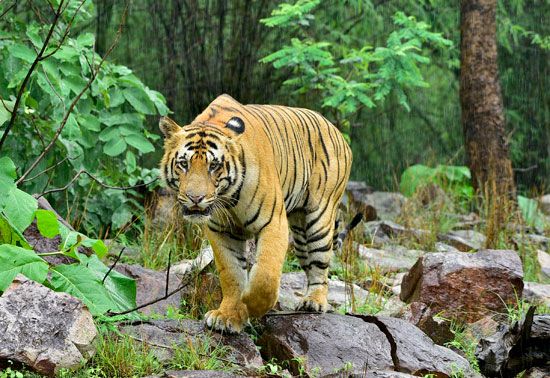
Ranthambore National Park is a prominent wildlife preserve located in the Sawai Madhopur district of Rajasthan, India. Once the hunting grounds of the…
What is Ranthambore National Park?
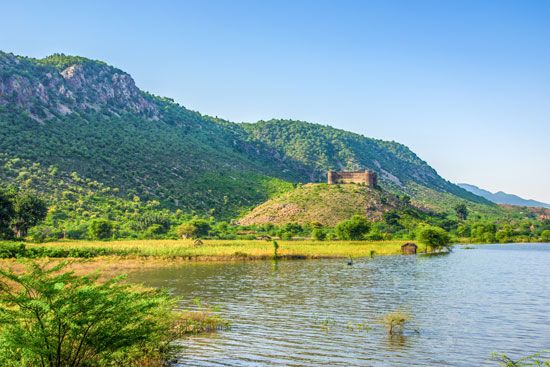
Ranthambore National Park is a prominent wildlife preserve located in the Sawai Madhopur district of Rajasthan, India1. Once the hunting grounds of the maharajas of Jaipur, the area was established as a game sanctuary in 1955 and designated a national park in 1980.1
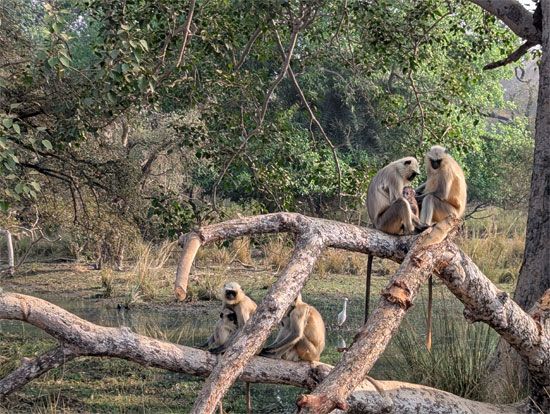
The park is a vital tiger reserve, having participated in Project Tiger since 1973. Its diverse terrain, where the Aravalli and Vindhya hills meet, supports a wide array of mammals, birds, and reptiles. Notably, the park also houses the 10th-century Ranthambore Fort, a UNESCO World Heritage site that features various temples and mosques.1
While the park is a major tourist destination, it faces ecological challenges, including concerns regarding inbreeding among its isolated tiger population and the recent arrival of cheetahs from neighboring regions.1
What is Project Tiger and why was it created?
Project Tiger is a major conservation program launched by the Indian government in 1973 to address the alarming decline of the country’s tiger population.34
Purpose and Creation
The initiative was created to protect the Royal Bengal tiger from extinction, as the species faced severe threats from habitat loss, poaching, and the illegal trade of tiger parts. By the mid-20th century, the global tiger population had plummeted, and India—home to half of the world’s tigers—recognized the urgent need for a structured, nationwide conservation strategy.345
Impact and Success
The program established a national network of dedicated tiger reserves, providing them with special conservation status and resources. Key figures like Kailash Sankhala, the program’s first director, were instrumental in its development, building upon the legal framework provided by the Wildlife (Protection) Act, 1972.345
The program has been widely regarded as a success, contributing to a significant recovery of the population, which grew from an estimated 1,411 individuals in 2006 to 3,682 by 2022. Today, the initiative continues to manage dozens of reserves across India to ensure the long-term survival of the species.35
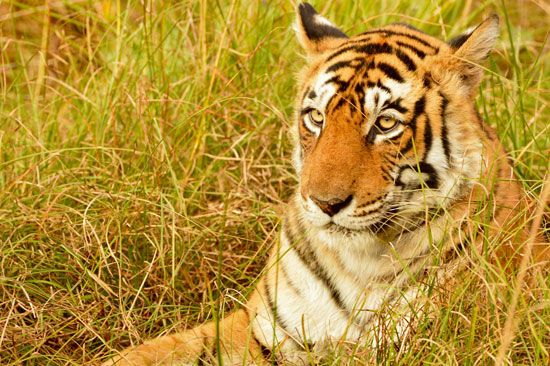
How does inbreeding affect the health of tiger populations?
Inbreeding poses a significant threat to the health and long-term survival of tiger populations, particularly those that are small and geographically isolated, such as the tigers in Ranthambore National Park.61
When a population is restricted to a few individuals, inbreeding leads to a rapid loss of genetic variability7. This process increases the likelihood that individuals will inherit harmful, recessive mutations from both parents, causing these deleterious traits to manifest. The negative impacts on health and fitness include:7
- Genetic Defects: Increased prevalence of physical deformities, such as crossed eyes, heart defects, and reproductive issues like undescended testicles.87
- Reduced Survival Rates: Inbred offspring often exhibit higher mortality rates and lower overall fitness compared to individuals born from unrelated parents.87
- Lowered Life Expectancy: The accumulation of genetic defects can lead to a shorter lifespan for affected animals.8
In the case of Ranthambore, because the current population descends from only a handful of ancestors and remains isolated from other tiger populations in India, experts fear that reduced genetic fitness could undermine the population’s resilience. Conservationists often address these risks by promoting genetic diversity, sometimes through “genetic intervention” or by facilitating connectivity between isolated groups.617
What are the main architectural features of the Ranthambore Fort?
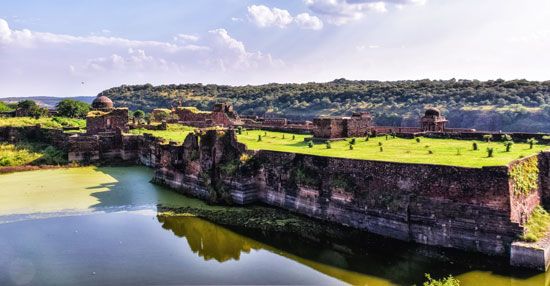
The 10th-century Ranthambore Fort is a significant historical structure located within the boundaries of Ranthambore National Park. Recognized as a UNESCO World Heritage site in 2013 as part of the Hill Forts of Rajasthan, the site reflects a complex history of control by Rajput rulers, the Delhi sultanate, and the Mughals.2
The fort is characterized by a variety of architectural features that highlight its historical and religious importance, including:
- Religious Structures: The site houses several temples and mosques. Notably, the Trinetra Ganesh Temple remains a major destination for pilgrims throughout the year.2
- Defensive and Functional Elements: The fort complex includes massive gates and various water tanks, which were essential for the site’s historical defense and sustainability.2
Sources
- Ranthambore National Park: Top Questions — Encyclopædia Britannica
- Ranthambore National Park — Encyclopædia Britannica
- Environment and sustainable development in India - Wildlife — Encyclopædia Britannica
- tiger - Tigers and humans — Encyclopædia Britannica
- 10 Conservationists of India - Kailash Sankhala — Encyclopædia Britannica
- white tiger — Encyclopædia Britannica
- conservation - Genetic intervention — Encyclopædia Britannica
- conservation - Body size and related reproductive characteristics — Encyclopædia Britannica
Published on · 3 min read