Sariska National Park
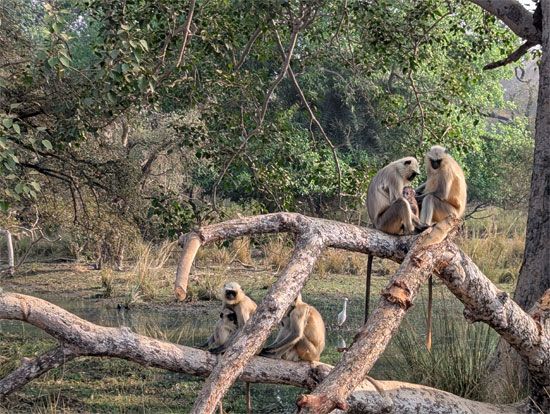
Sariska National Park is a wildlife preserve located in the Alwar district of Rajasthan, India. Spanning over 464 square miles, the park features a rocky…
What is Sariska National Park?
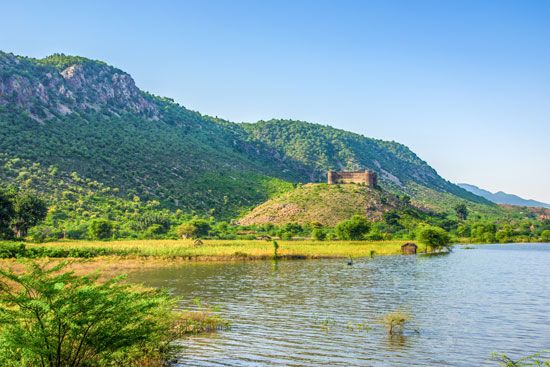
Sariska National Park is a wildlife preserve located in the Alwar district of Rajasthan, India. Spanning over 464 square miles, the park features a rocky landscape of scrub jungles, grasslands, and tropical dry deciduous forests.1
Originally a hunting ground for the princely state of Alwar, the area was established as a wildlife reserve in 1955 and became a national park in 1982. It is notable for hosting India’s first scientifically planned tiger translocation program; after poaching eliminated the local population by 2005, tigers were successfully reintroduced starting in 2008. Today, the park supports diverse wildlife, including leopards, hyenas, nilgai, and over 200 bird species.12
The park faces ecological challenges from livestock grazing, tourism, and illegal construction, which threaten its delicate ecosystem. Visitors are also drawn to historical sites within the park, such as the Kankwari Fort and ancient Shiva temples.1
How does tiger relocation help with conservation?
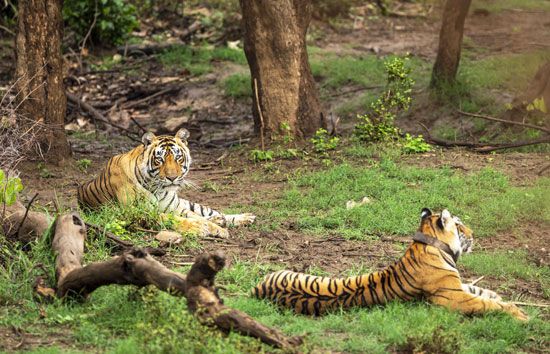
Tiger relocation is a vital conservation strategy used to restore populations in areas where they have been depleted or locally extirpated, such as the successful reintroduction of tigers to Sariska National Park after poaching eliminated the local population.3
This practice serves several critical conservation functions:
- Population Recovery: Relocation allows for the repopulation of protected habitats that are otherwise empty, helping to stabilize the species’ overall numbers in the wild.3
- Genetic Management: Small, isolated populations—such as those in Ranthambore National Park—are at high risk of inbreeding, which reduces genetic variability and increases the prevalence of harmful genetic defects. Introducing individuals from other areas brings in “new blood,” which can improve the genetic fitness and long-term survival prospects of the population.45
- Ecological Restoration: By restoring apex predators to their native ranges, relocation helps maintain the balance of the ecosystem, as tigers regulate the populations of their prey6.1
While relocation is a powerful tool, it is most effective when combined with habitat protection and the mitigation of human-wildlife conflict.67

What are the main threats to India’s national parks?
India’s national parks face a complex array of threats that jeopardize their ecosystems and wildlife. These challenges are often interconnected, stemming from both natural environmental shifts and human activities.
Human-Induced Threats
- Habitat Loss and Fragmentation: Unplanned infrastructure development, illegal encroachment, and the destruction of vegetation significantly reduce the space available for wildlife.910
- Resource Extraction: Activities such as illegal logging, fuelwood collection, and mining for coal or stone deplete forest tracts and create hazardous conditions for roaming animals.101112
- Pollution: Increased vehicular traffic and tourism contribute to pollution, which degrades the environment within and around protected areas.101112
- Poaching and Illegal Hunting: Despite regulatory efforts, poaching remains a persistent threat, often driven by economic instability.91011
- Livestock Grazing: The presence of livestock in protected areas can lead to overgrazing and competition for resources, further stressing the ecosystem.111312
Environmental and Natural Threats
- Climate Change: Extreme weather events, including floods, droughts, and heat waves, have intensified, causing direct loss of life and habitat.1014
- Natural Disasters: Seasonal flooding and landmass erosion, particularly in riverine parks, are recurring threats that have been exacerbated by climate change.10
- Invasive Species: Terrestrial and aquatic invasive plants can choke forest pathways and water bodies, impeding wildlife movement and potentially introducing toxicity to the ecosystem.10
Why is the Kankwari Fort significant to the park’s history?
Sorry, the Britannica knowledge base does not contain information regarding the specific historical significance of the Kankwari Fort to Sariska National Park. The available records identify the fort primarily as a tourist attraction within the park that contributes to environmental pressures due to visitor traffic and associated activities.15
Sources
- Sariska National Park: Top Questions — Encyclopædia Britannica
- Sariska National Park — Encyclopædia Britannica
- tiger - Tigers and humans — Encyclopædia Britannica
- Ranthambore National Park: Top Questions — Encyclopædia Britannica
- conservation - Genetic intervention — Encyclopædia Britannica
- Kanha National Park — Encyclopædia Britannica
- Bengal tiger — Encyclopædia Britannica
- Siberian tiger — Encyclopædia Britannica
- Environment and sustainable development in India - Wildlife — Encyclopædia Britannica
- Kaziranga National Park — Encyclopædia Britannica
- Hazaribag Wildlife Sanctuary — Encyclopædia Britannica
- Manas National Park — Encyclopædia Britannica
- pastoral communities in India — Encyclopædia Britannica
- climate of India - Climate change in India — Encyclopædia Britannica
- Mehrangarh Fort — Encyclopædia Britannica
Published on · 3 min read