Banff National Park
Banff National Park is a protected wilderness area located in southwestern Alberta, Canada, along the eastern slopes of the Rocky Mountains. It spans 2,564…
What is the geographical location and landscape of Banff National Park?
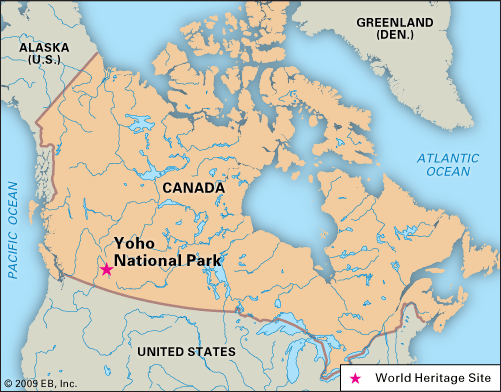
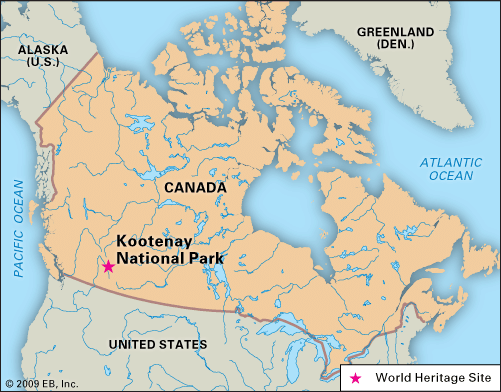
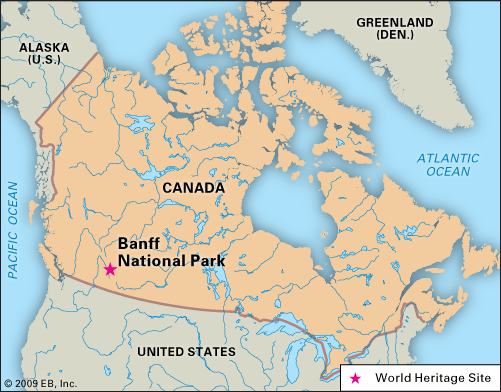
Banff National Park is a protected wilderness area located in southwestern Alberta, Canada, along the eastern slopes of the Rocky Mountains. It spans 2,564 square miles and shares a border with British Columbia, where it is adjacent to Yoho and Kootenay national parks.
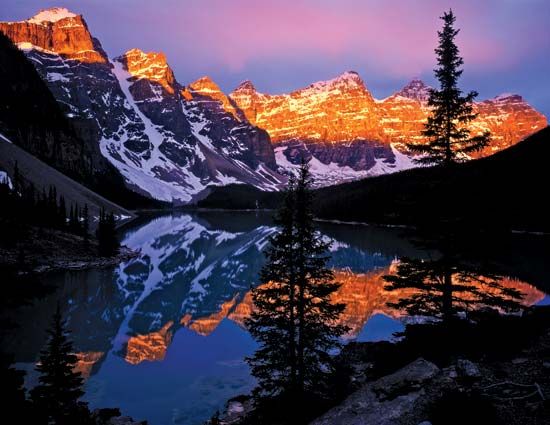
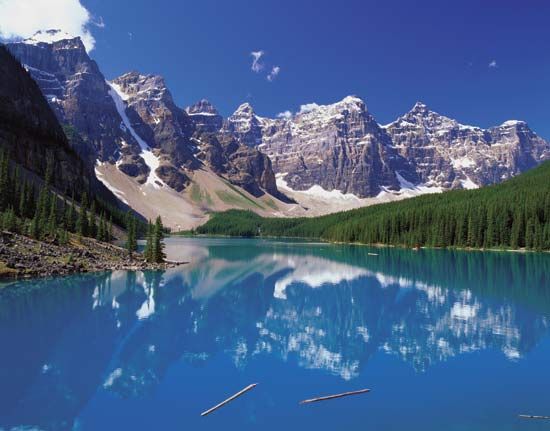
The park’s landscape is predominantly rugged and mountainous, trending northwest to southeast along the Canadian Rockies. The terrain features high alpine peaks in the western Main Ranges, while the eastern section consists of subalpine and montane landscapes within the Front Ranges. Composed of sedimentary rocks like limestone and shale, the mountains exhibit a distinct, toothlike appearance shaped by glaciation. The park also contains active glaciers, such as the Columbia Icefield, as well as alpine lakes like Lake Louise and Moraine Lake, and river valleys including the Bow and Red Deer.
When was Banff National Park established, and what was the reason for its creation?
Banff National Park was established in 1887 as Canada’s first national park under the Rocky Mountains Park Act.2
The creation of the park was primarily driven by the discovery of hot springs in 1883 by employees of the Canadian Pacific Railway. These springs were located above the Bow River valley. Following disputes regarding the ownership of these springs, the Canadian government intervened in 1885 by declaring a 10-square-mile area surrounding them a protected natural reserve. This initial reserve served as the foundation for the formal establishment of the national park two years later.2
What are some of the most popular attractions and activities in Banff National Park?
Banff National Park is a premier destination for outdoor enthusiasts, offering a wide array of recreational activities and attractions:
- Winter Sports: The park is an internationally renowned location for skiing and other winter sports, with major venues located at both the town of Banff and Lake Louise.12
- Hiking and Exploration: Visitors can access hundreds of miles of hiking trails that traverse the park’s diverse montane, subalpine, and alpine landscapes.1
- Scenic Landmarks: Popular natural attractions include the iconic Lake Louise and the nearby Moraine Lake, both celebrated for their stunning alpine beauty.1
- Cultural and Educational Sites: The town of Banff serves as a hub for visitors, featuring museums, a school of fine arts, and the Whyte Museum of the Canadian Rockies, which houses extensive regional archives.12
- Relaxation: The area is famous for its natural hot springs, which were the original catalyst for the park’s establishment.12
How does Banff National Park compare to other national parks in Canada in terms of size, biodiversity, and visitor numbers?
Banff National Park holds a unique position within Canada’s national park system, distinguished by its history, popularity, and ecological significance.
Size and Status
Spanning 2,564 square miles (6,641 square km), Banff is a significant protected area along the eastern slopes of the Rocky Mountains. While it is one of Canada’s most prominent parks, it is not the largest; for instance, Auyuittuq National Park in Nunavut is noted as the country’s largest national park. Banff was established in 1887 as Canada’s first national park, serving as the foundation for the nation’s extensive park system.12
Biodiversity
The park is celebrated for its diverse montane, subalpine, and alpine landscapes, which support a wide range of wildlife. It is home to dozens of mammal species, including grizzly and black bears, elk, moose, wolves, and bighorn sheep. Additionally, the park hosts over 260 bird species and supports large fish populations in its alpine lakes and streams. Its ecological value is further recognized by its designation as part of the Canadian Rocky Mountain Parks World Heritage site.1
Visitor Numbers
Banff is Canada’s most popular national park, attracting between three and four million visitors annually. This high level of human presence, combined with transit through the Trans-Canada Highway and rail lines, has led to ongoing concerns regarding the impact on wildlife habitats and water quality.1
Sources
- Banff National Park — Encyclopædia Britannica
- Banff — Encyclopædia Britannica
- Rocky Mountains - National parks , forests, and recreational areas — Encyclopædia Britannica
- Canada - Sports and recreation — Encyclopædia Britannica
Published on · 3 min read